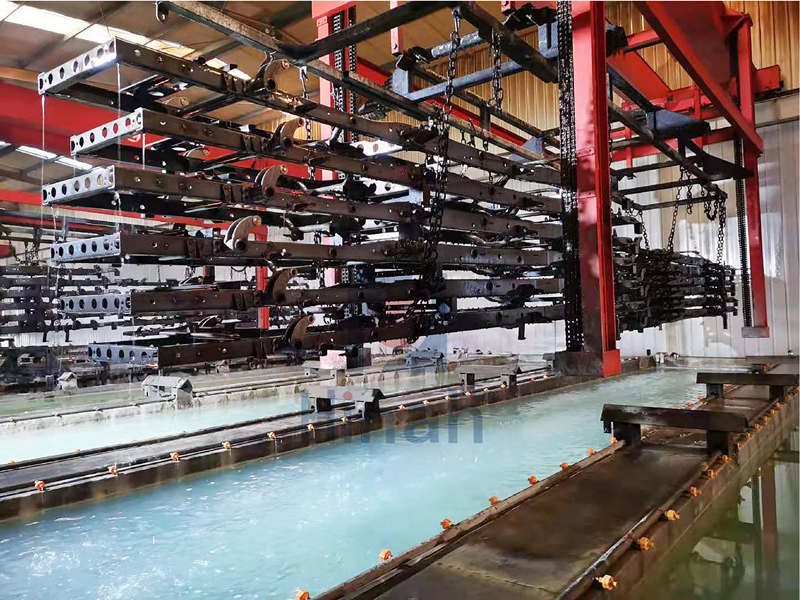
Every manufacturer dreams of a flawless, high-volume finish that lasts for decades. In that search for perfection, the e-coat line often feels like the ultimate prize. It is fast, efficient, and offers world-class corrosion protection. It’s the backbone of the automotive and appliance worlds for a reason.
But here is the honest truth: an e-coat line is a massive investment, and it isn’t a “magic wand” for every project.
Choosing the wrong coating system is more than just a technical error; it’s a drain on your budget, your time, and your peace of mind. We want you to succeed, even if that means telling you that our equipment isn’t the right fit for your specific part. Before you sign that purchase order, let’s look at four specific situations where an e-coat line might actually hold your production back.
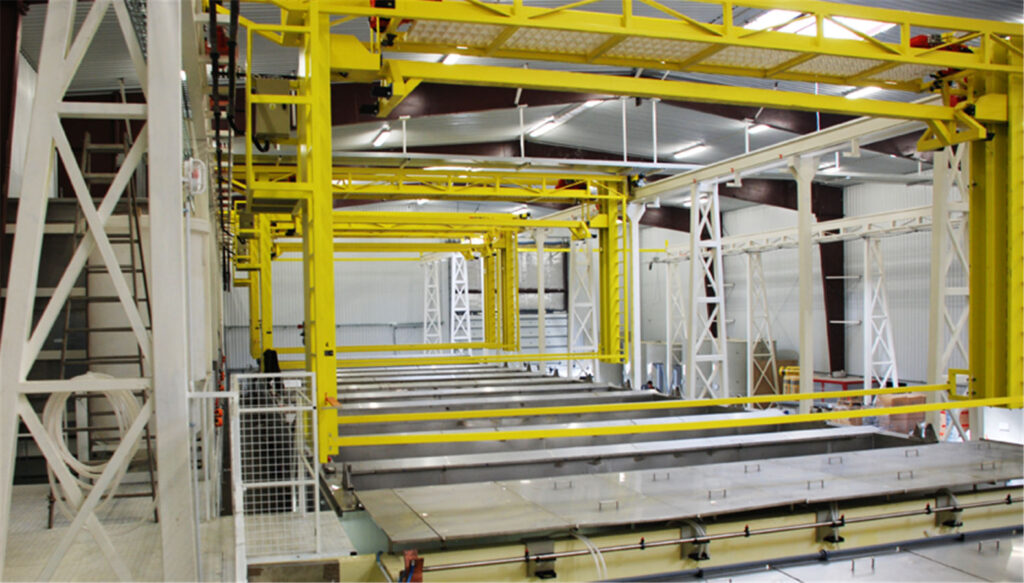
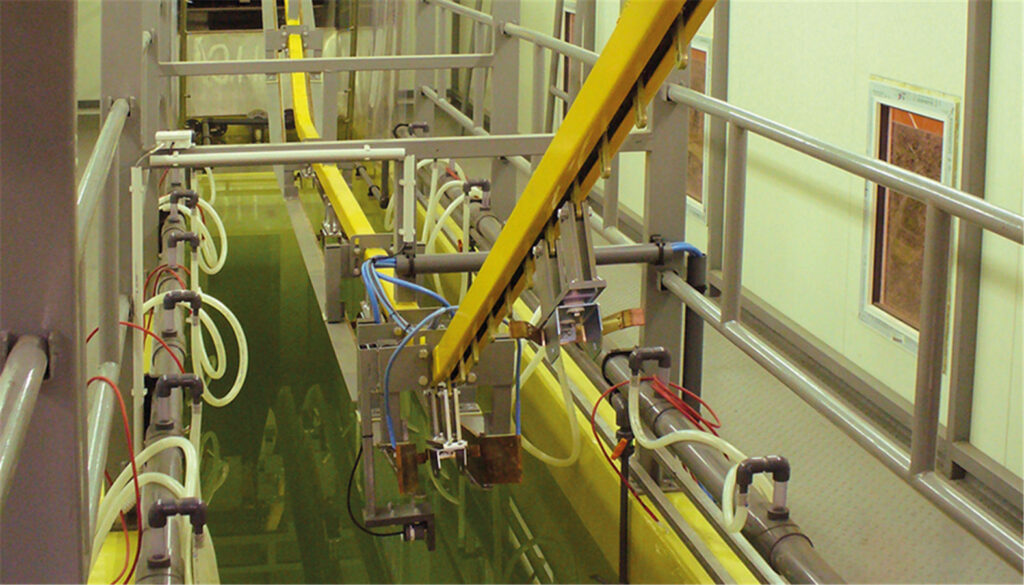
Why Non-Conductive Materials Fail on E-coat Line
It’s a frustrating moment for many manufacturers. You see the incredible, uniform finish an e-coat line produces, and you want that same quality for your plastic or wood components. We understand that desire. Everyone wants the best for their products.
However, we have to look at the hard science. An e-coat line works through a beautiful, invisible force: electricity. Think of the paint tank as a giant battery. The system charges the paint particles, and your metal part acts as the opposite pole. They pull together with perfect precision.
But here is the catch. If your material cannot carry an electric current, that attraction never happens.
Materials like plastics, glass, wood, or heavy composites act as a wall. They block the flow of electricity. Without that “spark,” the paint simply won’t stick. Trying to force a non-conductive part through an e-coat line is like trying to pick up a piece of paper with a magnet—it just won’t work, no matter how much you want it to.
If your heart is set on coating non-metal materials, an e-coat line will only lead to disappointment. In these cases, we recommend exploring traditional spray systems that rely on mechanical grip rather than electrical chemistry.
The High Cost of Color Variety in a Single E-coat Line
We know the modern market thrives on variety. Your customers might want a dozen different colors to make their products stand out. In many finishing shops, flexibility is king. But if your business model relies on changing colors every few hours, an e-coat line will quickly become your biggest bottleneck.
Think of an e-coat line as a high-speed freight train. It is incredibly powerful and efficient when it stays on one track. Most systems use a massive tank filled with thousands of gallons of specialized paint.
Here is the reality: you cannot simply “swap out” the color in an afternoon.
To change from black to red, you would have to drain the entire tank, scrub the system clean, and refill it with expensive new chemistry. This process wastes time, costs a fortune in materials, and halts your production for days. It is a logistical nightmare that eats your profits.
If you need a “rainbow” of options for small batches, the e-coat line is not your friend. It is built for the marathon, not the sprint. For those who need to switch colors at a moment’s notice, a powder coating booth or a manual spray line remains the much smarter, more soulful choice for your workshop.
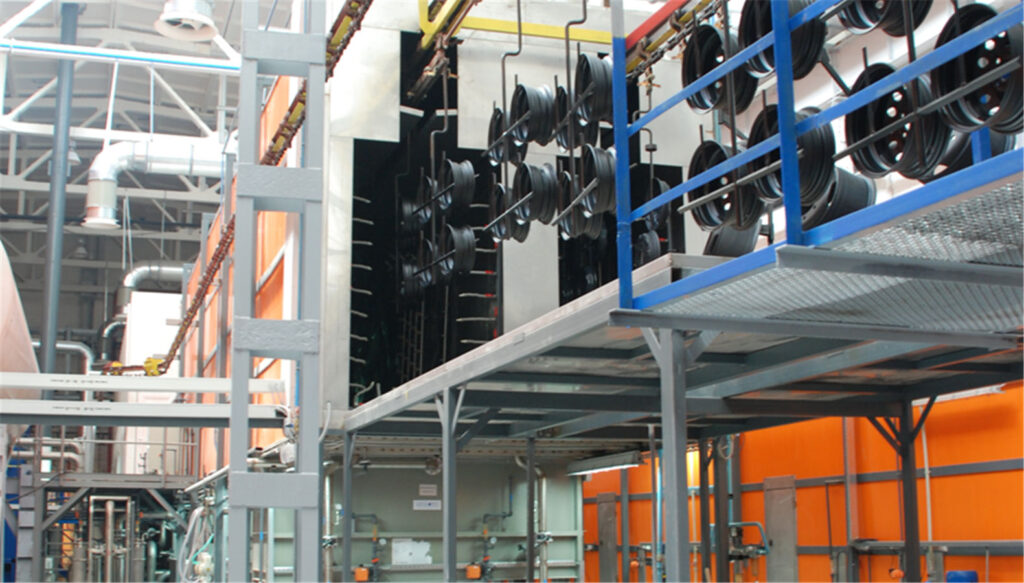
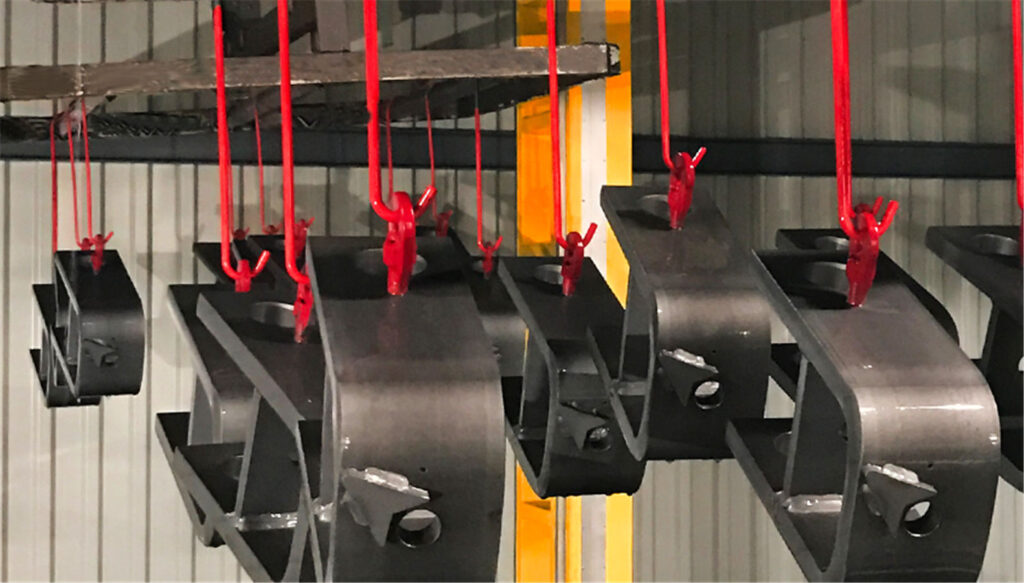
When Your Parts Can’t Handle the Electrocoating Curing Heat
You spend weeks, perhaps months, perfecting the design of your product. You select the best components and the most precise sensors. The last thing you want is to see that hard work melt or warp in the final stage of production.
This is where the e-coat line demands a trade-off.
The coating process doesn’t end when the part leaves the tank. To turn that liquid film into a rock-hard, protective shell, the part must travel through a curing oven. This oven is a high-heat environment, usually reaching temperatures between 150°C and 180°C.
For a heavy steel bracket, this heat is nothing. But for other materials, it is a trial they cannot survive.
If your assembly includes delicate electronic sensors, plastic gaskets, or low-melting-point alloys, the e-coat line becomes a danger zone. High heat can ruin the temper of specialized springs or cause thin-walled parts to lose their shape.
We hate to see a perfect part ruined by the very process meant to protect it. If your components have a low heat threshold, pushing them through an e-coat line is a risk you simply shouldn’t take. In these cases, air-dry coatings or low-temperature finishes are the kinder choice for your product.
Limitations of a Standalone Electrocoating for Outdoor UV Stability
We all want our products to look as good in five years as they do on the day they leave the factory. If your parts are destined for a life outdoors—facing the wind, the rain, and the constant glare of the sun—you need to be very careful with an e-coat line.
There is a common misunderstanding in the industry. People see the incredible rust protection of e-coat and assume it can handle everything. But the sun’s UV rays are a different kind of enemy.
Most resins used in a standard e-coat line are epoxy-based. Epoxy is a champion at fighting off salt and moisture, but it has a weakness: it hates sunlight. Over time, direct exposure to the sun causes the finish to “chalk.” It loses its gloss, turns a dull grey, and eventually begins to flake away. Imagine spending thousands of dollars on a high-tech finish, only to watch it fade and crumble after a few months in a customer’s backyard. It’s a heartbreaking result for any quality-conscious brand.