Building a professional automotive e-coating line requires more than just a paint tank. It demands a robust foundation of power, water, and thermal engineering to meet strict factory standards. If your infrastructure lacks precision, you will face inconsistent film thickness and high reject rates. Here we will breaks down the essential hardware every heavy-duty e-coating line needs to run without interruption. We focus on the core systems that keep your production stable and your coating quality high.
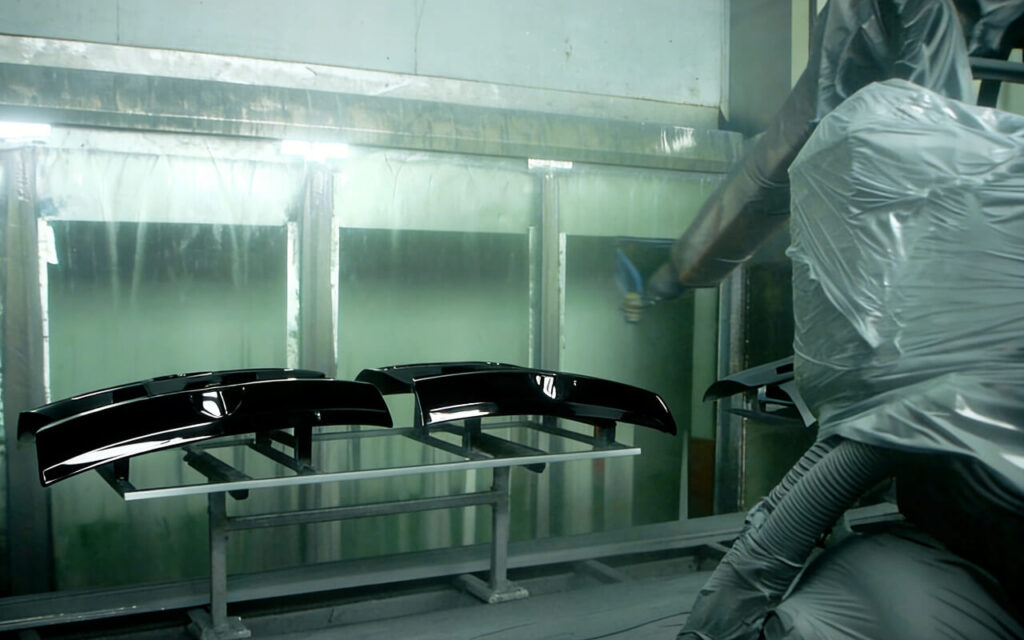
Power Grid & Rectification Requirements
A steady power supply is the heartbeat of any e-coating line. Without precise electrical control, the paint will not bond correctly to the car body. You must ensure your facility can handle the heavy load while maintaining extreme stability.
Reliable Rectifier Performance
The rectifier converts AC power to the DC current needed for electrodeposition. For automotive standards, you need a ripple factor below 5%. High ripple causes rough finishes and uneven coating thickness. Modern rectifiers should offer segmented control. This allows you to adjust voltage as the car body moves through different sections of the tank.
Emergency Power Strategy
Power outages are a major risk for a professional e-coating line. If the pumps stop, the paint solids will settle at the bottom of the tank. This can ruin the entire batch of paint and clog your pipes. You must install a backup generator or a robust UPS system. This equipment keeps the circulation pumps running and prevents a total system seizure during a blackout.
Water Treatment & Fluid Logistics
An automotive e-coating line consumes massive amounts of water, but not just any water will do. Impurities like calcium or magnesium will contaminate the paint bath and cause surface defects. You must treat your water supply as a critical raw material.
High-Purity DI Water Systems
You need a dedicated Reverse Osmosis (RO) or Deionization (DI) plant on-site. The final rinse stages and the main tank require water with conductivity below 10uS/cm. If the water is”hard,” the chemical balance in the e-coating line will fail. This leads to poor corrosion resistance and ruins the finish. Your infrastructure must include storage tanks large enough to support peak production hours without a drop in pressure.
Waste Water and Discharge Control
The pretreatment and rinsing stages generate a constant flow of chemical waste. Your facility must have an integrated treatment system to neutralize acids and remove heavy metals before discharge. A smart e-coating line design includes a closed-loop system for the final rinses.This setup recycles water back into the earlier stages, which saves money and keeps your factory compliant with local environmental laws.
Tank Engineering & Thermal Control
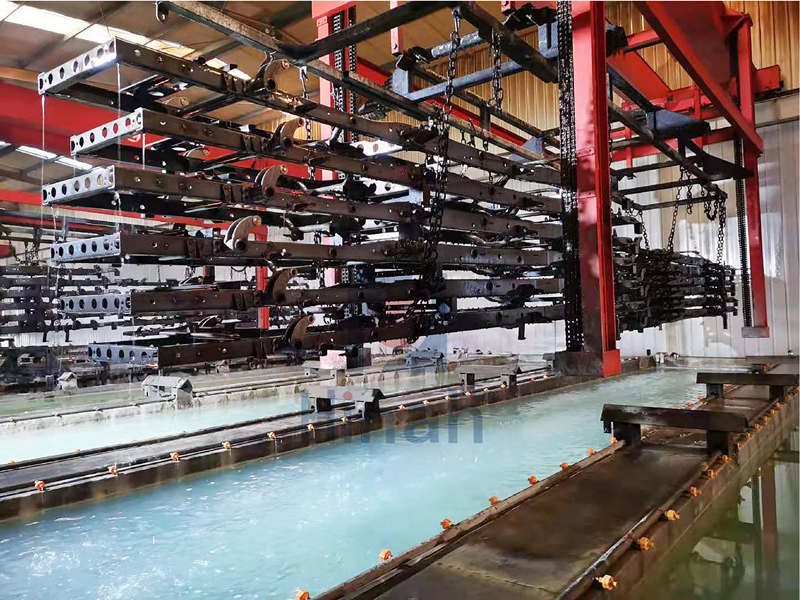
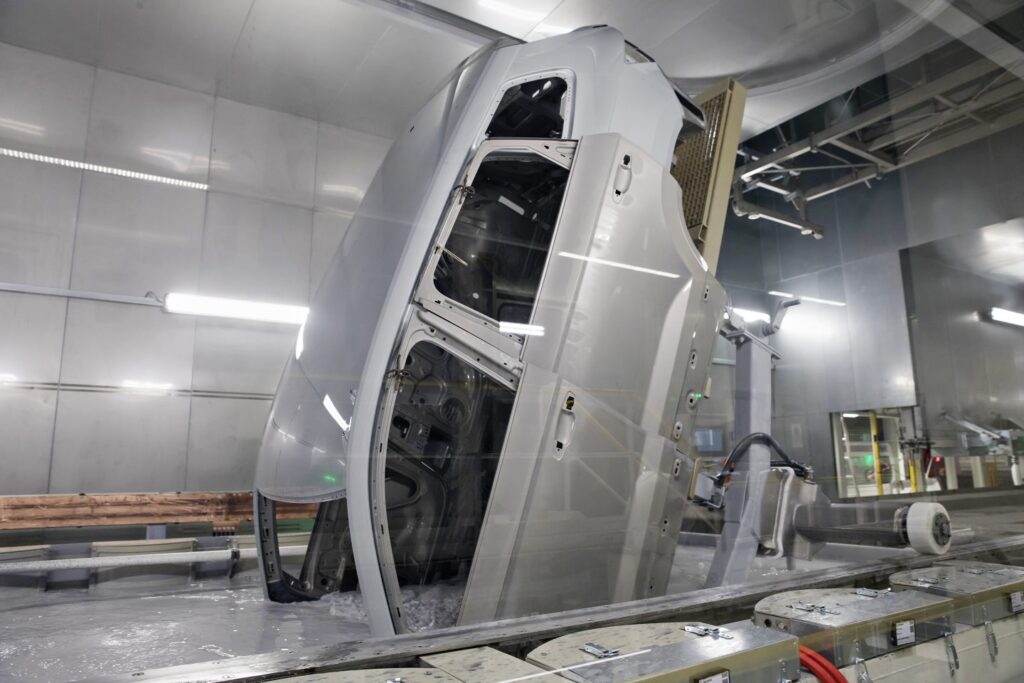
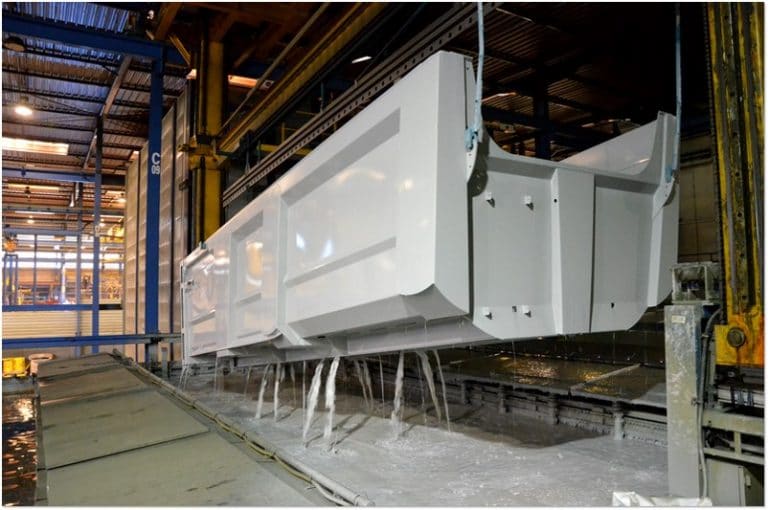
The main tank is the core of the e-coating line, and it must maintain a perfectly uniform mixture. You need powerful circulation pumps and eductor nozzles to keep the paint moving at all times. This prevents the heavy solids from sinking and ensures every part of the car body receives the same coating quality. Beside the tank, you must install a high-capacity chiller plant. This system uses heat exchangers to keep the bath temperature between 28°C and30°C. Even a small temperature spike can trigger a chemical reaction that ruins the paint stability.
UItrafiltration (UF) & Paint Recovery
A professional e-coating line cannot run efficiently without an Advanced Ultrafiltration system.This unit acts as a kidney for the paint bath, filtering out excess water and contaminants while recovering expensive paint resins. The UF system creates a “permeate” solution that you use for closed-loop rinsing. This process washes off loose paint from the car and returns it directly to the main tank. It significantly reduces your chemical waste and ensures you use nearly every drop of paint. You also need to monitor the anolyte system within this stage to balance the acidity of the bath and keep the coating process stable.
Curing Oven & Air Management
The curing oven provides the final strength for the coating on your e-coating line. It must reach and hold a specific “Peak Metal Temperature” to bake the paint onto the steel. You need a powerful air circulation system to heat every part of the vehicle frame equally. Without steady airflow, thick metal sections will stay soft while thin parts overbake. Your infrastructure also needs a high-quality exhaust system. This unit pulls out dangerous vapors and filters the air before it leaves the factory. A clean oven environment prevents dust from falling onto the wet paint and ruining your finish.
Heavy-Duty Conveyor Architecture
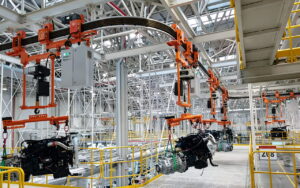
Your conveyor system must handle the massive weight of automotive frames day after day. The steel tracks and supports need a heavy-duty design to prevent sagging or mechanical failure. A breakdown in the middle of the e-coating line can trap cars inside the chemical tanks and cause a total loss. Most modern factories use PLC-controlled automation to sync the conveyor speed with the rest of the equipment. This ensures every car spends the exact same amount of time in each stage. Accurate timing is the only way to guarantee a consistent coating across your entire production run.