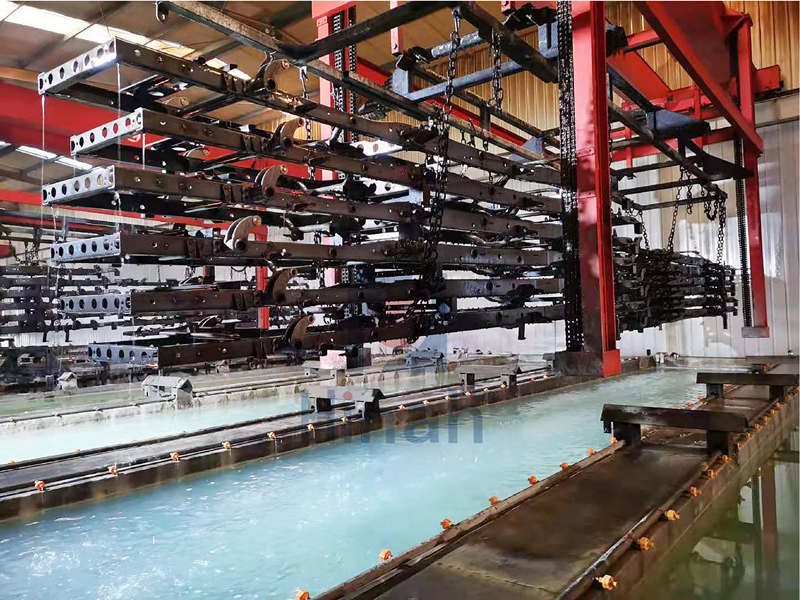
Automotive frames and chassis are built to last, but they are also the parts most exposed to corrosion, impact, and harsh road conditions. Once rust begins inside boxed sections or welded joints, it is difficult—and often impossible—to stop. For manufacturers, this makes the choice of primer coating not just a technical decision, but a long-term commitment to vehicle durability.
This is where cathodic electrocoating has become a trusted solution. By reaching internal cavities and complex structures that conventional spraying cannot protect, it provides a uniform, highly adherent coating that forms the foundation of corrosion resistance. For modern automotive frames and chassis, cathodic electrocoating is less about appearance, and more about confidence—confidence that protection starts where failure usually begins.

Coating Challenges Unique to Auto Frames and Chassis
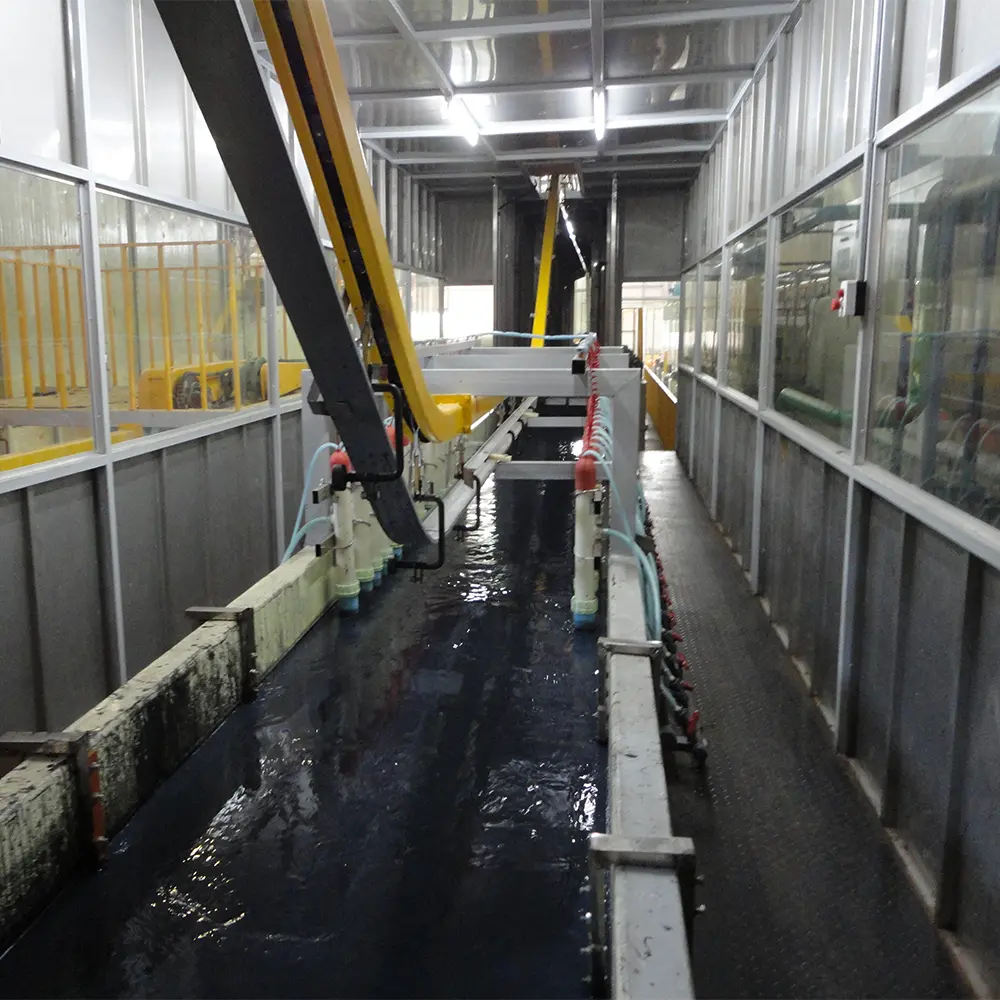
Automotive frames and chassis are not simple flat parts. They are large welded assemblies with hollow sections, overlapping joints, sharp edges, and blind cavities—exactly the areas where corrosion prefers to start. These structures make it difficult for traditional spray coating to reach critical internal surfaces, leaving protection uneven and unreliable.
In real production, the challenge goes beyond geometry. Frames and chassis face constant exposure to moisture, road salt, stone impact, and temperature changes. Any weak point in the primer layer can quickly turn into rust propagation, especially inside enclosed sections where inspection and repair are nearly impossible.
Consistency is another pressure point. A frame may look fully coated on the outside, yet suffer from insufficient film thickness in recessed areas. For manufacturers, this creates long-term quality risks rather than immediate visual defects—risks that often surface only after vehicles are already in service.
Cathodic Electrocoating Process Flow for Auto Applications
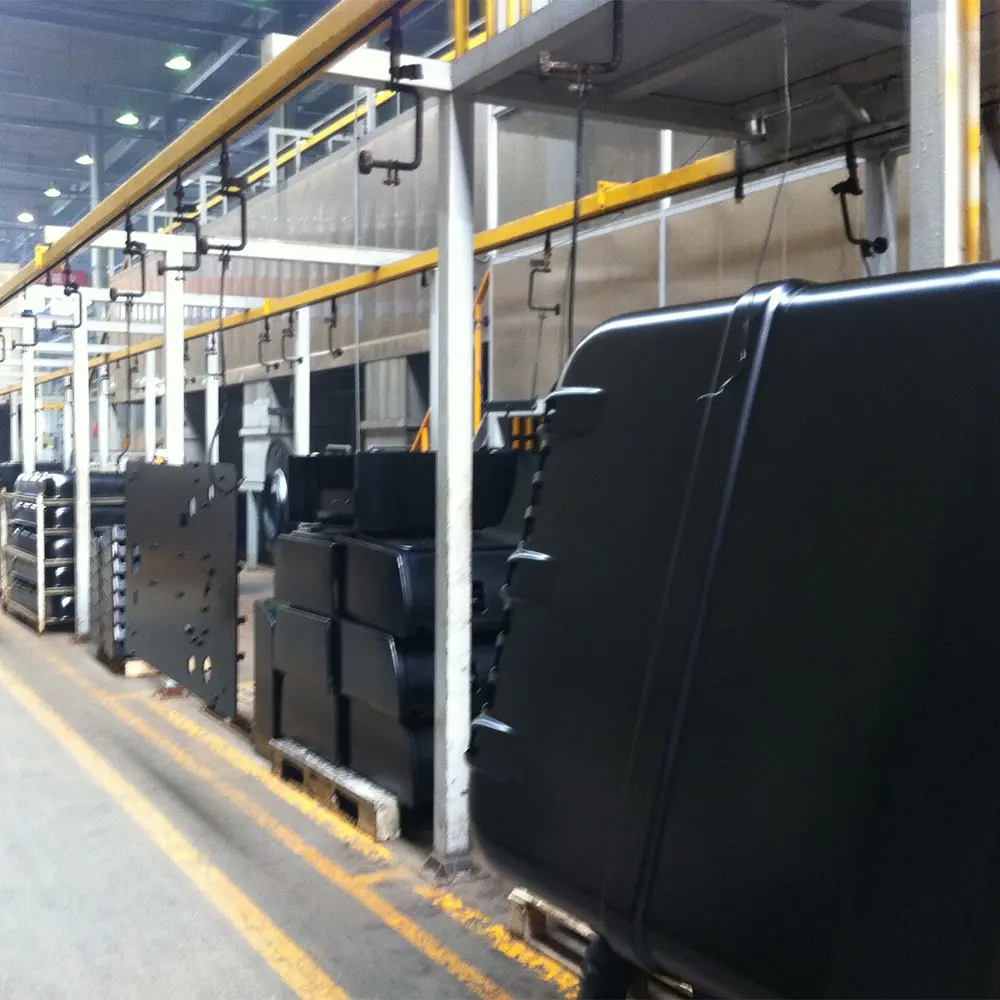
For automotive frames and chassis, a reliable coating result starts long before the e-coat tank. Proper pretreatment is essential, especially for welded structures where oil residues, welding fumes, and scale tend to accumulate. If these contaminants are not fully removed, even the most advanced coating process cannot compensate for poor surface conditions.
During cathodic electrocoating, electrical control becomes the core of coating uniformity. Voltage must be carefully managed to ensure the coating penetrates enclosed sections without causing defects such as ruptures or uneven film build. For large frames and chassis, stable current distribution is what allows internal cavities and sharp edges to receive the same level of protection as external surfaces.
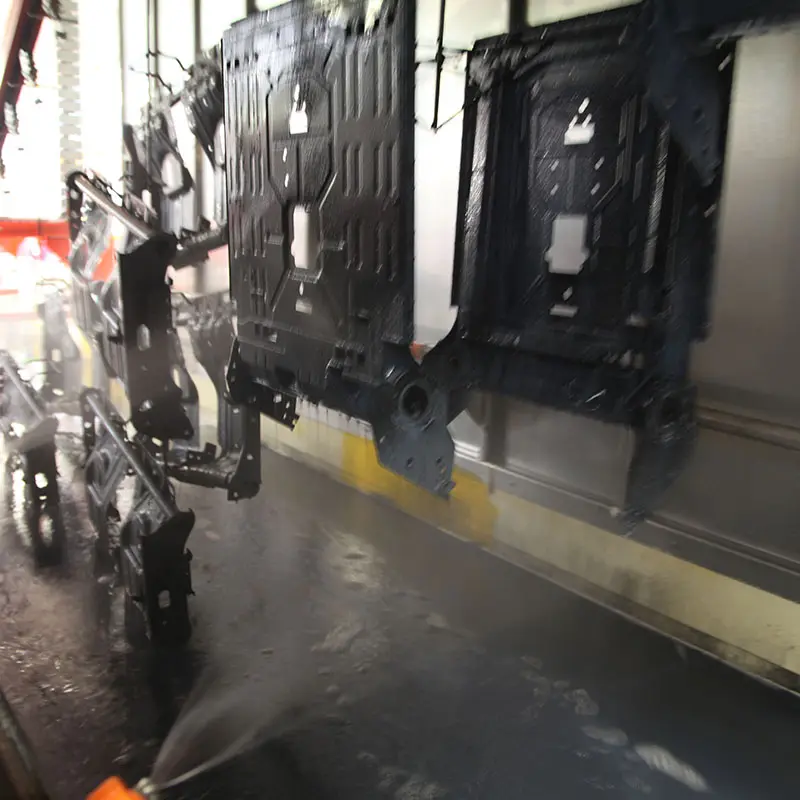
After deposition, rinsing and curing are equally critical. Excess paint residues must be recovered efficiently, while curing parameters need to match the mass and thermal characteristics of structural components. When each stage of the process is aligned, cathodic electrocoating creates a continuous, well-adhered primer layer that forms a dependable barrier against corrosion—exactly what automotive frames and chassis require for long-term service life.
Quality Control Points in Cathodic Electrocoating Production
In cathodic electrocoating production, quality is determined by what cannot be easily seen. For automotive frames and chassis, film thickness consistency across internal cavities, weld seams, and sharp edges is one of the most critical indicators of long-term performance. Regular measurement and validation at these locations help ensure the coating truly protects the structure, not just the visible surfaces.
Defect prevention is closely tied to process stability. Issues such as pinholes, thin spots, or poor adhesion often originate from subtle fluctuations in bath conditions, electrical parameters, or pretreatment quality. For large and heavy components, even small variations can be amplified if the system lacks proper control and monitoring.
Long-term corrosion resistance depends on repeatability. A well-designed cathodic electrocoating line integrates monitoring, feedback, and corrective mechanisms that keep the process within a stable window. When quality control is built into the production system—not treated as a final inspection step—manufacturers gain confidence that every frame and chassis leaving the line meets the same durability standard.