Every factory manager knows the sinking feeling of seeing “sandpaper” textures on a finished part. You check the chemicals, you test the voltage, but the culprit hides at the bottom of your tank. Sedimentation is more than just mud; it is a ticking time bomb for your e coating line.
When paint particles drop out of suspension, they don’t just stay down. They recirculate as grit, ruin your finish, and eventually force an expensive tank clean-out. You lose paint, you lose time, and you lose money. Keeping your e coating line clean isn’t a luxury—it is the only way to keep your defect rate from skyrocketing.
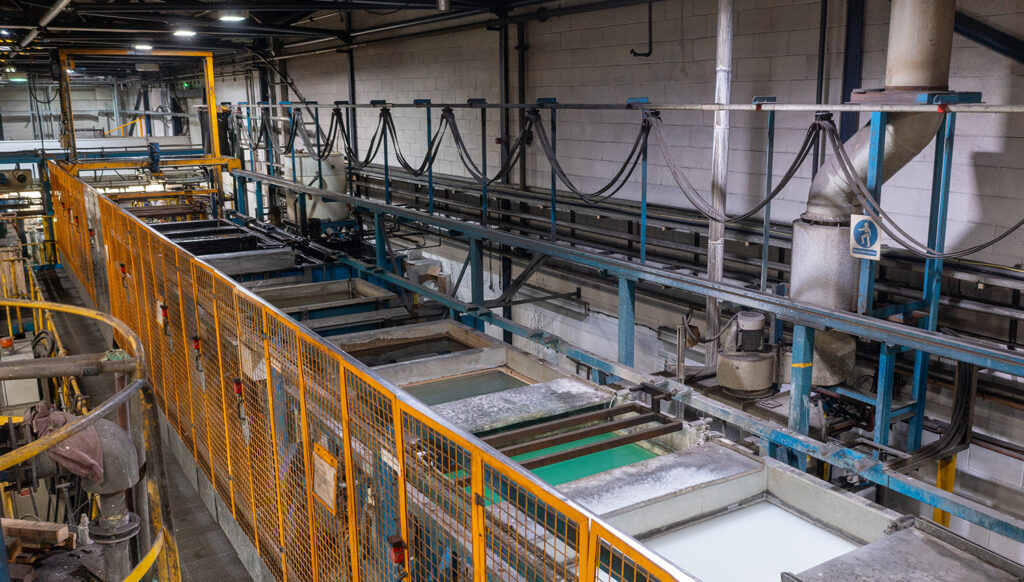
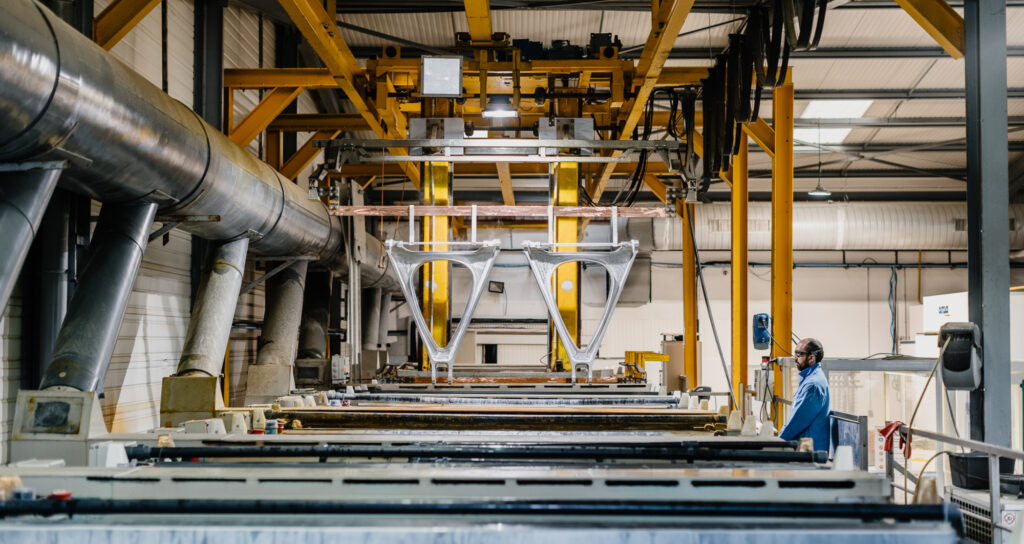
Why Does Sedimentation Occur in an E Coating Line?
Paint particles stay in suspension only when the environment is perfect. When that balance breaks, gravity wins. Here is why your e coating line starts dropping sludge:
Dead Zones and Poor Flow
If the liquid stops moving, the paint starts sinking. Many tanks have “dead zones”—corners or bottom areas where the flow is too weak. Without enough turbulence, heavy pigment particles lose their lift. If your circulation pumps underperform, or if your eductor nozzles point the wrong way, you are basically building a “sediment trap” inside your e-coat line.
Chemical Imbalance
Your paint bath is a delicate chemical soup. If the pH levels drift or the temperature spikes, the paint particles “clump” together. These larger, heavier clusters can no longer float. High temperatures in the electrocoating line often cook the paint onto the heat exchanger or cause it to fall out of the bath entirely.
Pre-treatment Carryover
Sometimes the problem starts before the parts even hit the paint. If your rinsing stages are weak, parts carry acids or salts into the e coating line tank. These contaminants act like magnets, pulling paint particles together into heavy flakes. You aren’t just painting parts; you are accidentally “cleaning” your dirty parts inside a million-dollar paint bath.
Critical Components for Preventing Sludge in Electrocoating Line
If your e coating line relies on luck to stay clean, you will lose the battle against gravity. You need a system designed to fight sedimentation at every turn. Here are the three workhorses that keep your paint in motion and your tank clear:
Strategic Eductor Nozzle Systems
Think of eductors as the “heartbeat” of your tank. These nozzles don’t just spray; they multiply the flow of your pumps. By placing them strategically along the bottom and corners, you eliminate the dead zones where sludge likes to hide. A well-designed e coat line ensures that every drop of paint stays in constant, turbulent motion. If your nozzles are clogged or aimed poorly, you are just waiting for a disaster.
High-Efficiency Filtration and UF Units
Your paint bath should only contain what belongs there. Multi-stage bag filters act as the first line of defense, catching large flakes and debris before they settle. But the real star is the Ultrafiltration (UF) system. It strips out excess minerals and contaminants that cause paint to clump. A high-performance electrocoating line uses UF to keep the bath chemistry stable, ensuring that only the finest paint particles remain in suspension.
Precision Heat Exchangers
Temperature control is about more than just drying paint. If your heat exchanger has “hot spots,” it can literally cook the paint onto the equipment, creating grit. Modern e coating line designs use plate heat exchangers that distribute heat evenly. This prevents the paint from destabilizing and falling out of the bath as heavy, unusable sludge.
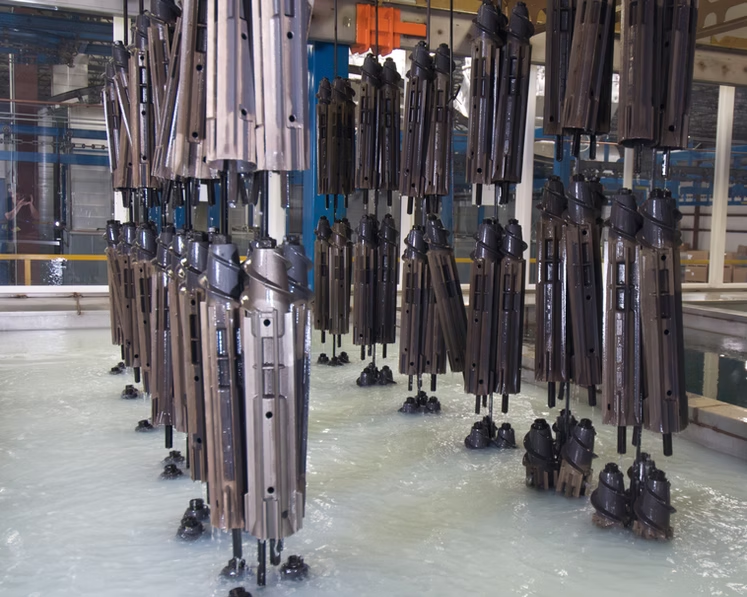
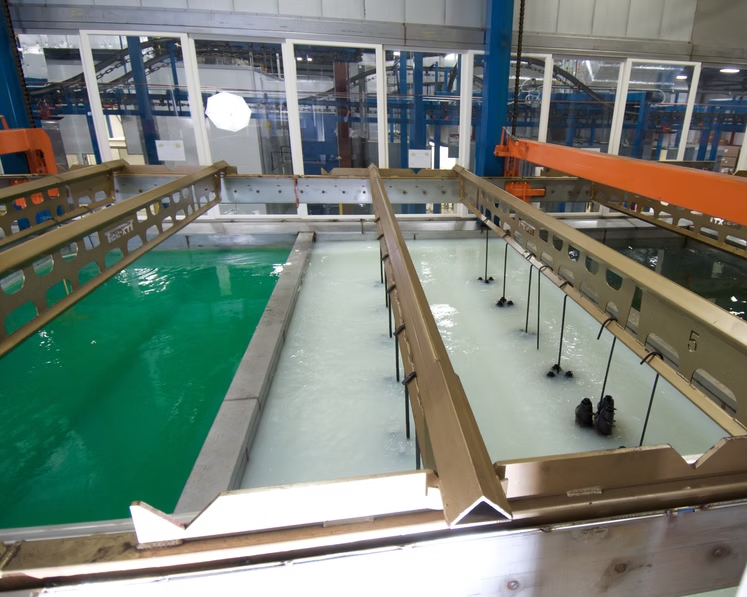
The Golden Rules: Keeping Your E Coating Line From Clogging
Equipment is only half the battle. If your team ignores the daily pulse of the tank, even the best hardware will fail. To keep your e coat line running like a Swiss watch, you must follow these non-negotiable rules:
The “Never-Stop” Circulation Policy
A stagnant tank is a dying tank. Paint particles start to drop the moment the flow stops. In a high-quality e coat line, the pumps should never truly shut down—even during weekends or holidays. If you must stop for maintenance, keep the agitation system running. If the paint sits still, it settles. If it settles, it clumps. Once it clumps, you can’t just “stir it back in.”
Daily Bath Analysis (No Shortcuts)
You cannot manage what you do not measure. Your e coating line depends on a precise chemical balance. Test your solids content, conductivity, and pH levels every single day. When these numbers drift, the paint loses its ability to stay in suspension. Think of it as a blood test for your machine; catch the imbalance early, or face a total system shutdown later.
Rigorous Hanger and Rack Hygiene
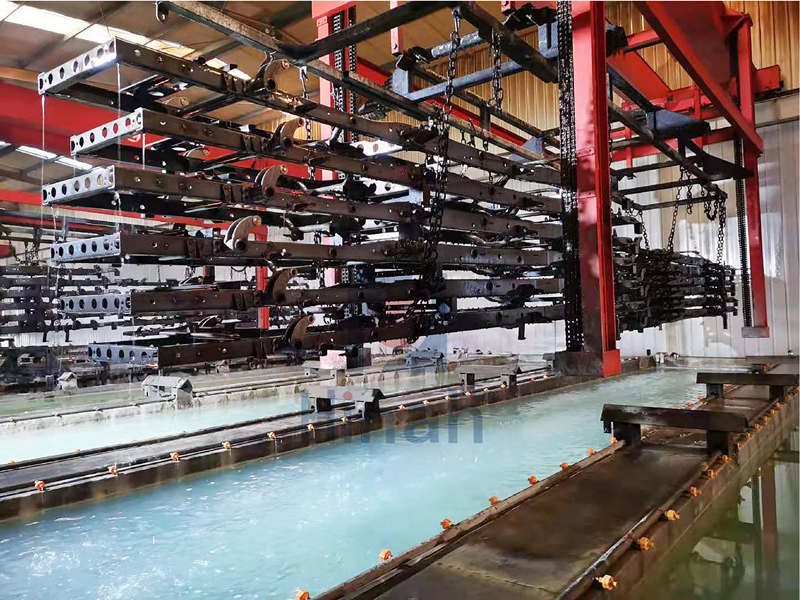
Most “dirt” in a tank doesn’t come from the paint; it falls from above. Dried paint flakes on hangers and racks are the primary source of grit. As parts move through the electrocoating line, these flakes vibrate loose and sink into the bath. Establish a strict cleaning schedule for your hanging equipment. If your racks are dirty, your e coating line tank will never stay clean, no matter how good your filters are.