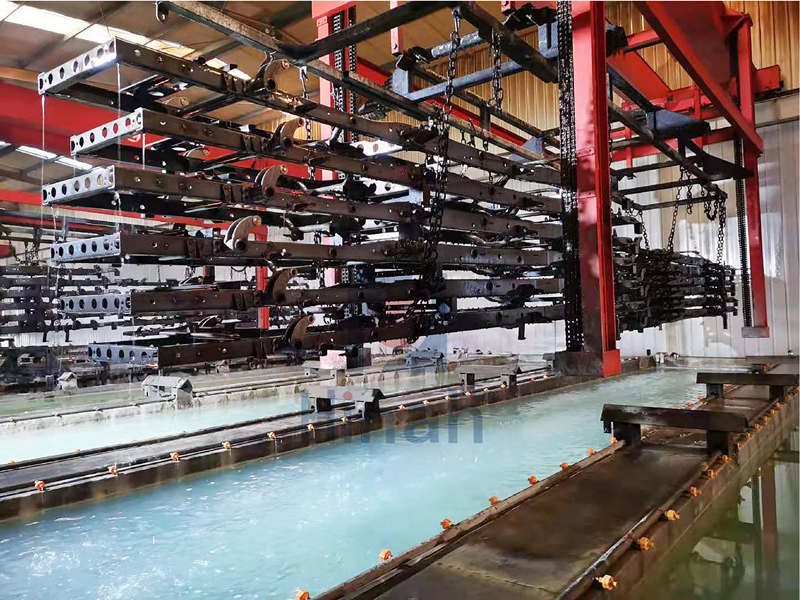
Most factory managers focus on the power supply when coating quality drops. However, your anodes actually do the heavy lifting in the tank. If you choose the wrong anode cells, you will face uneven film thickness and wasted paint every single day. Anodes control how the electrical current flows. They determine if the paint reaches deep into complex parts or just sits on the surface. To get the best results from your e-coat line, you must balance throwing power with energy efficiency. This guide cuts through the marketing talk and helps you pick the right hardware for a stable, cost-effective process.
Tubular vs. Flat Anodes: Selecting the Right Design
You generally have two choices for your tank: tubular cells or flat plate anodes. Both conduct electricity, but they handle the paint process differently. Selecting the wrong shape can create “dead zones” where the current doesn’t reach the workpiece.
Tubular Anode Cells: The Industry Standard
Tubular anodes are the go-to choice for modern e-coat lines. They offer a 360-degree active surface, which means they throw current in every direction. If you coat complex parts like automotive frames or nested brackets, tubular cells provide the best coverage. They are also easier to replace individually without draining the entire tank.
Flat Plate Anodes: Simple and Compact
Flat anodes work well if your parts are mostly flat and uniform. They take up less physical space in the tank, which helps if you have a narrow layout. However, they only provide a one-sided electrical field. This often leads to “shading” issues where the back of a part receives less paint than the front.
The Bottom Line for Your Tank
Standardize your e-coat line based on your product geometry. If your parts have deep recesses or curves, stick with tubular cells. They cost more upfront but prevent the “thin film” complaints that lead to rust and customer rejections.
Maximizing “Throwing Power” in a High-Volume E-coat Line
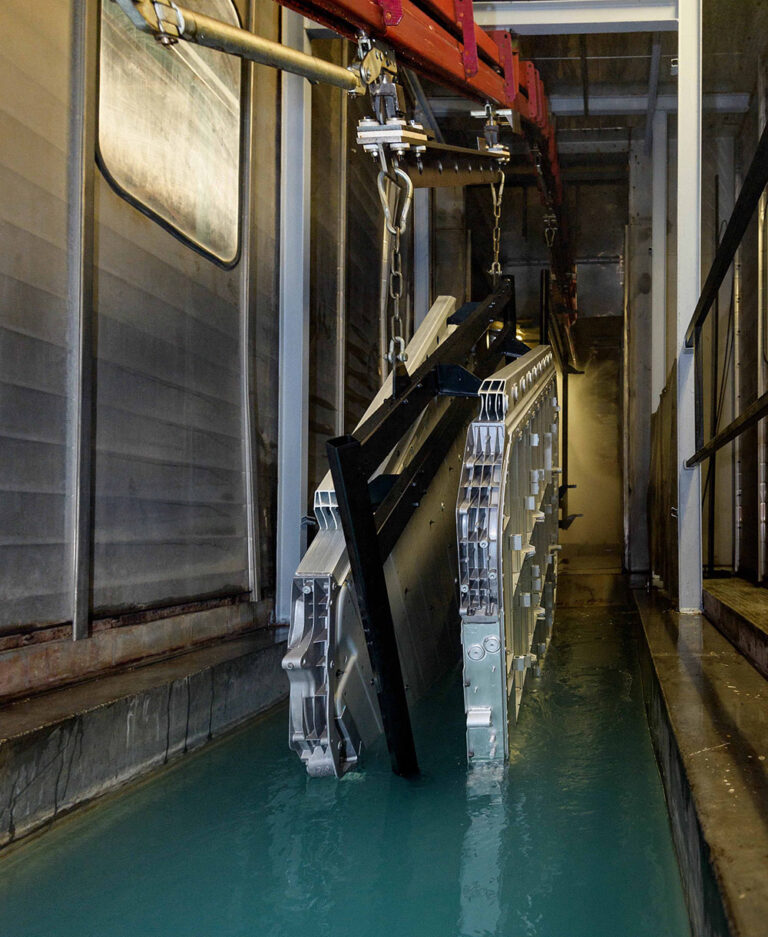
If your paint doesn’t reach the inside of a car door or a hollow tube, your e-coat line is failing. This ability to coat deep, shielded areas is what we call “throwing power.” Most coating defects happen because the electrical current follows the path of least resistance.
The Science of Current Distribution
Electricity behaves like water; it takes the easiest route. Without the right anode placement, the exterior of your part gets too much paint while the interior stays bare. You must position your anode cells to “push” the ions into those hard-to-reach cavities.
Optimizing Anode-to-Workpiece Distance
Distance matters. If the anode is too close, you get “burning” or ruptures on the film surface. If it is too far, the resistance increases and the paint won’t stick. For a high-speed e-coat line, we recommend a consistent gap that balances voltage and film build.
Solving the “Starvation” Issue
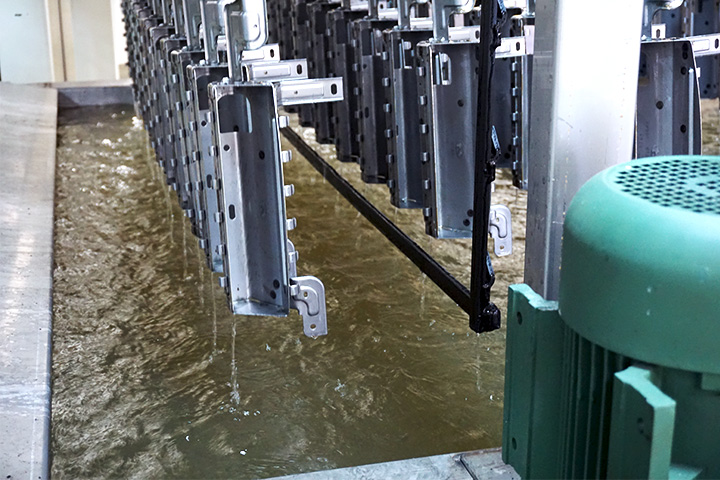
When multiple parts pass through the tank at once, they can “starve” each other of current. We solve this by adjusting the density of the anode cells along the tank walls. By fine-tuning this layout, you ensure every square inch of the metal receives a uniform protective layer, even at high production speeds.
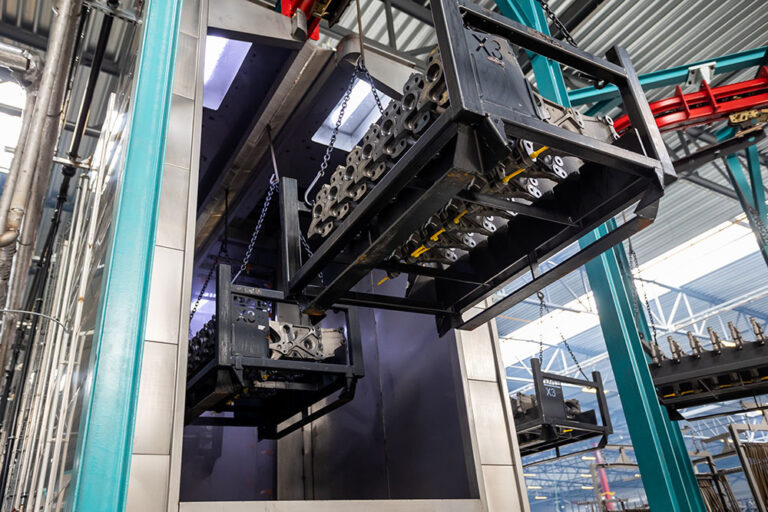
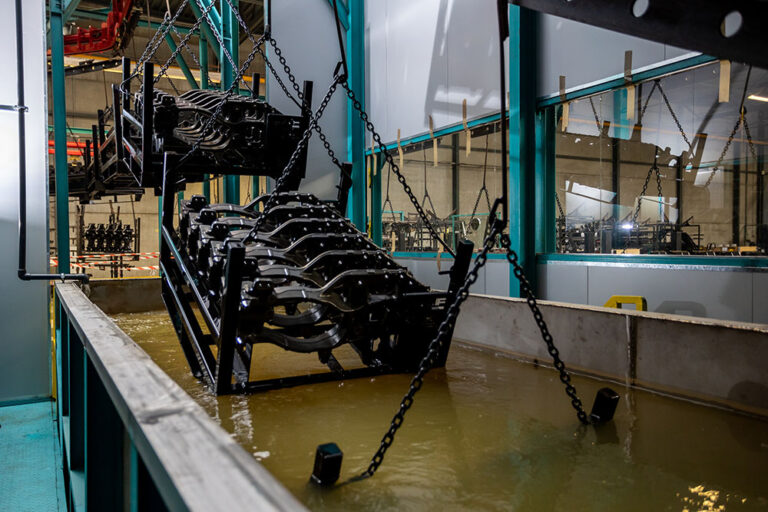
Membrane Technology: Maintaining Bath Stability
The membrane is the invisible filter that keeps your chemistry in balance. Without a high-quality ion-exchange membrane, the acid levels in your tank will spike. This destabilizes the paint and leads to rough, grainy finishes on your products.
The Role of Anolyte Circulation
In an active e-coat line, the coating process releases acid near the anodes. If this acid stays in the tank, it attacks the freshly deposited paint. Anolyte circulation systems pull this acid away through the membrane. You must maintain a steady flow rate to ensure the pH level stays within the “sweet spot” for your specific paint chemistry.
Choosing the Right Ion-Exchange Membrane
Not all membranes are equal. Some wear out quickly when exposed to aggressive solvents or high voltages. You need a membrane with high mechanical strength and low electrical resistance. A durable membrane ensures that the current flows easily into the e-coat line without generating excess heat, which saves on cooling costs.
Spotting Membrane Fouling
Over time, minerals and paint particles can clog the membrane pores. We call this “fouling.” When this happens, your conductivity drops, and your rectifier has to work harder to maintain the same film build. Regular monitoring of the anolyte’s clarity and conductivity will tell you exactly when the e-coat line needs a membrane check-up before quality drops.