Electrocoating is the gold standard for modern industrial finishing. It provides unmatched corrosion resistance and covers every corner of a complex metal part. However, even the best systems face a frustrating challenge: coating cracking.
These cracks are more than just a visual defect. They weaken the protective barrier and lead to early rust or part failure. To fix this problem, we must look beyond the surface. We need to understand the physics and chemistry happening inside the electrocoating bath and the curing oven. Let me explain the science behind film failure and why these cracks form in the first place.

The Fundamentals of Film Formation in Electrocoating
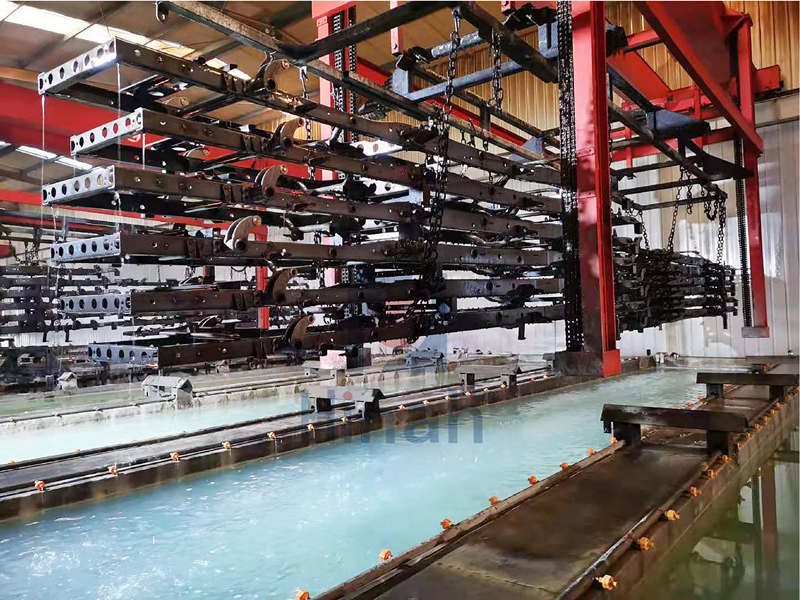
The electrocoating process starts when charged paint particles move toward the metal substrate. This movement, called electrophoresis, builds a “wet” layer on the surface. At this early stage, the coating is not yet a solid shield. Instead, it is a collection of individual particles.
The next stage is the coalescence phase. This is where the particles must fuse together into a smooth, continuous matrix. If the particles do not bond properly, the film becomes weak. Even before the part enters the oven, internal stresses begin to build. The way the electrocoating film dehydrates and settles determines its final strength. If the film develops tiny gaps during this phase, those gaps will eventually grow into visible cracks.
Primary Scientific Causes of Cracking in Electrocoating
- Excessive Film Build
A thicker coating does not always mean better protection. When an electrocoating layer grows too thick, it creates internal tension. As the film dries and shrinks, this tension pulls the particles apart. High voltage or long immersion times often cause this “over-build.” The resulting deposit is dense but brittle, making it much more likely to crack under stress.
- Curing Stress and Thermal Expansion
The metal substrate and the electrocoating film expand at different rates. When the part enters the curing oven, the heat forces these materials to stretch. If the film loses its elasticity too quickly, it cannot keep up with the metal’s movement. This mismatch leads to “over-baking,” where the chemical bonds become too rigid. Instead of flexing, the coating snaps and forms visible fissures.
- Bath Chemistry and Solvent Balance
The electrocoating bath relies on a precise balance of solvents and pigments. Coalescing agents (solvents) allow the paint particles to flow and merge smoothly. If the solvent level is too low, the film stays “tight” and fails to bridge small gaps. Similarly, too much pigment weakens the polymer structure. Without enough resin to bind the pigments together, the final finish lacks the strength to resist cracking.
How to Identify Crack Patterns?
- Mud-Cracking
This pattern looks like a dried riverbed. It usually happens when the electrocoating film dries too fast before it reaches the oven. High solids in the bath or aggressive air flow in the flash-off area cause this. The surface skin hardens while the bottom layer is still wet, creating a network of fine cracks.
- Stress Cracking at Geometric Concentrations
Cracks often appear around welds, sharp edges, or corners. These areas concentrate physical stress as the metal cools. In an electrocoating system, the film is often thinner or under more tension at these points. Because the coating cannot stretch, it splits along these high-pressure lines.
- Micro-cracking and Reticulation
Sometimes, cracks are too small to see without a microscope. This “micro-cracking” occurs when the chemical cross-linking is uneven. Although the finish looks smooth, these tiny holes allow moisture to reach the metal. This failure ruins the primary goal of electrocoating: long-term corrosion salt spray resistance.