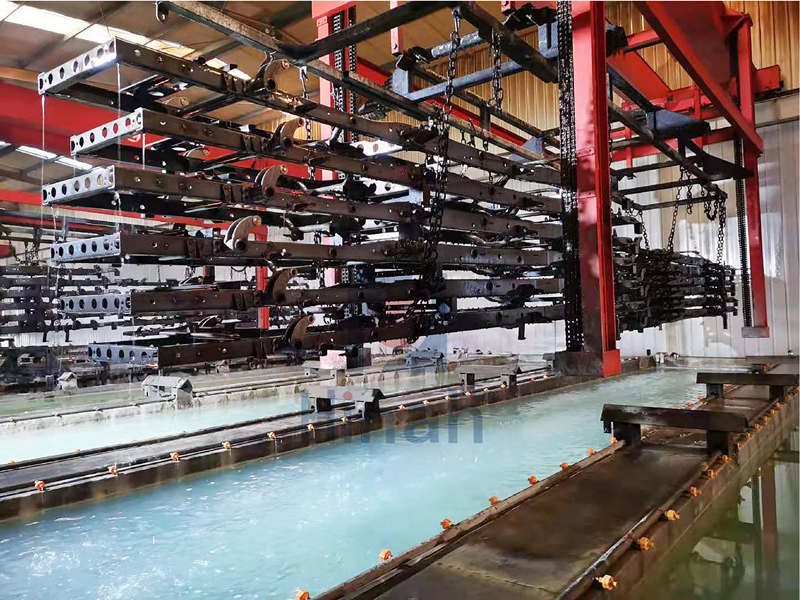
An e-coat tank typically needs replacement every 10 to 20 years. In well-maintained production lines, it may last over 20 years. In harsh operating conditions, replacement may be necessary in as little as 8 to 10 years. The actual lifespan depends on tank material, bath chemistry, production volume, and maintenance quality.
If your e-coat tank shows severe corrosion, repeated leakage, or rising repair costs, replacement is often more cost-effective than continued repairs.
An e-coat tank is one of the most important parts of an electrophoretic coating line. It holds the coating bath and directly affects coating quality, production stability, and operating cost. That is why many buyers ask: how often should it be replaced?
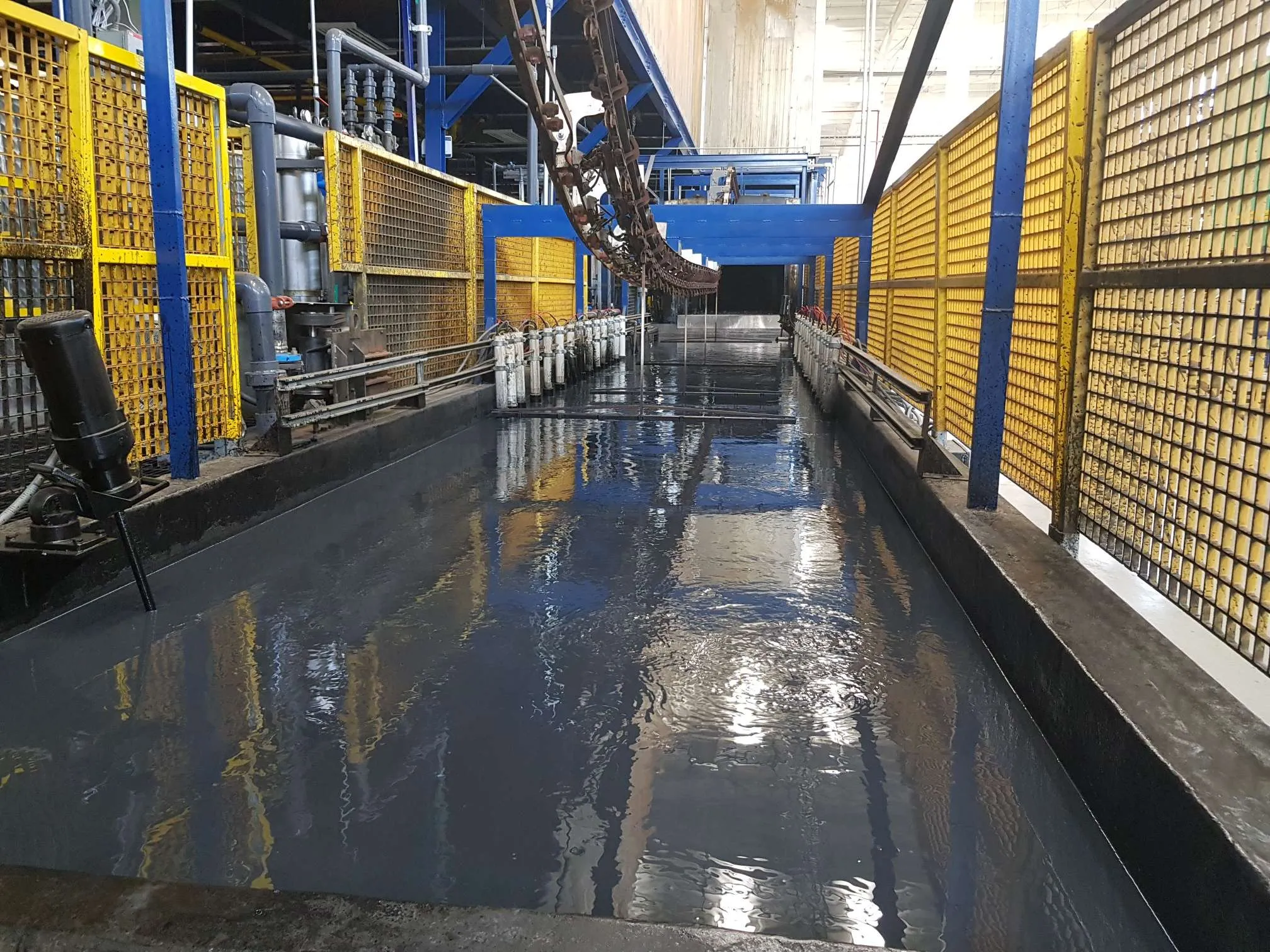
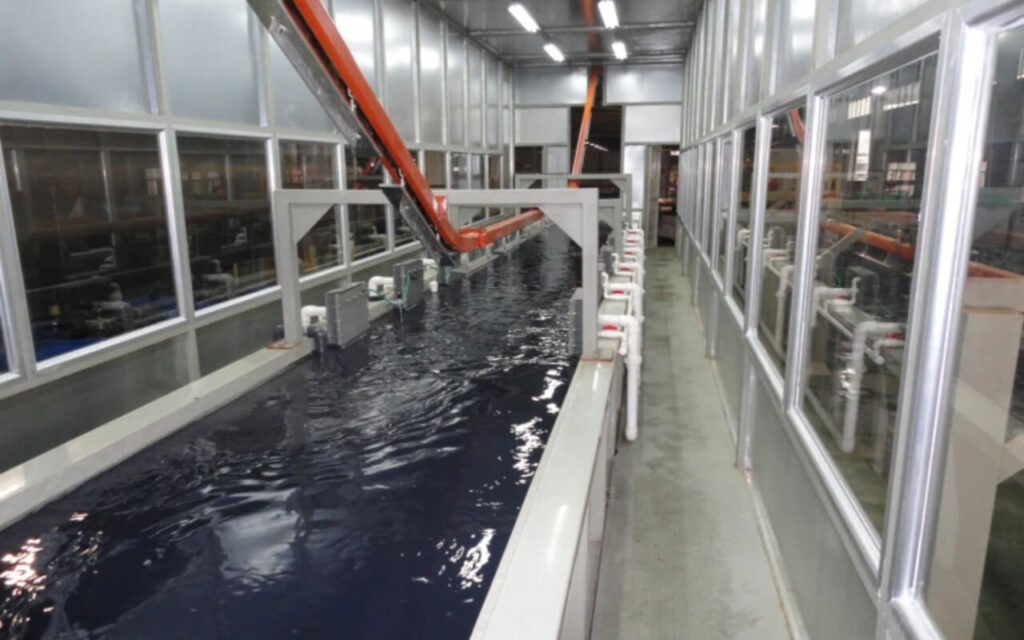
What Affects Electrocoating Tank Lifespan?
Several factors determine how long an e-coat tank will last.
Tank Material
Tank material matters first. Stainless steel tanks usually last longer because they resist corrosion better. Carbon steel tanks cost less, but they may wear faster if the lining gets damaged.
Many manufacturers also use PVC, PP, or FRP linings to protect the inner surface. The quality of these materials affects service life.
Chemical Exposure
The coating bath contains chemicals that slowly attack surfaces over time. High acidity, unstable pH, or poor bath control can speed up corrosion.
If your process runs continuously, the tank faces constant chemical stress. This naturally increases wear.
Production Volume
A line running 24/7 will age faster than a line running one shift per day.
Heavy production means:
- more chemical circulation
- more temperature fluctuation
- more pump and filtration cycles
All of these increase stress on the system.
Signs Your E-coat Tank Needs Replacement
An e-coat tank rarely fails without warning. Most tanks show clear signs before replacement becomes necessary.
Watch for these issues:
- Visible rust or corrosion
- Cracks in the lining
- Frequent leakage
- Uneven bath temperature
- Coating defects with no clear process cause
If coating quality starts dropping while voltage, pH, and paint concentration stay normal, the tank may be part of the problem.
Small damage does not always mean replacement. Sometimes repair is enough.
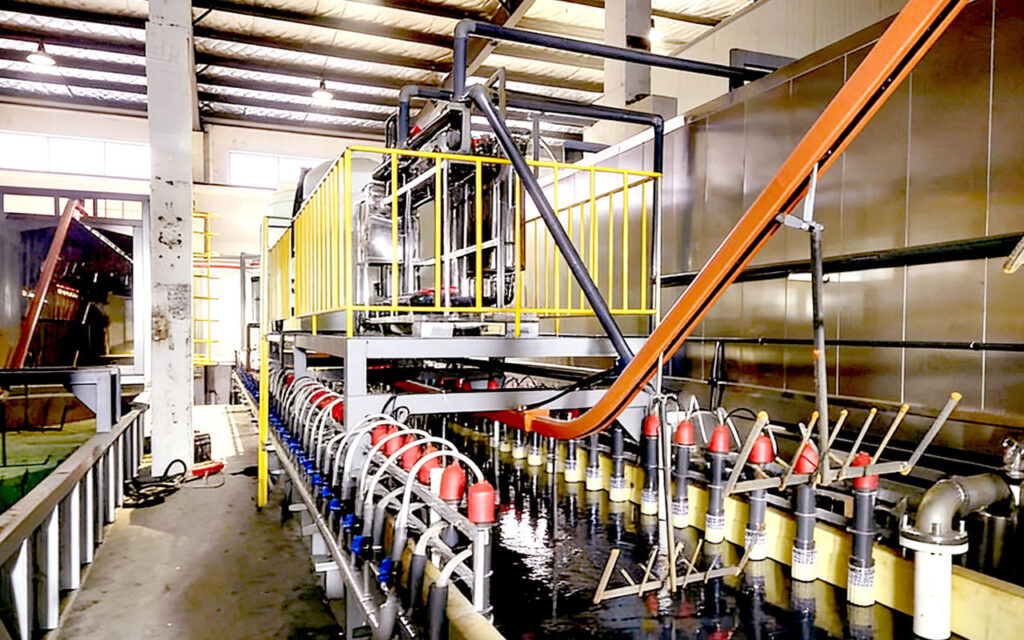
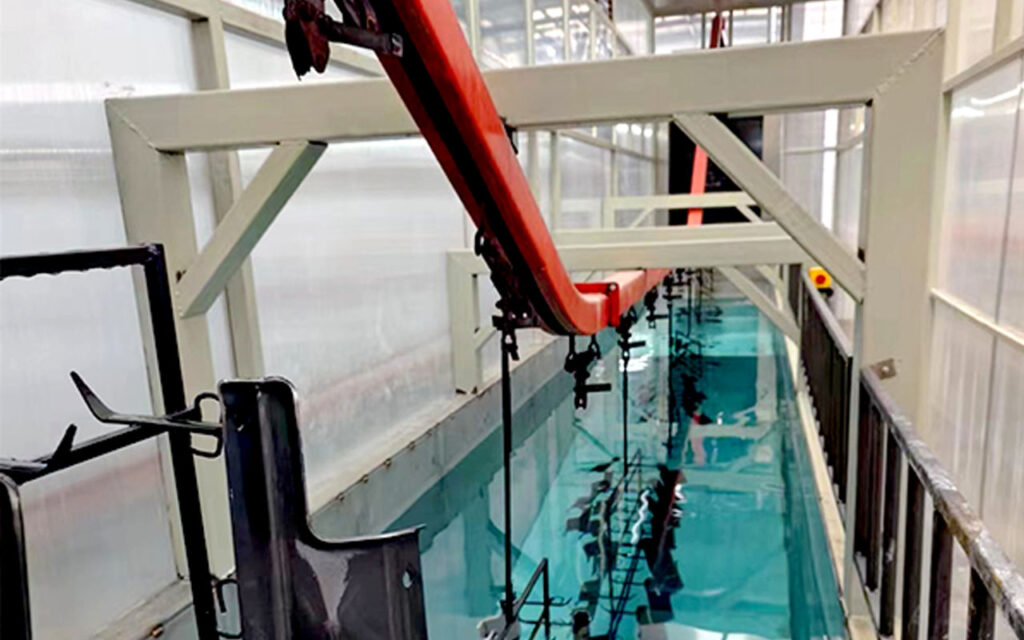
When Can an E-coat Bath Be Repaired?
Not every issue requires a new e-coat tank.
Minor corrosion, localized cracks, or worn linings can often be repaired during scheduled maintenance. Relining the tank may restore performance at a much lower cost than full replacement.
Repair works best when:
- damage stays local
- structural strength remains good
- leaks are small and controllable
If the tank frame remains strong, repair is usually worth considering.
When Should an E-coat Bath Be Replaced?
An e-coat tank should be replaced when repairs no longer solve the problem.
Replacement becomes the better choice when:
- corrosion affects large areas
- leaks return repeatedly
- structural deformation appears
- maintenance cost keeps rising
A good rule is simple: if yearly repair costs become too high, replacement often saves money in the long run.
Many factories choose replacement during line upgrades. This reduces downtime and improves efficiency at the same time.
How to Extend E-coat Tank Life?
Good maintenance can add years to an e-coat tank.
Here are practical ways to extend service life:
Inspect Regularly
Schedule visual inspections for corrosion, cracks, and lining wear.
Early detection prevents major failures.
Control Bath Chemistry
Keep pH, conductivity, and temperature stable.
Poor chemical control damages both coating quality and equipment.
Clean on Schedule
Sludge buildup can create local corrosion and reduce circulation efficiency.
Regular cleaning helps prevent this.
Check Pumps and Filters
Poor circulation creates uneven chemical exposure inside the tank.
Stable flow reduces stress on the system.
Final Thoughts
So, how often should an e-coat tank be replaced?
In most cases, every 10 to 20 years is a realistic range. Some tanks last longer with proper maintenance. Others need replacement much earlier due to corrosion or heavy production.
The key is not to focus only on age. Pay attention to condition, repair frequency, and coating performance. These indicators tell you far more than a simple number.