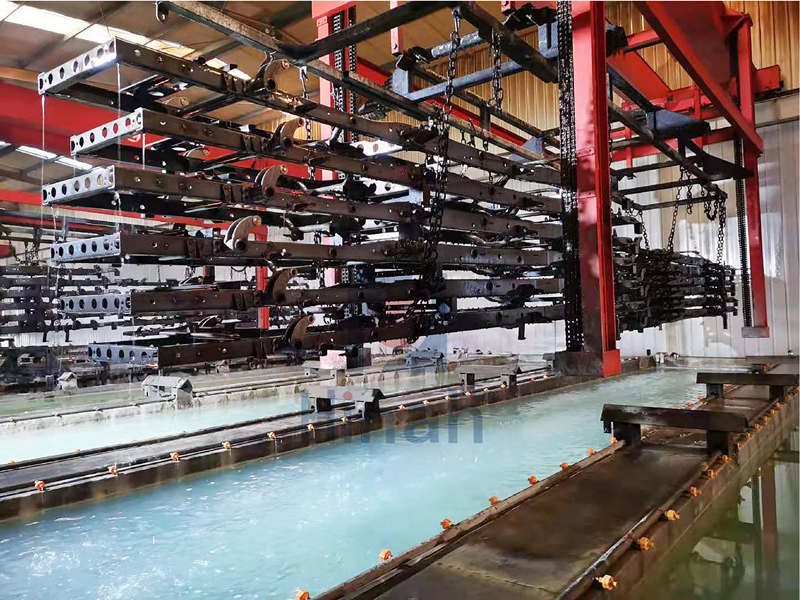
The complete electrophoretic coating process usually takes 30 to 90 minutes, depending on part size, coating requirements, pretreatment quality, and curing conditions. In most industrial production lines, the coating stage itself lasts only a few minutes. However, cleaning, pretreatment, rinsing, drying, and curing add significant time to the overall cycle.
For manufacturers that require high corrosion resistance and consistent coating quality, understanding the timing of each stage helps improve production planning and equipment selection.
What Stages Make Up an E Coating Line?
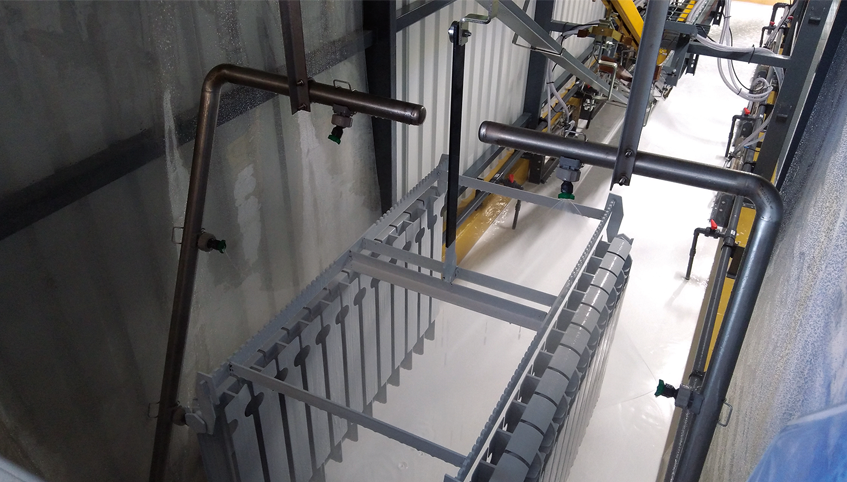
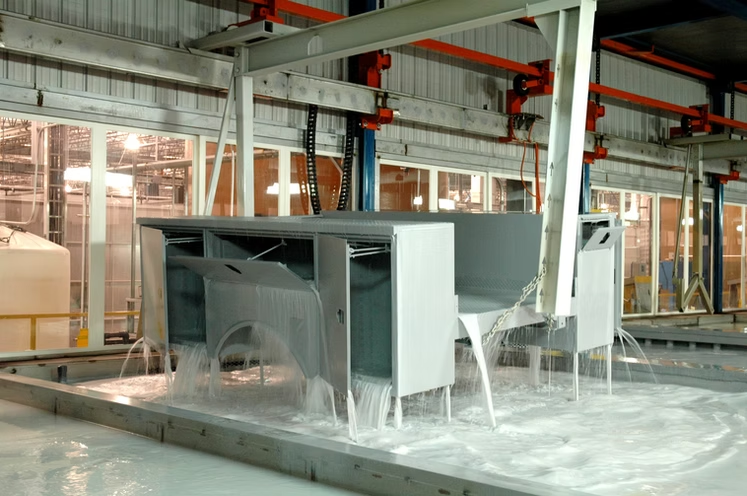
An electrophoretic coating process consists of several connected steps. Each stage contributes to coating quality and overall production efficiency.
Typical process flow:
- Pretreatment
- Water rinsing
- Electrophoretic coating
- Ultrafiltration rinsing
- Final rinsing
- Drying and curing
- Cooling and unloading
The total process time depends on how long products remain in each section.
How Long Does Pretreatment Take in Electrophoretic Coating?
Pretreatment often requires the most time in an electrophoretic coating line.
This stage removes oil, dust, rust, and other contaminants from the surface. A clean surface helps the coating bond properly and improves corrosion resistance.
Common pretreatment steps include:
- Degreasing
- Water rinsing
- Surface conditioning
- Phosphating or zirconium treatment
- Final rinsing
Most pretreatment systems require 10 to 30 minutes. The exact duration depends on material type and cleanliness requirements.
Steel automotive parts often need longer treatment times than simple metal components.
How Long Does the Electrophoretic Coating Stage Take?
The actual electrophoretic coating stage is relatively short.
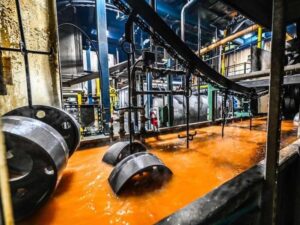
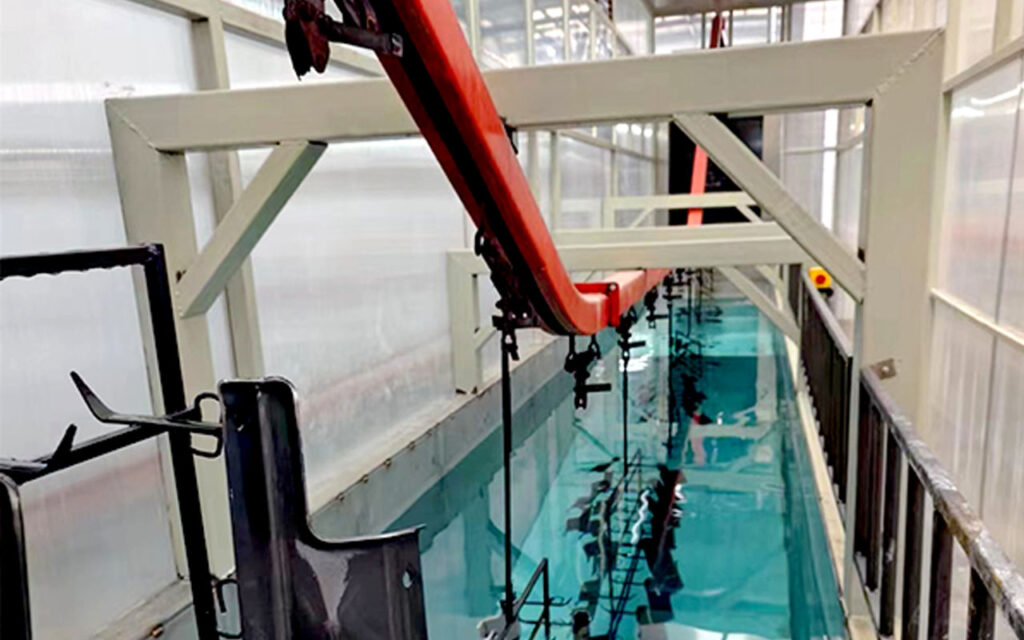
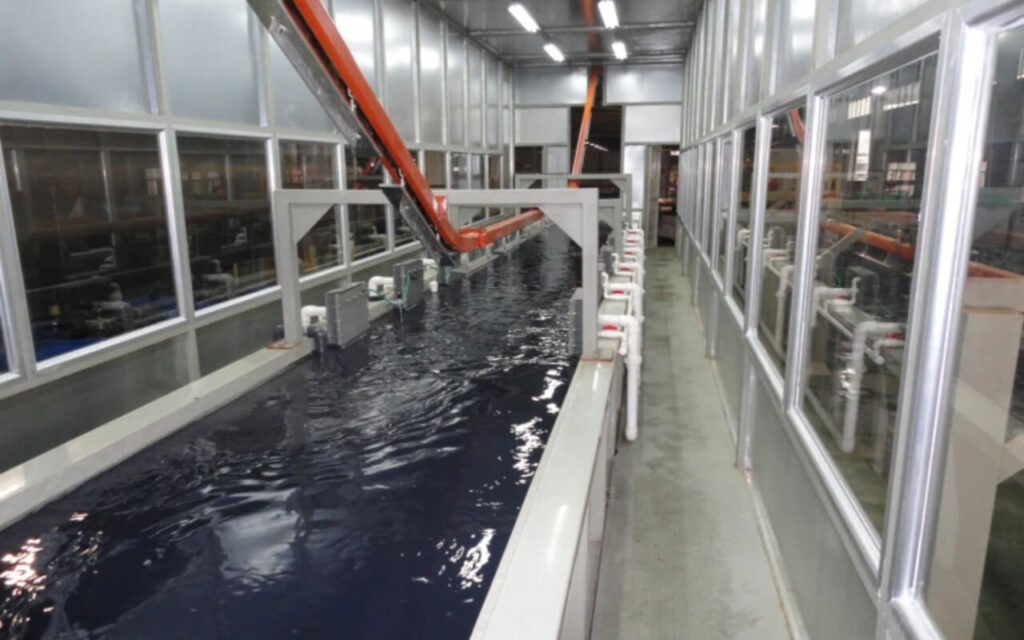
During this process, parts enter the coating tank and an electrical current attracts paint particles to the metal surface. The coating forms evenly across the entire part, including complex shapes and recessed areas.
In many production lines, immersion time ranges from 2 to 5 minutes.
Several factors influence coating time:
- Required film thickness
- Voltage settings
- Paint chemistry
- Part geometry
- Surface area
Higher voltage can increase deposition speed, but excessive voltage may affect coating quality. Manufacturers typically balance speed and performance to achieve stable results.
How Long Do Rinsing Stages Take After Electrophoresis Coating?
Rinsing follows immediately after the coating tank.
These rinses recover excess paint and improve surface appearance. Many modern systems use ultrafiltration technology to reduce paint waste and lower operating costs.
Typical rinsing stages include:
- Ultrafiltration rinse
- Permeate rinse
- Final DI water rinse
Combined rinsing time usually ranges from 3 to 10 minutes.
Although these steps seem simple, they play an important role in achieving a smooth and uniform finish.
How Long Does Curing Take in E-Coating Line?
Curing is often the longest single stage after pretreatment.
Once coating deposition finishes, parts enter a curing oven. Heat causes the coating film to cross-link and develop its final mechanical properties.
Typical curing temperatures range from 160°C to 200°C.
Most curing cycles require 15 to 40 minutes.
Several factors affect curing duration:
- Coating formulation
- Film thickness
- Product mass
- Oven efficiency
- Required performance standards
Heavy steel components generally need more heating time than lightweight metal products.
Manufacturers should follow coating supplier recommendations to ensure proper curing and long-term durability.
What Factors Affect Coating Process Time?
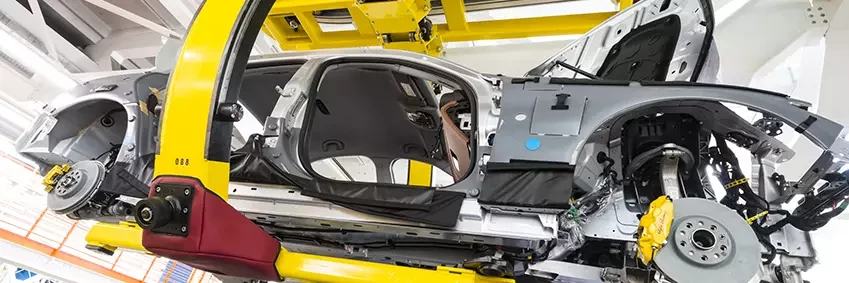
Several variables influence the total process duration.
Product Size and Shape
Large products often require slower conveyor speeds. Complex shapes may also need additional rinsing or curing time.
Surface Condition
Dirty or rusty surfaces need more extensive pretreatment. Better incoming material quality usually shortens processing time.
Coating Specifications
Higher corrosion resistance requirements may require thicker coatings or longer curing cycles.
Production Volume
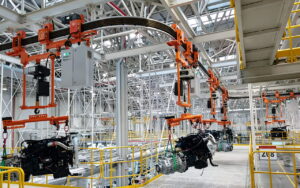
High-volume production lines often use automated conveyors and optimized layouts. These systems can reduce bottlenecks and improve throughput.
Equipment Design
A well-designed electrophoretic coating line improves material flow and minimizes idle time between stages.
How Can I Reduce Coating Processing Time?
Reducing cycle time does not always require higher line speed. Process optimization often delivers better results.
Manufacturers can improve efficiency by:
- Using automated pretreatment systems
- Optimizing tank layouts
- Improving conveyor design
- Maintaining stable bath chemistry
- Selecting energy-efficient curing ovens
- Monitoring process parameters continuously
Modern automated lines can achieve faster production while maintaining coating quality and corrosion resistance.
Is Faster Electrophoretic Coating Always Better?
Not necessarily.
Many manufacturers focus on reducing production time, but coating quality should remain the primary goal.
If operators shorten pretreatment or curing stages too much, problems may appear later, including:
- Poor adhesion
- Reduced corrosion resistance
- Surface defects
- Premature coating failure
A balanced process usually delivers the best long-term results. Consistent quality often saves more money than a slightly faster production cycle.
Conclusion
A typical electrophoretic coating process takes 30 to 90 minutes from pretreatment to final curing. The coating stage itself usually lasts only a few minutes, while pretreatment and curing account for most of the total production time.
Factors such as product size, coating specifications, equipment design, and production volume all influence the final cycle length. Manufacturers that invest in efficient line design and proper process control can improve productivity without sacrificing coating performance.
When evaluating a new electrophoretic coating line, it is important to consider not only processing speed but also coating quality, corrosion protection, and long-term operating efficiency.