Designing an automotive e-coating line is a massive undertaking. For automotive bodies and heavy-duty chassis parts, you cannot afford to guess your facility requirements. Underestimating your physical space or power capacity will halt your project, while over-engineering will drain your capital.
Whether you are planning a new factory layout or upgrading an existing facility, you must calculate your space and utility footprints early. Here is a detailed breakdown of the exact physical space and electrical power a standard automotive e-coating line requires to run efficiently.
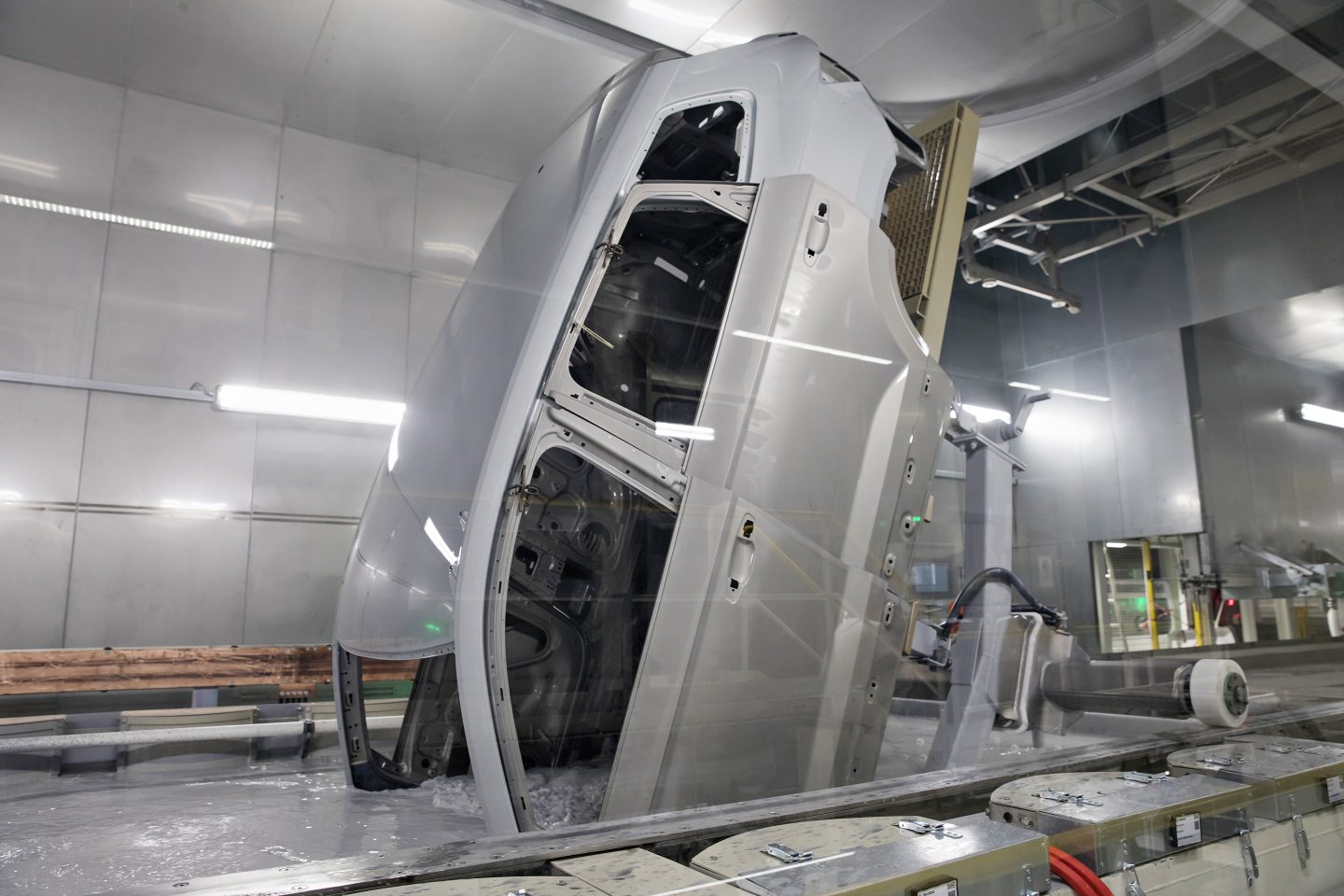
Physical Space Requirements for an Automotive E-Coating Line
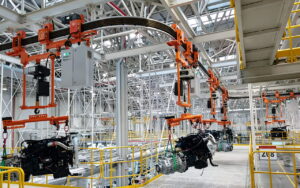
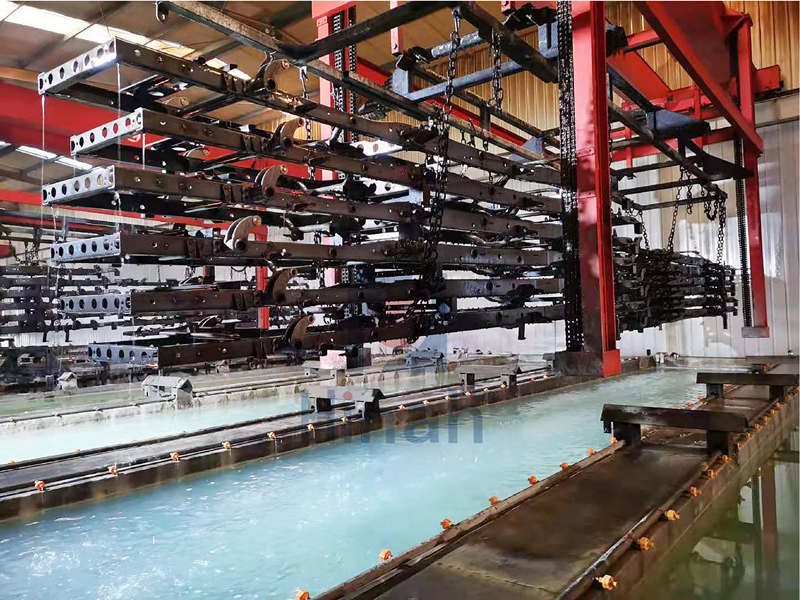
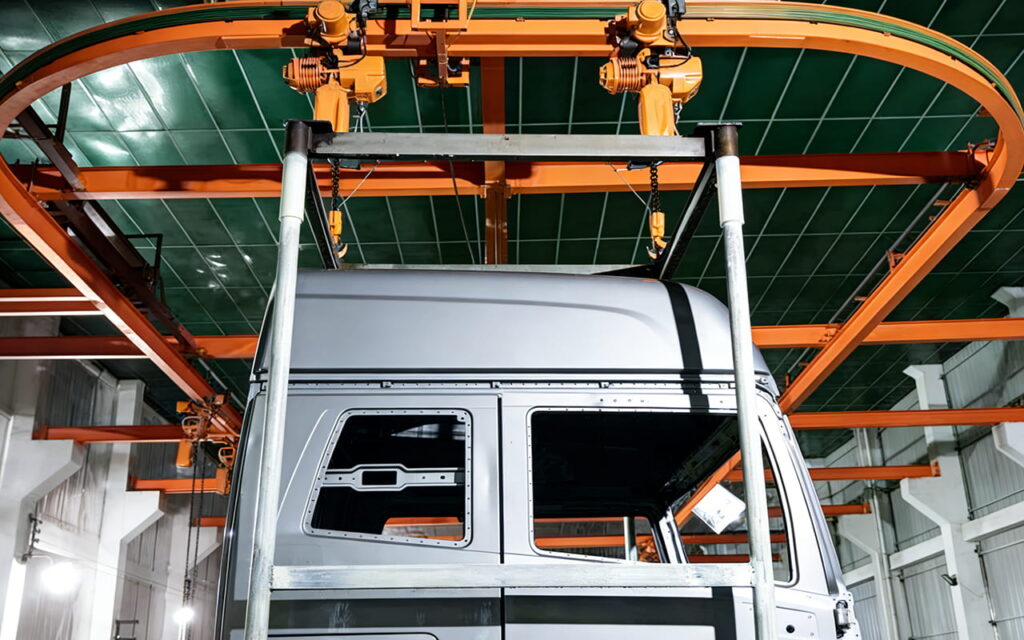
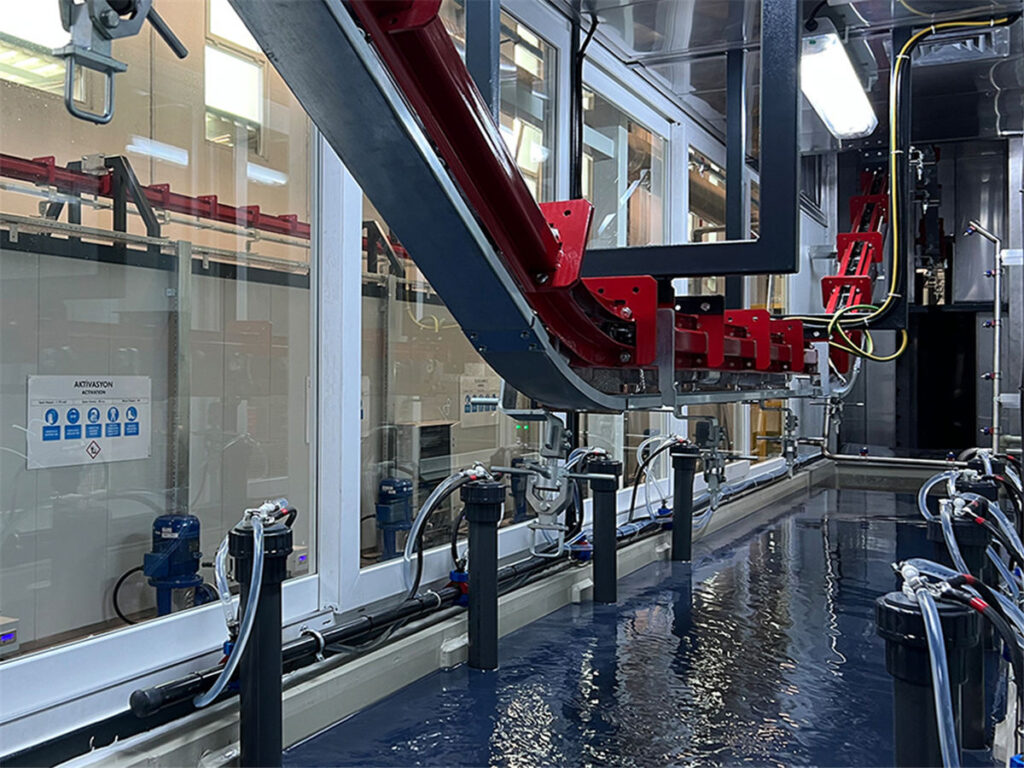
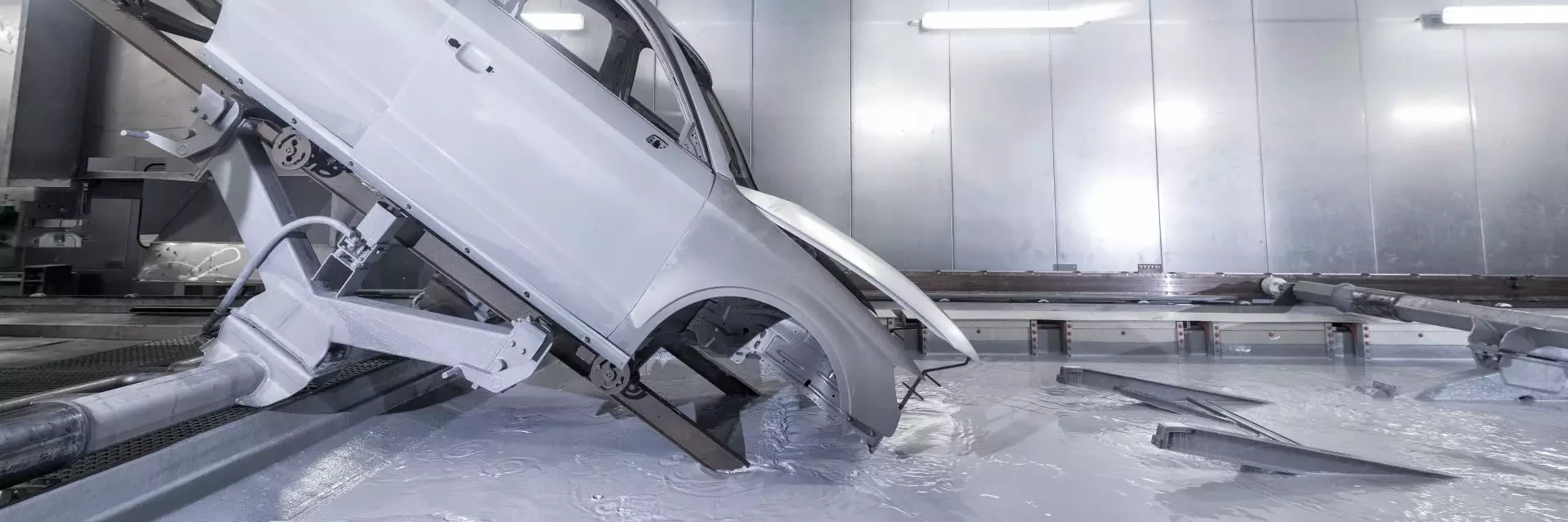
An automotive e-coating line is typically a long, continuous system. It relies on monorail conveyors or indexing cranes to move large automotive frames through 10 to 14 sequential process tanks.
For a medium-capacity system that processes 15 to 20 car bodies or chassis per hour, you should prepare for the following footprint:
- Length: 80 to 120 meters (260 to 390 feet). The length depends heavily on your required chemical immersion times and conveyor speed.
- Width: 8 to 12 meters (26 to 40 feet). This measurement covers only the process tanks and conveyor track. It does not include side-mounted auxiliary equipment.
- Height: 6 to 9 meters (20 to 30 feet). Your building needs high clearance because cranes must lift large parts completely out of deep tanks.
Space Allocation by Process Zone
To help you visualize your factory floor, we can break down the line into four major zones:
| Process Zone | Average Length | Ceiling Height | Key Equipment Included |
| Pre-treatment (Degreasing & Phosphating) | 30 – 40 meters | 5 – 6 meters | Spray tunnels, immersion tanks, heat exchangers |
| E-Coat Tank & Post-Rinses | 15 – 25 meters | 6 – 8 meters | Main e-coat tank, UF (ultrafiltration) skids, anolyte systems |
| Curing Oven | 25 – 40 meters | 5 – 7 meters | Elevated bake oven, cooling tunnel, air burners |
| Auxiliary Equipment Bay | Parallel run (4 – 6m wide) | 4 meters | DI water systems, chillers, wastewater treatment (ETP) |
Power Consumption: Where Does the Energy Go?
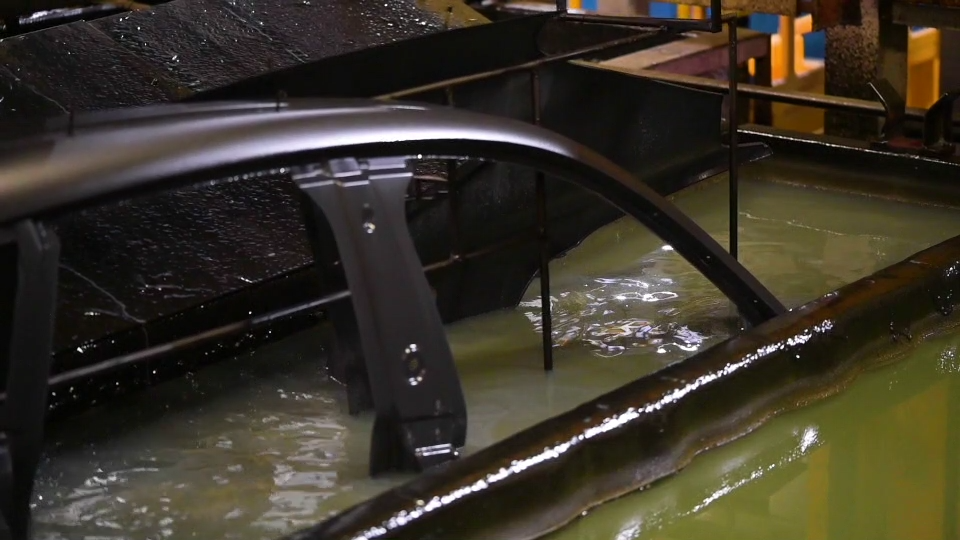
E-coating is an energy-intensive process. It relies on a strong direct current (DC) field to deposit paint ions onto the metal, followed by high-temperature baking to cure the coating.
A standard mid-sized automotive e-coating line requires a total connected electrical load of 800 kW to 1,500 kW. Fortunately, your actual running load will usually hover around 60% to 70% of this capacity.
Major Electrical Consumers
- The Rectifier: This is the heart of your e-coat tank. Automotive coatings require 250V to 400V of DC power, pulling 1,000A to 1,500A of current. This system alone consumes 250 kW to 400 kW.
- Chiller Units: The chemical reaction in the e-coat tank generates significant heat. You must keep the paint bath at a steady 28°C to 32°C (82°F to 90°F). Chillers use 100 kW to 200 kW to remove this heat.
- Pumps and Agitation: E-coat paint will settle and spoil if it stops moving. Therefore, your circulation pumps must run 24/7, consuming 80 kW to 150 kW continuously.
- Curing Oven Fans: Although most factories use natural gas to heat the oven to 180°C (356°F), the heavy-duty recirculation fans and air exhausts still require 150 kW to 300 kW of electrical power.
Integrating a Secondary Powder Coating Line for Maximum Protection
Many automotive manufacturers apply a dual-layer finish to chassis parts. They use e-coat as a highly corrosion-resistant primer, and then they add a topcoat using a powder coating line. This combination easily passes 1,000-hour salt spray tests.
However, adding a powder coating line next to your e-coat line introduces unique layout challenges:
- Avoid Shared Curing Ovens: Do not use the same oven for both processes. The off-gassing from the curing e-coat can contaminate your powder coating chemistry and ruin the finish.
- Design a Smart Buffer Zone: E-coat lines use heavy, specialized hangers. A powder coating line often uses lighter, faster conveyors. You must design a physical transfer area where workers or robots can transfer parts between the two conveyor systems.
Crucial Utility Inputs for Your Powder Coating Line and E-Coat System
Electricity and physical space are only part of the equation. Your auxiliary utilities also demand dedicated space on your factory floor.
Water Treatment (DI Water): E-coating requires massive volumes of pure water. You will need a Reverse Osmosis (RO) and Deionization (DI) setup that can supply 3 to 5 tons of pure water per hour.
Compressed Air: Your pre-treatment pneumatic valves, paint agitation systems, and the spray guns on your powder coating line require clean, dry, oil-free air. Plan for a dedicated compressor room housing at least a 22 kW screw compressor.
Ventilation and Exhaust: Pre-treatment stages release steam and mild chemical fumes, while ovens release curing byproducts. You must install overhead ductwork and environmental filtration units like regenerative thermal oxidizers (RTO).
Final Checklist for Your Factory Layout
When you plan your plant layout, never place your walls directly against the tanks. Always design a 1.5 to 2-meter maintenance corridor around all sides of the line. This space allows your team to service pumps, change filters, and clean tanks without shutting down the entire facility.
Additionally, you should place your main electrical substation as close to the rectifier and ovens as possible. Keeping these cable runs short reduces voltage drops and lowers your monthly utility bills. By planning these spatial and electrical boundaries early, you ensure a smooth installation and highly efficient daily operations.