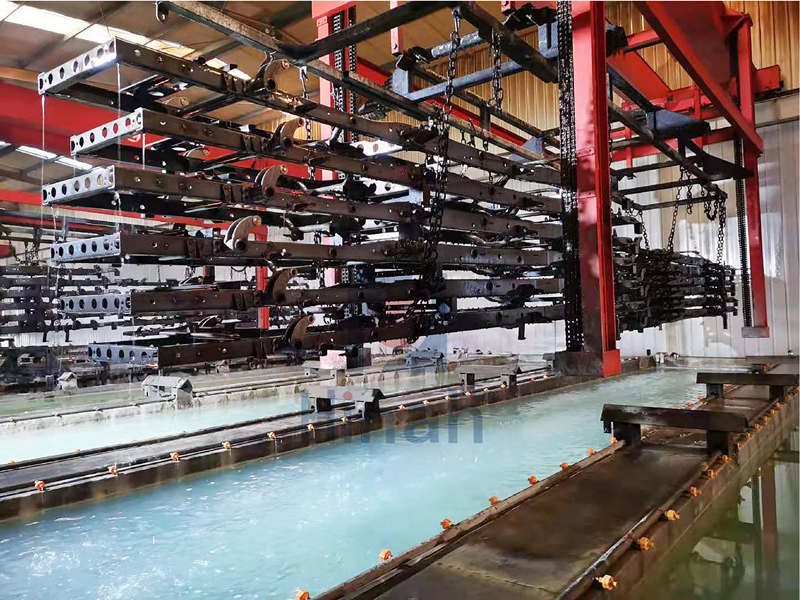
Cratering is one of the most frustrating defects in electrodeposition. You run your parts, and instead of a smooth, uniform finish, you get small, bowl-shaped depressions across the surface. These craters do more than just look bad. They break the protective paint film, expose the raw metal underneath, and trigger early rust. At its core, cratering happens because of surface tension. A tiny speck of contaminant on the part repels the wet paint during the deposition or baking phase. The paint pulls away from the speck, creating a crater. Usually, this issue comes down to two main culprits: poor pre-treatment or a dirty baking oven. Let’s look at exactly what triggers this problem on your e-coat line and how you can fix it without draining your production budget.
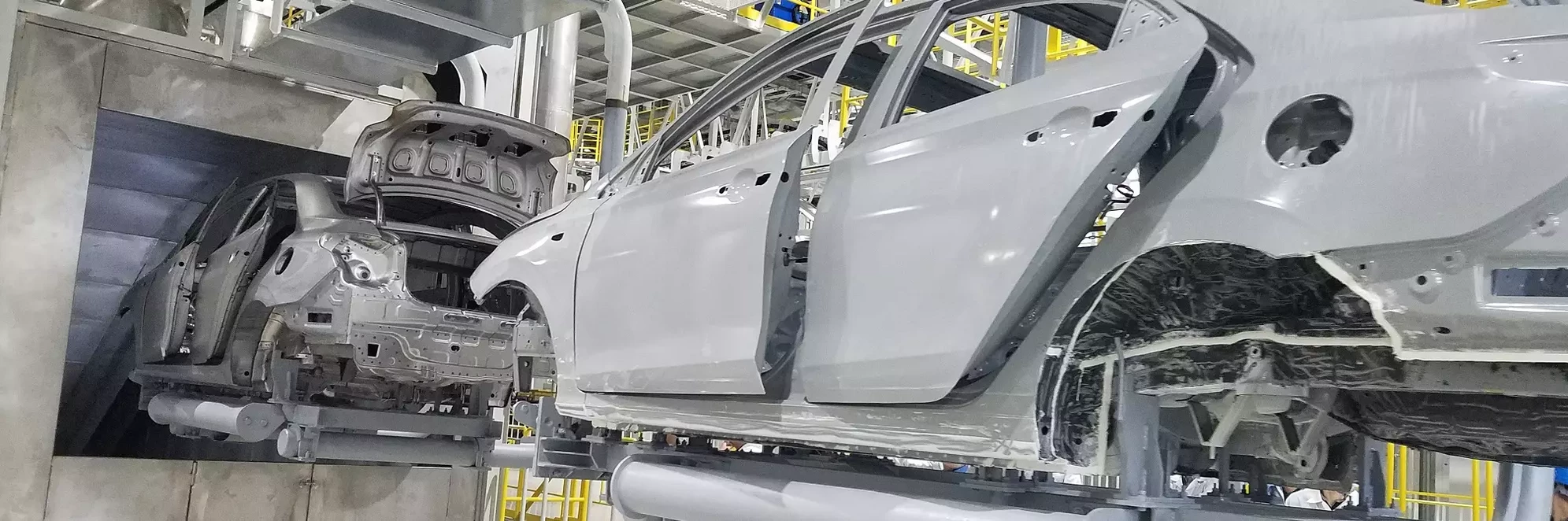
The Usual Suspects: Paint vs. Contamination
The Silicone Nightmare in Pre-Treatment
Invisible contaminants cause most craters. Silicone is the worst offender. A single drop of maintenance spray or a trace of operator cosmetics can ruin an entire batch.
Standard alkaline washes often fail to strip these heavy stamping oils and lubricants. When the steel leaves the pre-treatment stage with oily patches, the water-based paint cannot stick to those spots. The paint pulls back, leaves a ring, and forms a crater during the bake cycle.
Parameters Fighting Your E-Coat Line
Sometimes, your tank chemistry creates the defect. Low solvent levels are a common cause. Solvents give the wet paint film its flowability. If your solvent concentration drops below the minimum threshold, the paint cannot level out and heal itself before it hardens.
High voltage also triggers craters. Pushing your rectifiers too close to the paint’s electrical breakdown limit causes micro-sparking. These tiny electrical ruptures blow holes right through the wet film.
Finally, check your tank turnover rate. Low agitation creates stagnant zones in your e-coat line. The pigment settles out, disrupts the paint balance, and leads to surface defects.
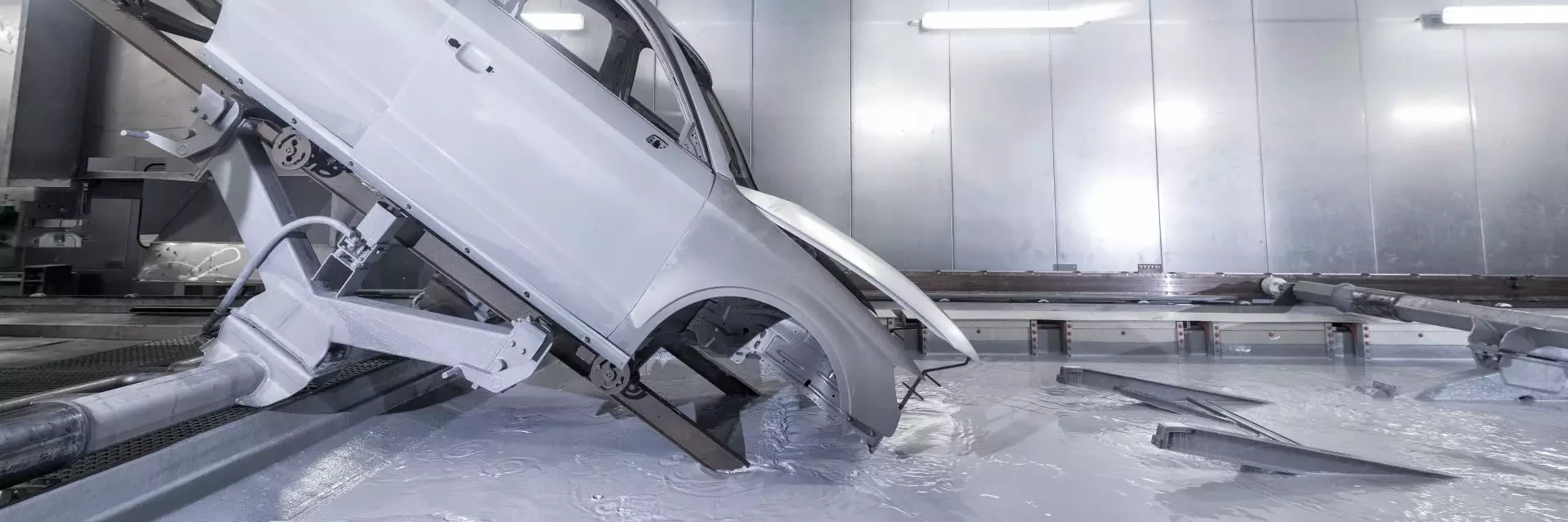
The Baking Trap: Oven and Air Failures
The Rain of Hydrocarbons
You can have a perfectly balanced paint tank and still get craters inside the curing oven. This happens because of oven condensation.
When you bake heavy structural steel or complex parts, the high heat volatilizes residual oils trapped in seams or pockets. These oil vapors rise to the cool oven ceiling, condense into liquid drops, and fall back onto the curing parts. Each drop creates a permanent crater on the hot, hardening paint surface.
Blasting Defects Onto Wet Paint
The air you use right before the oven can also ruin your finish. Many plants use compressed air blow-off decks to remove excess water after the final rinse.
If your coalescing filters are old or saturated, oil-mist and moisture bypass the filtration system. The blow-off nozzles then blast microscopic oil droplets directly onto the wet paint film. The moment the part enters the oven, those oil spots reject the paint and turn into deep craters.
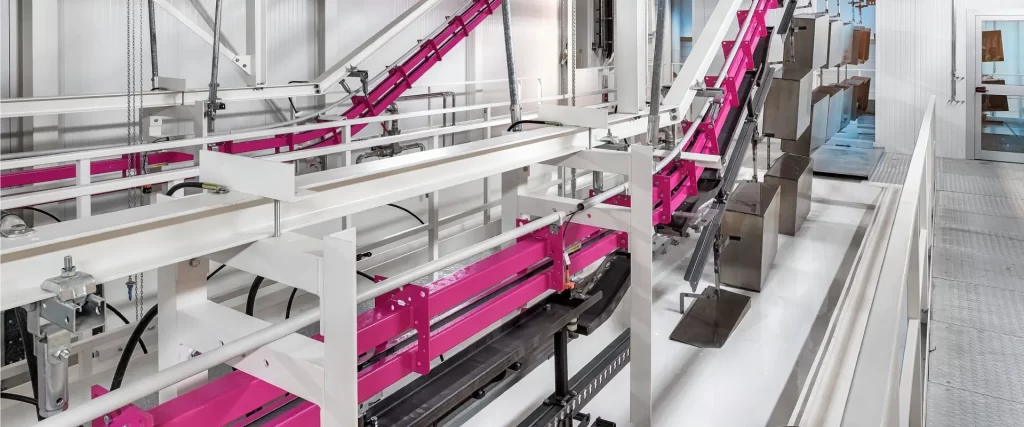
Eliminating Cratering Without Stopping Production
Quick Tests and Bath Adjustments
Do not guess where the problem is. Run a 30-second water break test at the exit of your pre-treatment stage. If the rinse water sheets off smoothly, your metal is clean. If the water breaks and beads up, you have an oil or silicone issue right there in your wash stages.
Next, check your tank data. Measure your solvent levels. Add the recommended leveling solvents immediately if your concentration falls below the supplier standard. Also, check your solid content. Keep it strictly within the 18% to 20% sweet spot to ensure proper film build and flow.
Hardening Your E-Coat Line Against Pollution
Clean your curing ovens regularly. Install multi-stage active carbon filters in your oven air loops. These filters trap oil vapors before they can condense and drip onto your production pieces. Change these filters on a strict schedule based on your baking volume.
Finally, protect the entire footprint of your e-coat line. Ban all silicone lubricants, aerosol maintenance sprays, and personal cosmetics from the coating area. Treat the line like a cleanroom. Controlling what enters your plant air is the only way to eliminate cratering for good.