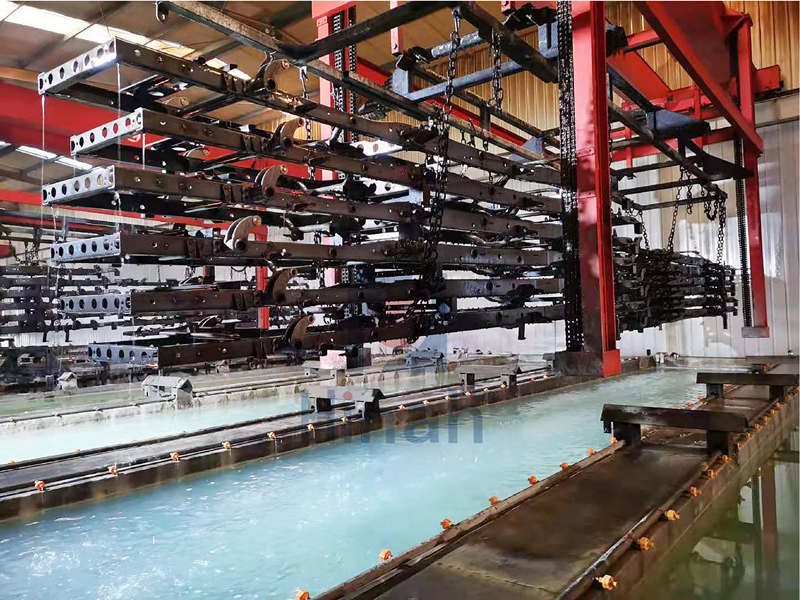
Metal finishing shops use a massive amount of water. In an e-coat line shop, the pre-treatment and electrocoating stages consume more water than any other process. Most of this water goes toward rinsing parts between chemical baths.
Every gallon of water down the drain costs you money twice. First, you pay for the fresh water coming into your facility. Second, you pay heavy hazardous waste fees to treat and discharge that same water. If your rinsing stages run with continuous, unmonitored overflows, you are throwing away active chemistry and driving up your utility bills.
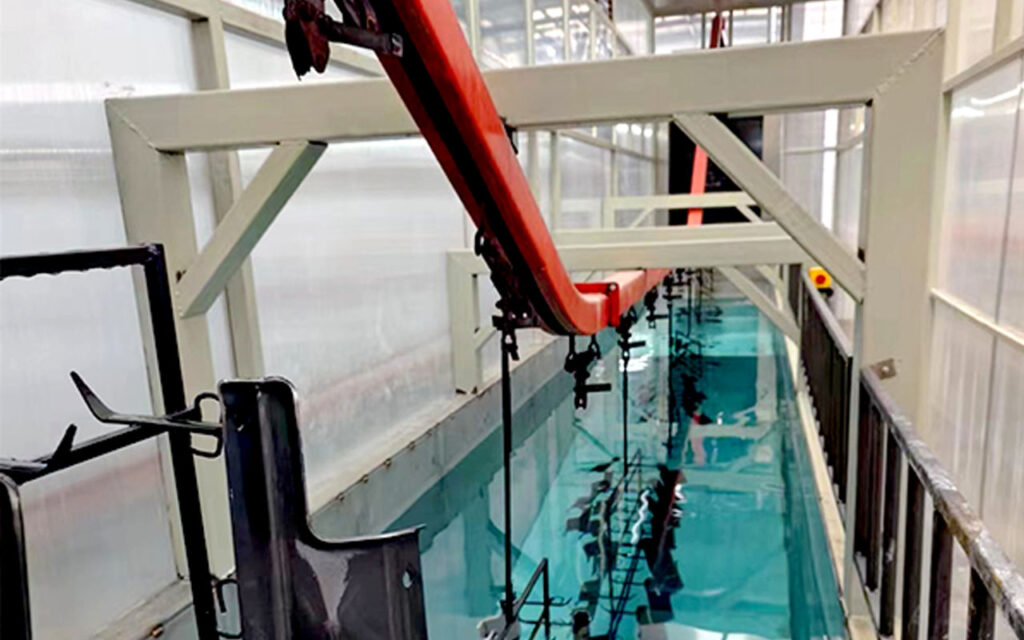
Where Does an Inefficient E-Coat Line Waste the Most Water?
To stop water waste in e-coat line, you must look at specific stages on the shop floor. Water loss usually happens because of poor drag-out control, incorrect tank plumbing, or unmonitored overflows.
The Pre-Treatment Stage
As parts move from degreasing tanks to acid baths, they carry chemicals on their surfaces. This is drag-out. If your hang times are too short, parts carry excessive chemicals into the rinse tanks. To keep the rinse water clean, operators often turn up the fresh water valves. This creates a massive, continuous overflow that floods the drain with polluted water.
Post-Electrocoat Rinsing
The rinsing stages immediately after the e-coat bath are critical. If you do not manage the water flow precisely, active paint chemicals wash directly into the waste stream. This does not just waste water. It also drains expensive paint solids that should stay inside the system.
Evaporation and Sludge Dewatering Losses
Water also disappears into thin air or leaves the factory in solid waste. High-temperature degreasing tanks lose water constantly through evaporation. Additionally, automated sludge separators pull water out of the system during the filtration process. If you do not recover this water, you must constantly pump fresh water into the line to maintain tank levels.
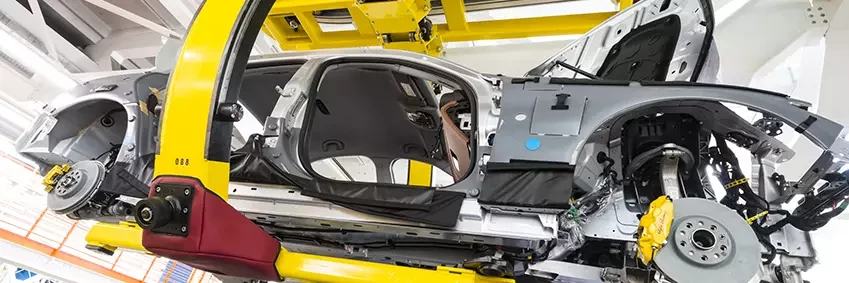
Engineering a Sustainable E-Coat Line: Core Water-Saving Technologies
You can stop this waste by upgrading your tank design and adding modern filtration equipment in your e-coat line. Three specific technologies can turn your water-wasting line into an efficient, closed-loop system.
Counter-Current Rinsing Cascades
Do not use fresh water for every rinse tank. Instead, connect your rinse tanks in a reverse-flow cascade. Fresh water enters only the very last rinse tank. This clean water then overflows backward into the previous tank, moving in the opposite direction of your parts. This simple plumbing change cuts fresh water demand by up to 50% without sacrificing cleanliness.
Ultrafiltration (UF) Closed-Loop Recovery
An ultrafiltration system acts as a barrier after the e-coat bath. The UF membrane separates the water and solvents (the permeate) from the heavy paint solids. You then pump this permeate back into the post-coat rinse tanks. This water washes the loose paint off the parts and carries it back into the main e-coat tank. This loop recycles both your water and your paint.
Reverse Osmosis (RO) Integration
For the final rinse stage, parts require highly pure, deionized water to prevent spots. Instead of buying fresh deionized water, install a Reverse Osmosis system. The RO unit takes the overflow water from earlier stages, forces it through high-pressure membranes, and removes the remaining chemical ions. This provides a steady supply of pure water directly from your existing waste stream.
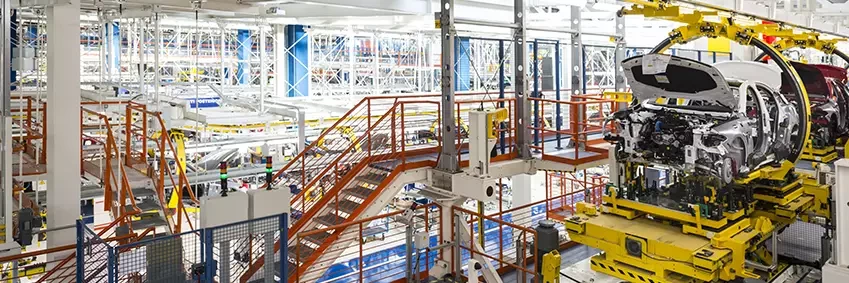
How to Implement Zero Liquid Discharge?
If you want to stop sending wastewater to the local treatment plant completely, you must implement a Zero Liquid Discharge system. This setup treats your heaviest waste streams on-site so you can reuse every drop.
Stage 1: Source Segregation & Hydraulic Balance
Never mix all your factory waste into one big pit. Alkaline cleaners, acid pickles, and electrocoat rinses require different treatments. Keep these streams separate from the start. This allows you to balance the water flow rates and target specific chemical contaminants without overloading your treatment equipment.
Stage 2: Heavy Metal Chemical Precipitation
Pre-treatment chemicals contain heavy metals like zinc, manganese, or iron phosphates. To remove them, pump the wastewater into a reaction tank and adjust the pH levels. The dissolved metals will bind together and drop to the bottom as solid particles. A filter press then squeezes the water out, leaving you with dry cakes and clean, clear water.
Stage 3: Thermal Vacuum Evaporation
Take the clear water from the precipitation stage and pump it into a vacuum evaporator. The machine boils the water at a low temperature, turns it into steam, and condenses it back into pure distilled water. You then pump this distilled water directly back into the e-coat line for reuse. Only solid, dry salt crystals remain for disposal.