For many coating applications, the biggest challenge is not putting parts into a tank — it is controlling how each part moves inside the coating process.
A large steel frame and a small metal component may need completely different dipping depths, immersion times, and handling methods. However, traditional conveyor systems usually move all parts along the same route and at the same speed, which can make it difficult to meet different coating requirements.
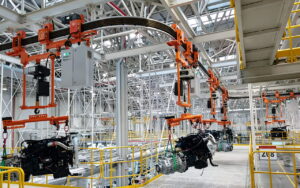
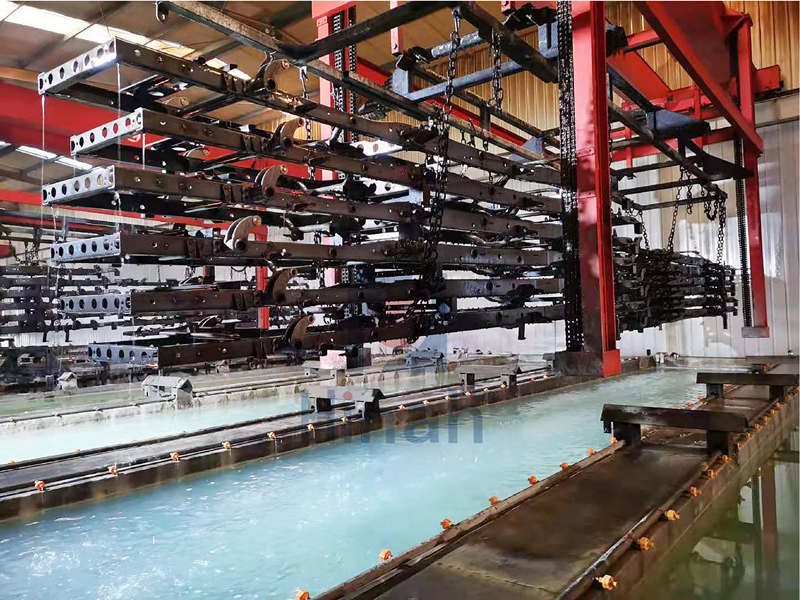
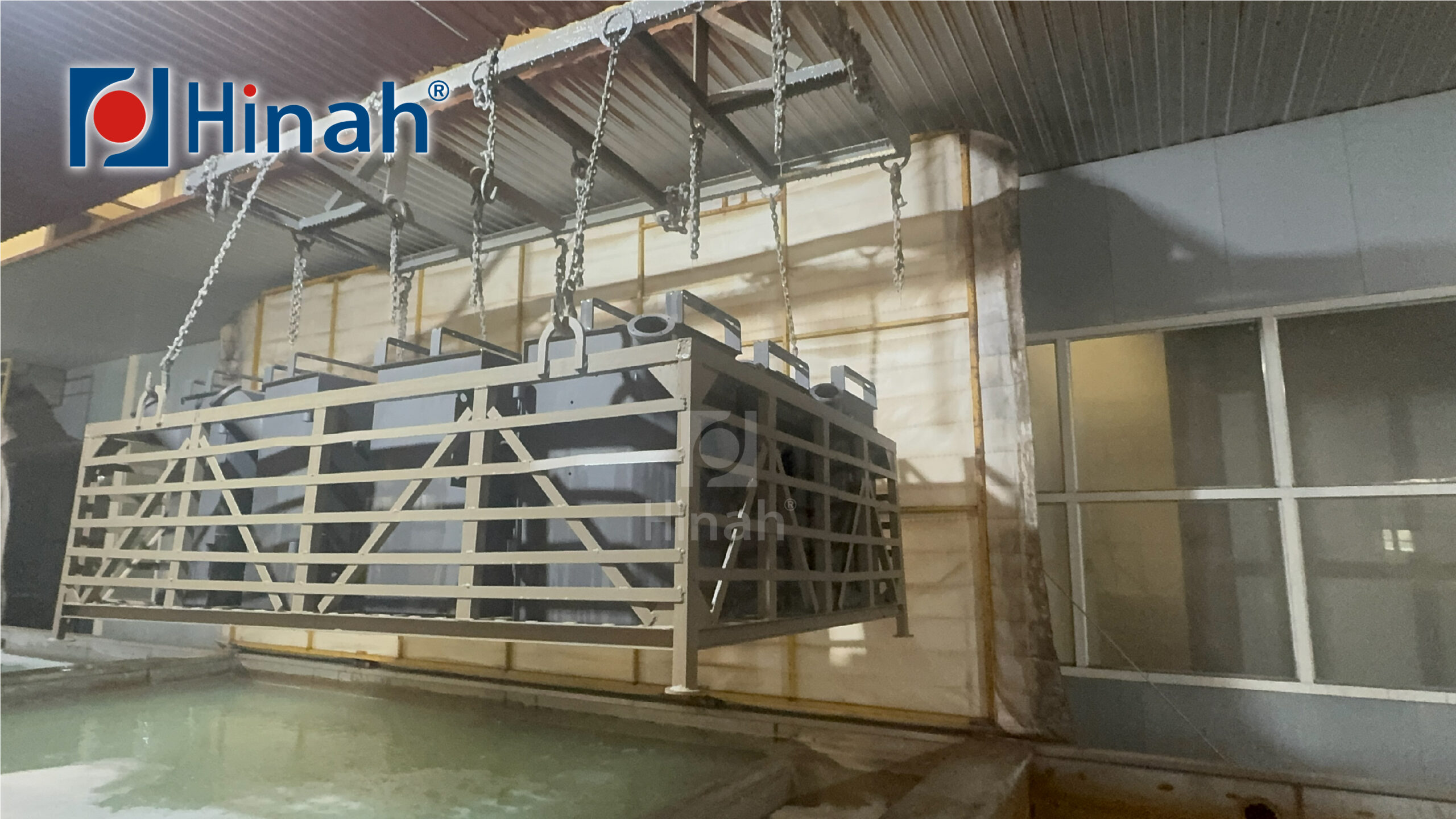
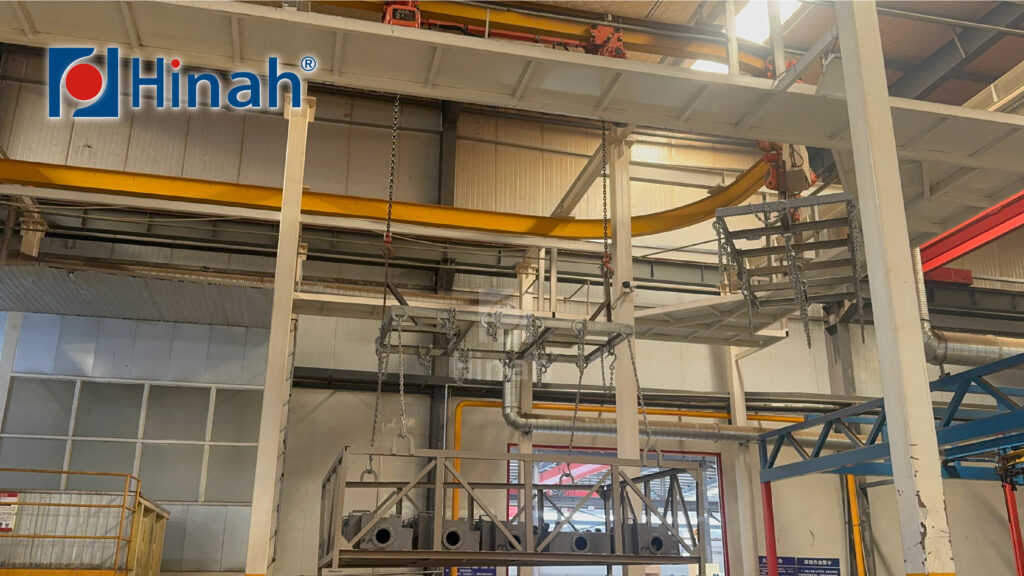
An electric hoist e-coat line solves this problem by giving each workpiece more flexible movement control. The hoist travels along an overhead rail, lowers parts vertically into each process tank, and adjusts the dipping position according to the coating requirements. This vertical dipping design makes it easier to process large, heavy, and mixed-size parts while maintaining stable coating coverage.
But how exactly does this system work, and why is vertical dipping an important feature in modern e-coating applications?
How Does an Electric Hoist E-Coat Line Achieve Vertical Dipping?
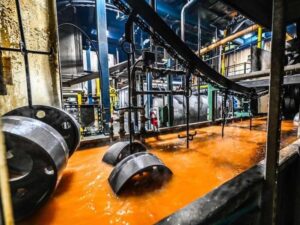
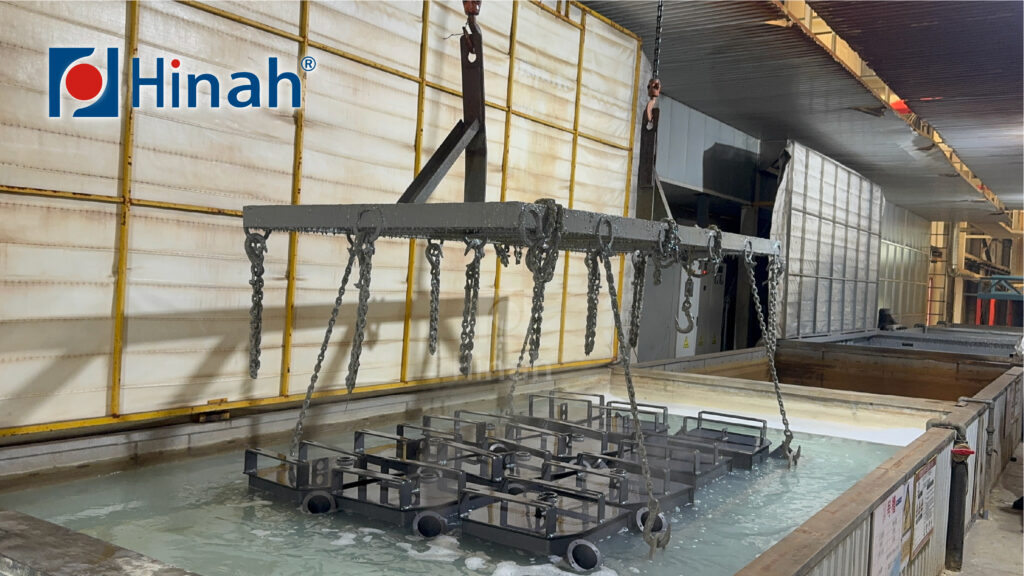
During the pretreatment process, the part enters cleaning and rinsing tanks to remove oil, dust, and surface impurities. After that, the hoist lowers the workpiece into the e-coating tank. The part stays submerged for a specific period, allowing the coating material to cover the entire surface.
After completing each stage, the hoist lifts the part and moves it to the next tank. Since the movement direction is vertical, the system can handle parts with different shapes and sizes without requiring a large horizontal transportation path.
This design is especially useful for products that need full immersion coating, because it provides accurate control over how the part enters and leaves each tank.
Why Is Vertical Dipping Important in an E-Coat Line?
Vertical dipping is one of the key features that separates an electric hoist system from many conventional conveyor solutions.
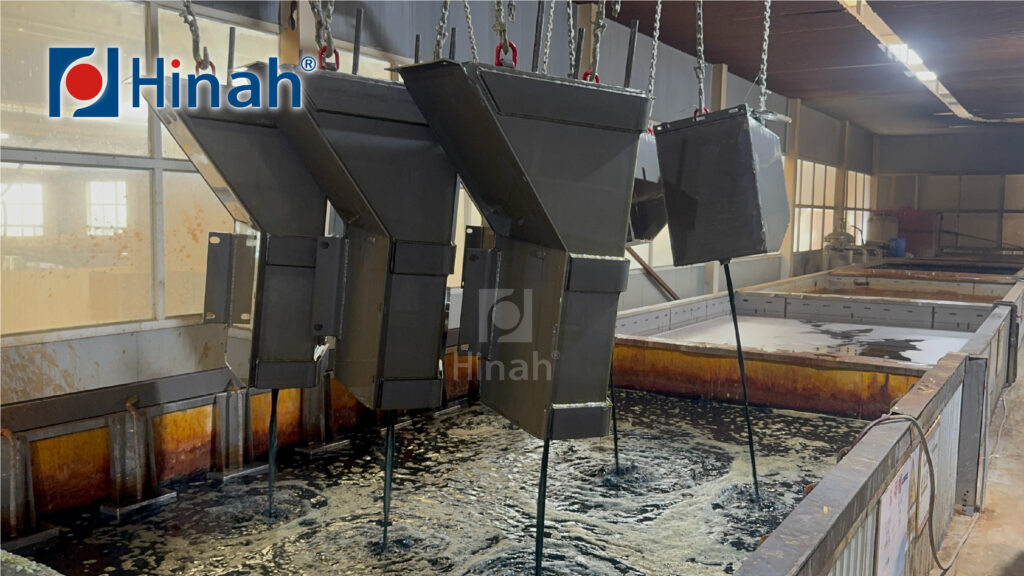
When a part is completely immersed in the coating tank, the liquid can reach areas that are difficult to cover with spraying methods. This includes internal corners, narrow spaces, and complicated structures.
For example, a steel frame may have multiple connection points and hidden areas. If the dipping depth or immersion position is not controlled properly, some sections may receive insufficient coating. Vertical movement helps the part enter the tank at the correct position and maintain stable contact with the coating solution.
In addition, vertical dipping provides more flexibility for large parts. The system does not rely on a fixed horizontal path, so it can better adapt to different production layouts.
How Does Independent Hoist Control Improve Coating Flexibility?
One major advantage of an electric hoist e-coat line is that each hoist can operate independently.
Unlike a traditional continuous conveyor, where every product follows the same movement speed, an independent hoist system allows different parts to have different process settings.
For instance, a heavy component may require a longer dipping time to ensure complete coating coverage. A smaller part may need less time inside the tank. The control system can adjust lifting speed, stopping position, and immersion duration according to the actual requirements.
This flexibility is valuable for production environments that handle multiple product types. Different workpieces can share the same coating system while maintaining suitable process conditions.
Can an Electric Hoist E-Coat Line Handle Large and Complex Parts?
Yes. Handling large and complex parts is one of the common applications of this system.
Many industries need to coat products that are difficult to move with standard conveyor equipment. These parts may be heavy, oversized, or have irregular structures.
With an electric hoist system, the workpiece is supported from above and moves smoothly through each process tank. The lifting mechanism provides stable transportation, while the vertical dipping method helps achieve better coating coverage.
This makes the system suitable for applications such as automotive components, agricultural machinery parts, construction equipment, and large metal structures.
How Does the Overhead Rail Design Benefit Production Layout?
The overhead rail is another important part of the system. It connects different process stations and provides a clear movement path for each hoist.
Compared with a large loop conveyor, an overhead rail system can provide more layout flexibility. The tanks can be arranged according to the available factory space and production requirements.
Because the parts move vertically into the tanks, the system can reduce unnecessary horizontal movement. This makes it suitable for facilities where space planning is an important consideration.
At the same time, the overhead structure keeps the floor area more open, which can make loading, inspection, and maintenance work easier.
What Parts Are Suitable for Electric Hoist E-Coat Line?
An electric hoist e-coat line is commonly selected for parts that require reliable immersion coating and flexible handling.
Typical applications include:
- Steel frames and welded structures
- Automotive components
- Machinery parts
- Agricultural equipment components
- Metal products with complex shapes
The system is especially suitable when different parts require different dipping positions or process times. Through independent control and vertical movement, it can support a wider range of coating applications.
Conclusion
An electric hoist e-coat line works by combining overhead rail transportation with controlled vertical dipping. The system allows parts to move into treatment tanks with accurate positioning, adjustable immersion time, and flexible handling.
For large, heavy, or complex metal parts, this design provides better adaptability than fixed movement systems. With independent hoist control and vertical dipping technology, the e-coat line can meet different coating requirements while maintaining consistent surface coverage.
Understanding how this system works helps you choose a suitable coating solution based on your product size, production needs, and process requirements.