At 06:00 the meter reads 6.1. By the end of the second shift it reads 5.75, and nobody touched a setpoint. That swing is normal when the line runs three products. A reading that keeps walking in one direction for a week is not. That one is worth chasing, because the e-coat bath pH decides how much resin stays dissolved and how much stays on the part.
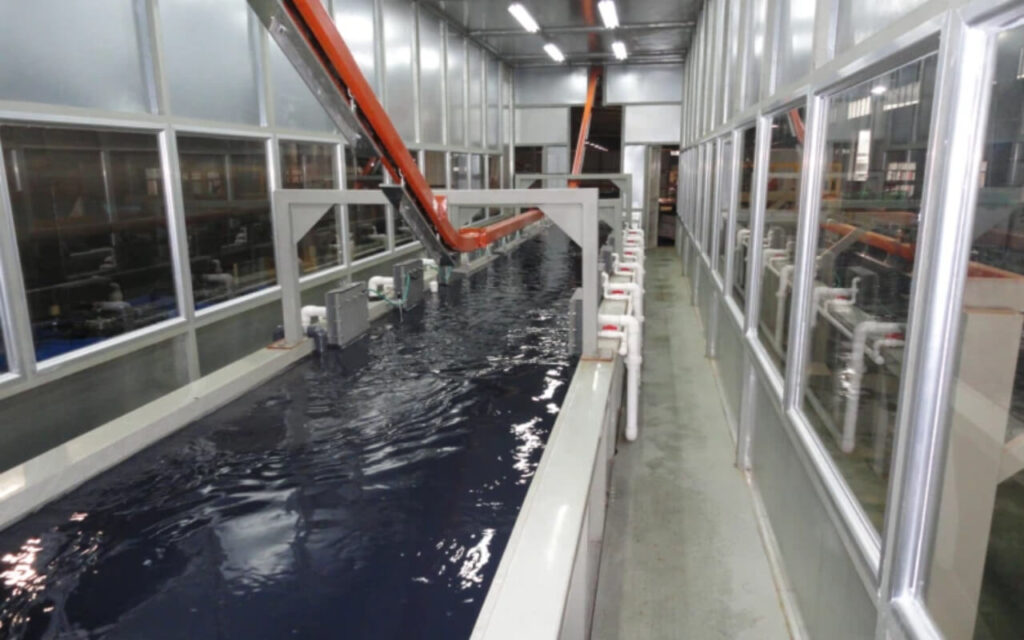

What the Number Actually Measures
pH reads solubility, not cleanliness.
A solubilizing acid holds the resin in water, and the balance between acid and neutralizer keeps it there. Shift that balance and paint comes out of solution. The scale is logarithmic, so 0.3 looks small on paper and is a large chemistry change in the tank. An e-coat bath pH that walks away from setpoint is a solubility problem first. Film build drops long before anyone sees a defect.
Deposition Adds Acid to the Bath Every Hour
Every square meter coated releases acid into the bath.
Jose Tirado, writing in Products Finishing, states it plainly: the acid released during deposition is proportional to the area being coated. The film takes the resin. The bath keeps the acid.
So volume sets the drift rate. Two full shifts push more acid than one light shift. If the removal path cannot keep up, pH moves down.
| Line condition | Effect on pH | Check first |
|---|---|---|
| Higher coated area per shift | Falls faster | Anolyte dump volume vs. area coated |
| Torn or leaking anode cell | Falls | Cell and membrane inspection |
| Plugged membrane | Falls | Permeate flow, cell pressure |
| Alkaline carry-over from rinse | Rises | Final rinse conductivity |
| Over-dumping of anolyte | Rises | Conductivity setpoint vs. load |
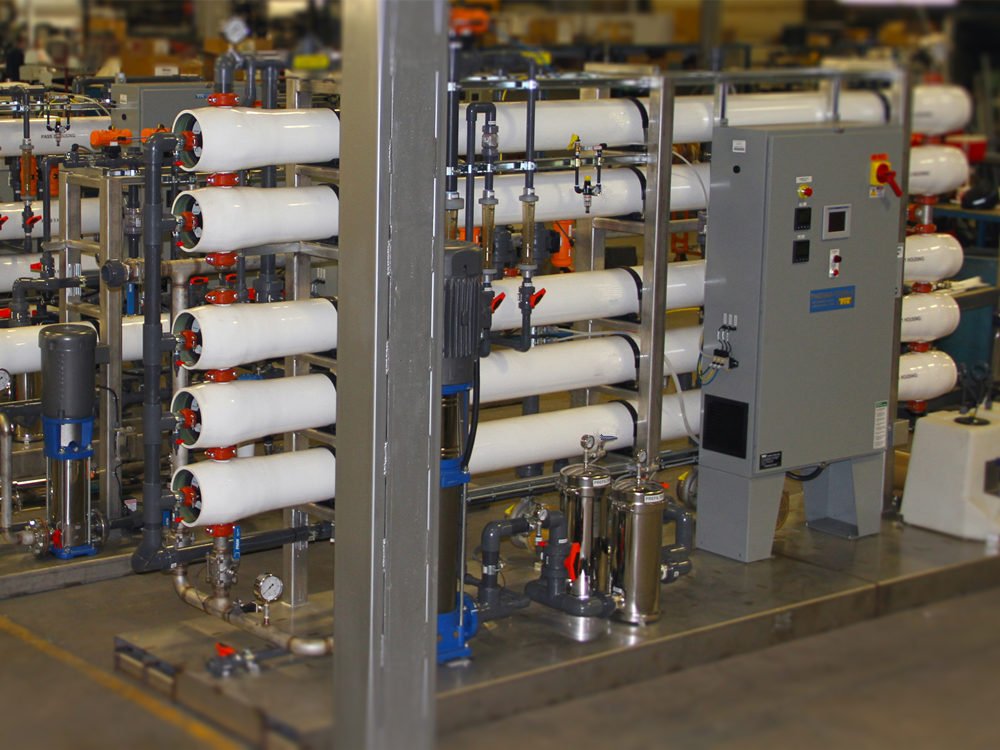
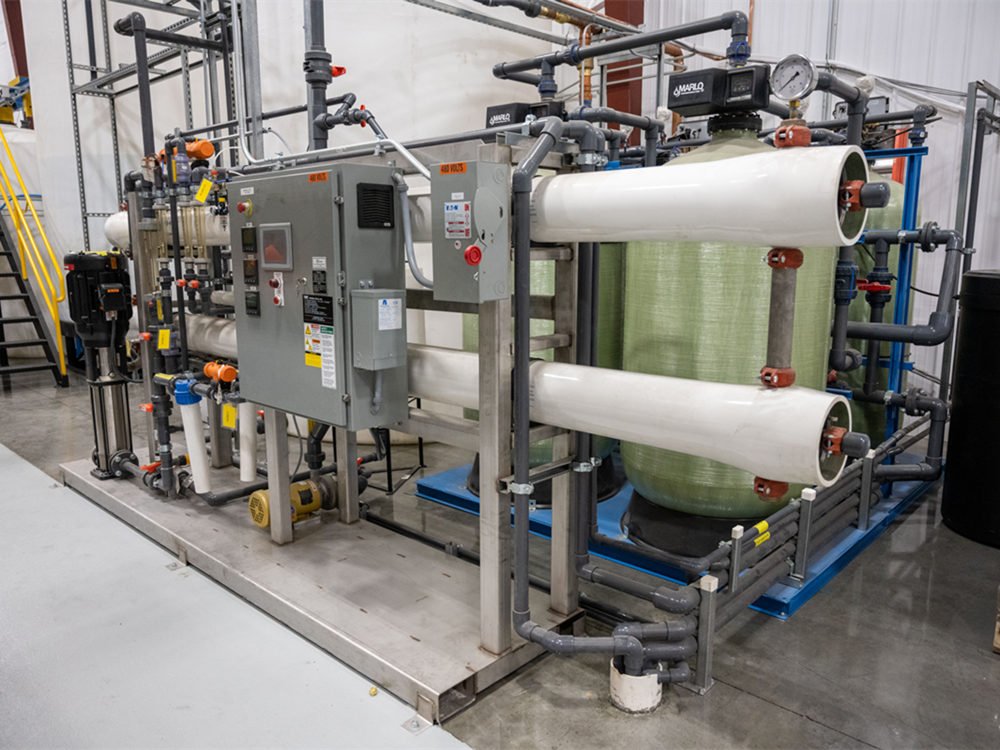
The Anolyte Loop Is Where an E-Coat Bath pH Usually Starts to Drift
Acid has one way out of the paint, and the membranes control it.
Anode cells sit behind ion-selective membranes. In a cathodic system those membranes are anodic, and they pass the acid out of the paint and into the anolyte. In a second Products Finishing article, Tirado puts the required ionic selectivity at 96 percent or better.
When separation fails, the bath follows. Leaky cells with holes or tears, and plugged membranes, account for most pH problems in electrocoat systems. A torn cell sends acid back into the tank. A plugged membrane stops the transfer, so acid builds up on the paint side. Both push pH down, and both leave the anolyte setpoint off the value the paint supplier specified. Cell condition belongs on a scheduled check, not on a reaction to a bad reading, and anode cells chosen for the load are easier to keep in balance than a mismatched set.
The opposite failure is quieter. A control loop that dumps more anolyte than the load needs removes acid faster than deposition creates it, so pH climbs. Permeate from the ultrafiltration loop moves through the same balance, and dumping it without reading conductivity only moves the error.
Drag-In and Feed Material Push From the Other Side
Rinse stages carry chemistry into the tank.
A weak final rinse, hard makeup water, or cleaner carry-over from dip tank pretreatment arrives as alkaline load, so the e-coat bath pH rises. Fix that upstream before touching the bath. Feed material matters too. Paste and resin arrive at a fixed ratio, and the ratio only holds while the bath loses solids at the rate the feed assumes. Add material to a bath that is already out of balance and pH moves toward the new material.


A Meter That Reads Low Every Morning May Be Measuring the Probe
Paint fouls a glass bulb.
Resin and pigment leave a film that slows the response, so the reading lags the true value and drifts between calibrations. Low-conductivity paint also makes a poor environment for an electrode, and a cool sample reads differently from a hot one.
Prove the number first. Calibrate on fresh buffers, read one sample twice, then compare pH against acid titration and conductivity. When the three disagree, the probe is the story.
How to Read an E-Coat Bath pH Trend in One Week
Log pH per shift next to the area coated in that shift, then read the shape.
– Flat with small noise: the loop is holding, so leave it alone.
– Step change at a shift boundary: look at people, valves and drag-in.
– Steady ramp across the week: the anolyte loop or the load balance is out of step.
– Sawtooth between calibrations: suspect the electrode, not the paint.
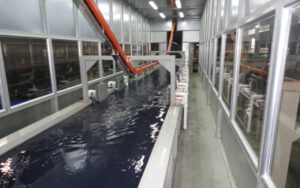
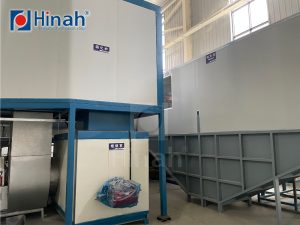
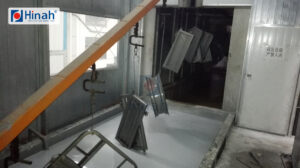
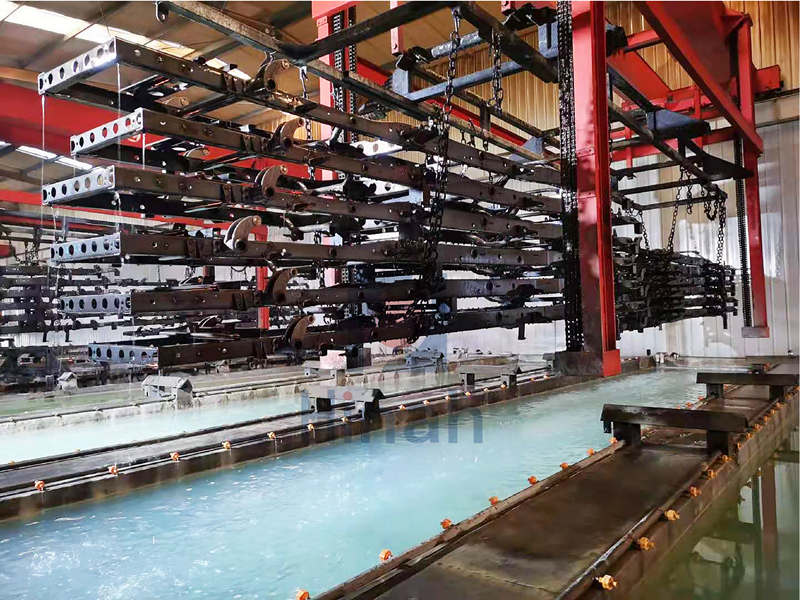
To see how the tank stages sit in a working line, this e-coat line simulation runs from pretreatment through to the oven.
Fix the Cause Before You Dump the Anolyte
The levers exist, and they are easy to misuse.
Dump anolyte, dump permeate, add material. Draining too much permeate leaves a bath that will not coat at low voltage, and recovery takes days. So confirm the reading first, inspect the cells and membranes, check drag-in and feed, then adjust in small steps against the setpoints your paint supplier gave you. A bath that keeps returning to the same fault usually needs a clean tank rather than more chemistry.
Log what you changed, and when. A bath that returns to the same pH after every correction has a mechanical cause, not a chemical one. Skip that step and the e-coat bath pH will drift back within a week.
The reading deserves a trend chart, not a spot check. The e-coat bath pH is the fastest signal that the acid balance has moved. It almost always moves for a physical reason you can find on the line.