A freshly coated part can look fine when it leaves the tank, yet tiny holes may become visible after rinsing or curing. Some appear as small dark dots. Others look like tiny craters or breaks in the film. In electrocoating, these defects often point to a problem that started earlier in the process. The cause may come from gas generation, surface contamination, pretreatment, electrical conditions, or even the metal itself.
What Does a Pinhole Look Like?
A pinhole is a small opening or discontinuity in the coating film. It may expose the substrate or create a weak point in the protective layer.
The defect can be difficult to trace because its final appearance does not always reveal where it started. A surface may look acceptable immediately after deposition, then show defects after curing.
Research on painted galvanized steel has shown that some pinhole defects can originate from very small defects in the underlying metal surface. In one study, researchers used microscopic and chemical analysis to trace the defects back to the substrate rather than the coating process alone.
So, when pinholes appear, checking the coating bath is only one part of the investigation.
Can Gas Cause Pinholes During Electrocoating?
Yes. Gas generation is one of the important causes to check.
During electrodeposition, electrochemical reactions occur at the workpiece surface. These reactions can generate gas. If a gas bubble remains on the surface while the film develops, it can interfere with local deposition.
Research from Brigham Young University examined the role of surface hydrogen bubbles during cathodic electrocoating. The study found that hydrogen bubbles can affect local current density and influence early film growth.
The EPA has also reported that excessively high voltage can cause holes in electrocoat films because of gassing.
This is why increasing voltage is not a simple way to solve a thin-film problem. If the voltage goes beyond the suitable process range, gas generation can increase and create new defects.
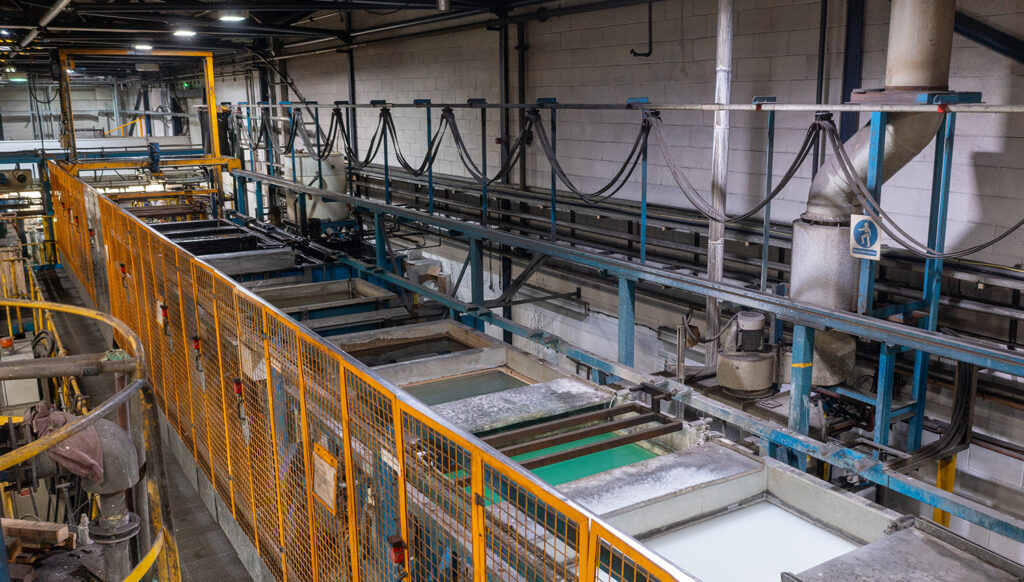
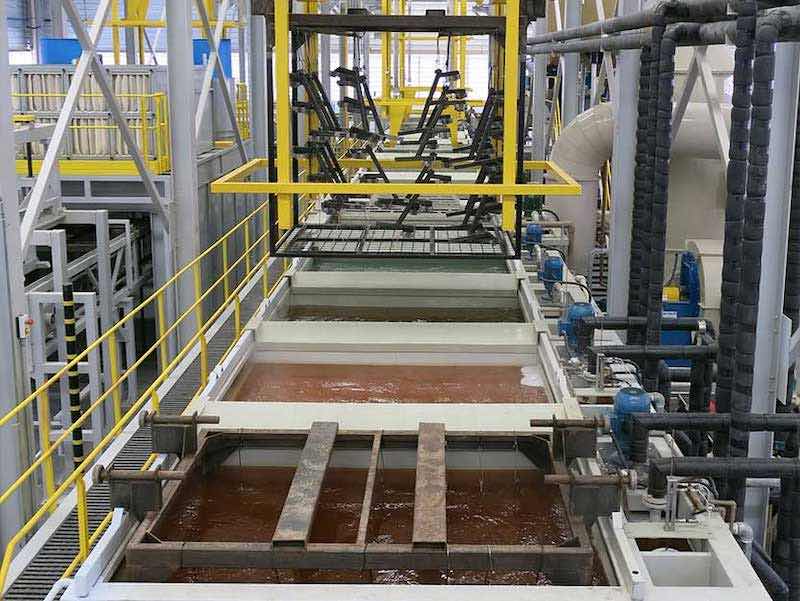
How Does Pretreatment Affect Pinholes?
The coating process starts well before the part enters the electrocoat tank.
Oil, grease, dust, oxide, and residues can remain on the surface if cleaning is incomplete. These contaminants can interfere with electrical contact and coating deposition. They can also create local areas where the coating does not develop normally.
The EPA specifically notes that metal cleaning and pretreatment are more critical for electrocoating than for many solvent-borne coating applications. Its technical guidance also identifies residual soils and unsuitable cleaning conditions as common pretreatment problems.
That makes the pretreatment stages worth checking whenever pinholes appear repeatedly.
Look at cleaner concentration, temperature, spray pressure, bath condition, and dwell time. Then check whether the workpieces leave the pretreatment section with a clean and consistent surface.
Can Rinsing Problems Lead to Pinholes?
They can contribute to surface defects.
After pretreatment, the part passes through one or more rinse stages before entering the coating tank. The purpose is to remove chemicals and residues carried from the previous stage.
If rinsing is inadequate, unwanted materials can enter the electrocoat bath. This can affect bath cleanliness and may create local surface problems.
The EPA recommends thorough rinsing in electrocoating processes and identifies final deionized-water rinsing as an important part of the process.
Therefore, do not only inspect the electrocoat tank when troubleshooting. Check the transition from pretreatment to electrocoating as well.
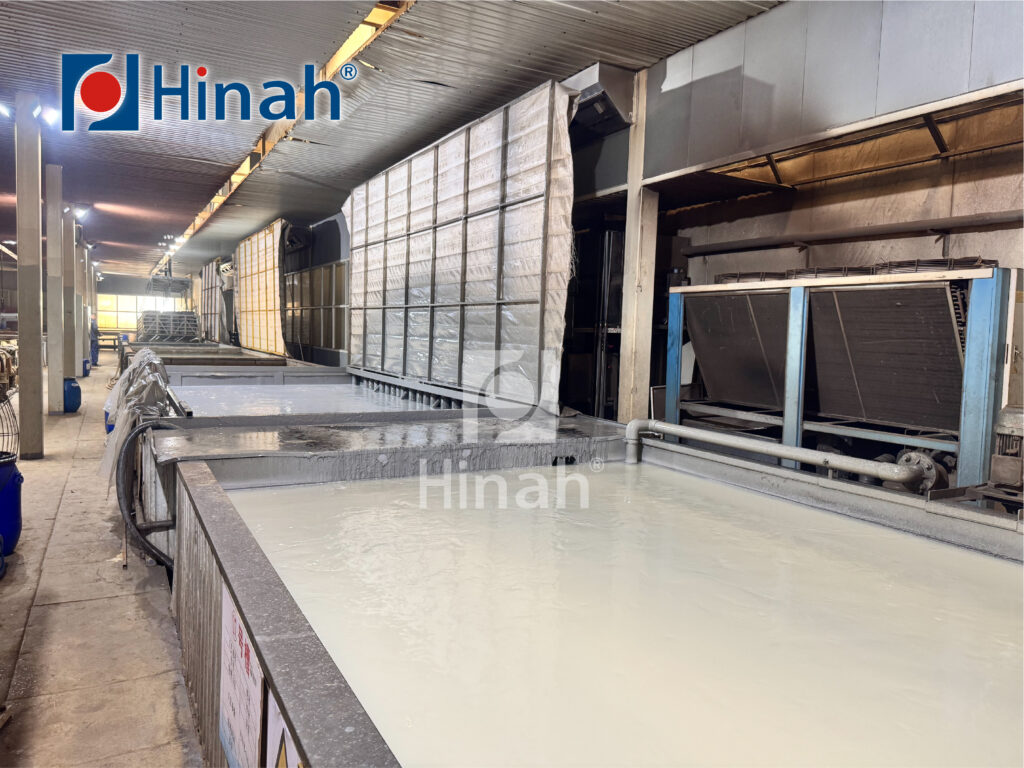
Does Electrocoating Bath Condition Matter?
Yes, and several parameters deserve attention.
Check:
- Bath temperature
- pH
- Conductivity
- Solids content
- Contamination
- Circulation
- Applied voltage
The EPA’s technical material identifies voltage, current density, temperature, dwell time, pH, and solids content as important operating parameters for electrodeposition.
A change in one parameter can also affect another. For example, a change in bath condition may alter current behavior, while a change in electrical conditions may affect gas generation and film formation.
That is why operators should compare several process records instead of changing one setting without checking the others.
Why Does High Voltage Make Pinholes Worse?
When pinholes appear together with signs of excessive gassing, voltage should be one of the first items to review.
A higher voltage can increase deposition, but the relationship has a limit. Once the electrical conditions become too aggressive, electrochemical reactions can generate more gas at the workpiece surface.
The EPA’s historical electrocoating guidance directly connects excessive voltage with holes caused by gassing.
The right approach is to return to the coating supplier’s specified voltage range and compare it with the actual voltage at the workpiece. Do not rely only on the value displayed by the control panel.
How Can You Find the Real Cause?
Start by mapping the defect.
If pinholes appear across many different parts, check the bath and electrical conditions first. If they occur only on certain workpieces, inspect their material, surface condition, geometry, and pretreatment history.
Next, compare good and defective parts. Check where the pinholes appear and whether the locations repeat.
Then review production records:
- Bath temperature and chemistry
- Applied voltage
- Conveyor speed and immersion time
- Pretreatment conditions
- Rinse quality
- Workpiece electrical contact
- Recent bath maintenance or chemical additions
This approach can narrow the cause much faster than changing several parameters at once.
Preventing Pinholes in Electrocoating
Pinholes are easier to prevent when the entire process stays under control.
Keep pretreatment consistent. Maintain stable bath conditions. Check electrical contact before production. Monitor voltage and current instead of adjusting them only when defects appear. Also, keep the rinse system clean so that unnecessary contamination does not return to the coating process.
For recurring defects, examine the actual part surface as well. Scientific investigations have shown that substrate defects can sometimes develop into visible pinholes after coating and curing.
In other words, not every pinhole starts in the coating tank.
Final Thoughts
Pinholes after electrocoating can come from several points in the process. Gas generation, excessive voltage, poor pretreatment, contamination, rinsing problems, electrical contact, and substrate defects all deserve attention. The fastest way to find the cause is to follow the defect back through the process instead of focusing on the final appearance alone.
A stable electrocoating process depends on the whole chain working together. When pretreatment, bath chemistry, electrical conditions, rinsing, and curing remain consistent, small surface defects become much easier to prevent and troubleshoot.