Peeling rarely starts with the peeling itself. By the time an e-coat film lifts from the metal, the original problem may have started several stages earlier.
A trace of oil, an unstable pretreatment bath, poor electrical contact, or an unsuitable cure can weaken the bond long before anyone sees a defect. That is why adhesion problems on an e-coat line need to be traced through the whole process rather than judged only from the finished part.
Where Does E-Coat Adhesion Start?
The foundation is the metal surface.
Before a part enters the coating tank, it needs proper cleaning and pretreatment. The U.S. Environmental Protection Agency states that surface preparation is critical to good film formation and identifies phosphate treatment as an important step for steel coating.
The reason is simple. The electrocoat film needs a clean and chemically suitable surface to form a strong bond. If oil, grease, oxides, dust, or process residues remain on the metal, the coating may deposit over them instead of bonding directly to the substrate.
The problem may not appear immediately. A part can leave the tank looking normal, yet the weak interface can later show peeling during curing, handling, corrosion testing, or further finishing.
Can Poor Pretreatment Cause Peeling?
Yes, and this is one of the first areas to investigate.
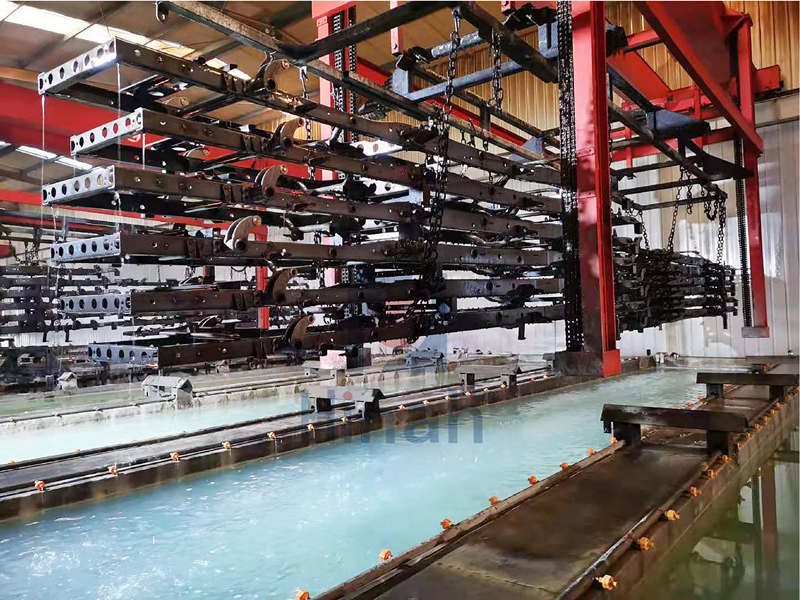
Pretreatment normally includes cleaning, rinsing, and a conversion coating. Each stage has a specific job. Cleaning removes contaminants. Rinsing limits chemical carryover. The conversion stage creates a suitable surface for the coating system.
EPA guidance describes cleaning and pretreatment as steps used to improve electrocoating adhesion.
Research published in Progress in Organic Coatings also found that surface pretreatment affected the adhesion performance of cathodic electrocoat on aluminum alloys. The study compared different cleaning conditions and found clear differences in coating delamination behavior.
So, if adhesion drops suddenly, do not change the electrocoat voltage first. Check the pretreatment process and recent chemical changes.
What Happens When the Surface Is Not Clean?
Even a small amount of contamination can create a weak area.
Common sources include:
- Oil and grease
- Drawing compounds
- Dust and metal fines
- Cleaner residue
- Pretreatment chemicals
- Poor-quality rinse water
- Handling contamination
The location of the peeling can provide a useful clue. If the defect appears only on certain surfaces, inspect those areas before changing the whole bath.
For example, recessed areas may hold contaminants or rinse water longer than exposed surfaces. A complex part may therefore show adhesion problems in specific locations while the rest of the coating looks normal.
Can Bath Conditions Affect Adhesion?
They can.
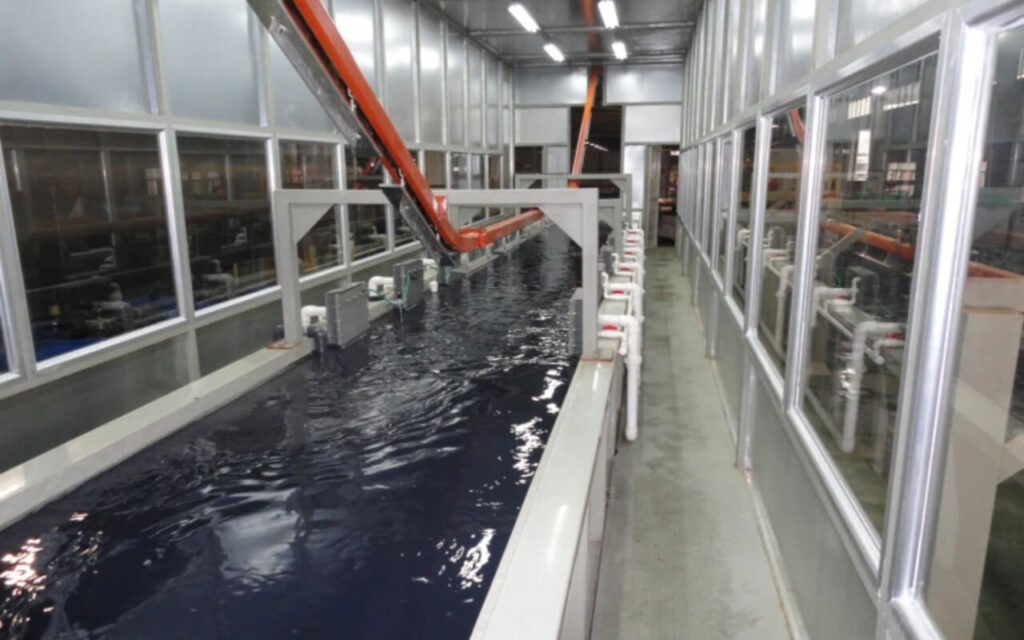
An e-coat line depends on stable bath conditions for consistent deposition. Important parameters include temperature, pH, conductivity, solids concentration, and contamination level.
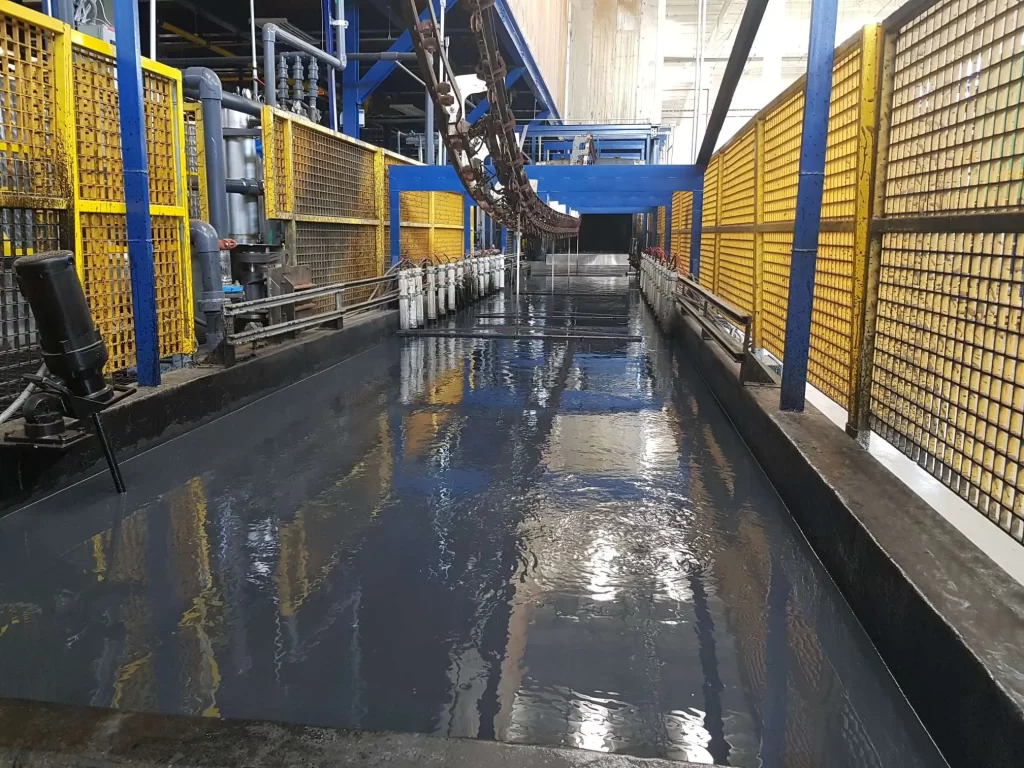
The EPA describes the electrocoat bath as an agitated system that maintains a uniform concentration of coating material.
If bath conditions drift, the deposition behavior can change. However, operators should avoid assuming that every adhesion problem comes from the bath. Compare the bath readings with previous production records first.
A sudden change in film thickness, conductivity, temperature, or solids content can help identify when the problem started.
Can Voltage Affect E-Coat Adhesion?
Yes, but voltage should be considered together with other process conditions.
During electrodeposition, the applied electrical field drives charged coating particles toward the workpiece. As the film builds, it becomes increasingly insulating, so deposition gradually slows.
Research on cathodic electrocoat has also found a relationship between voltage, deposition time, film thickness, and adhesion behavior. In one study, higher electrocoating voltage and longer deposition time did not automatically produce better adhesion on the tested aluminum surfaces.
This is an important point during troubleshooting.
If the film is too thick, too thin, or showing poor adhesion, simply increasing voltage may move the process further away from its suitable operating range.
What If the Film Looks Good but Peels After Curing?
Then the curing stage deserves attention.
The electrocoat film needs enough heat and time to develop its final properties. If the part does not reach the required metal temperature, the coating may not cure properly.
EPA training material describes electrocoated parts as going through an oven after rinsing, with typical curing conditions in the range of 275–375°F for 15–30 minutes. Actual requirements depend on the coating system and process.
For this reason, oven temperature should not be judged only by the controller display.
Check the actual part temperature and compare it with the coating supplier’s curing schedule. Also check conveyor speed, oven zones, airflow, and heat distribution.
How Does Rinsing Affect Adhesion?
Rinsing comes after deposition, but it can still influence final coating quality.
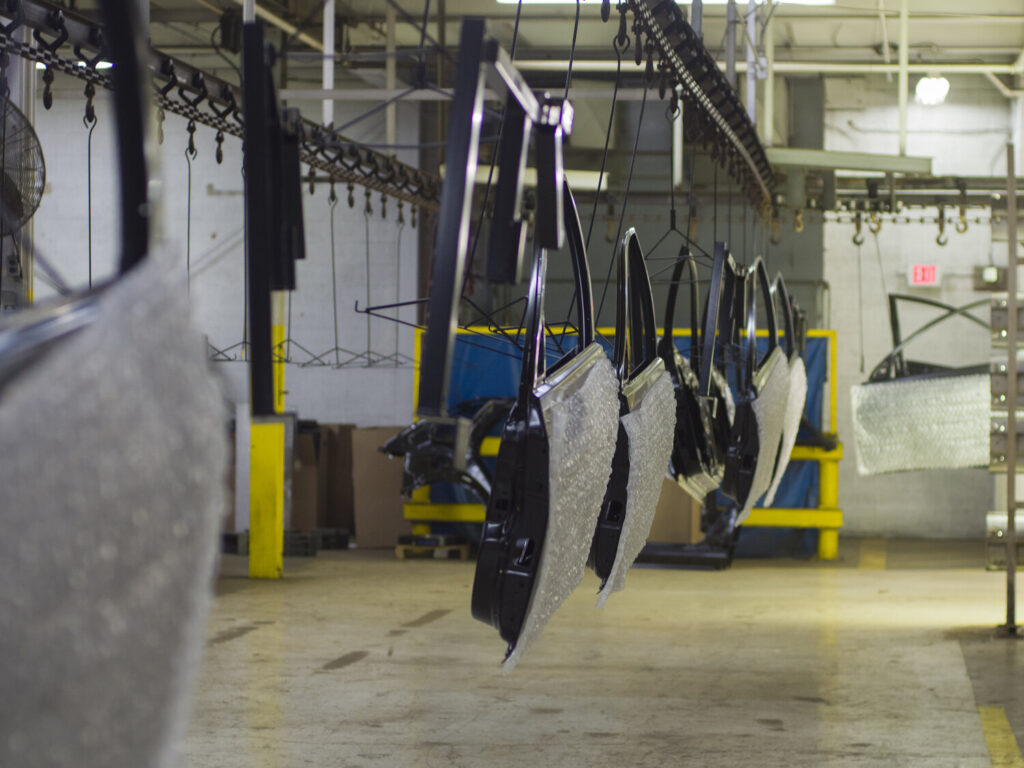
Excess coating material remains on the part when it leaves the bath. Post-rinse stages remove this material and recover it for reuse. EPA documentation describes multiple rinse stages and filtration as part of the electrocoating process.
If rinse water becomes contaminated or the rinse stage does not work properly, unwanted material can remain on the surface.
That does not always create immediate peeling. However, it can interfere with later coating or curing behavior. Therefore, rinse quality should be part of the inspection when adhesion problems appear.
How Can You Find the Cause of Peeling?
Avoid changing several settings at the same time.
Instead, follow the process in order:
- Inspect the defect location. Check whether peeling occurs across the whole part or only in specific areas.
- Check the substrate. Look for oil, rust, oxides, dust, or other surface problems.
- Review pretreatment records. Compare cleaner concentration, temperature, chemical condition, and rinse stages with previous production.
- Check the coating bath. Review temperature, pH, conductivity, solids, and contamination.
- Check electrical conditions. Verify voltage, current, rack contact, and grounding.
- Check curing. Measure actual part temperature and compare it with the coating supplier’s cure schedule.
This sequence helps separate a surface problem from a bath, electrical, or curing problem.
Keeping Adhesion Stable on an E-Coat Line
Good adhesion does not come from one machine setting. It starts with a clean substrate and continues through pretreatment, deposition, rinsing, and curing.
The EPA’s electrocoating guidance treats cleaning and pretreatment as key parts of the process, while technical research shows that surface treatment and electrocoating parameters can both influence adhesion.
For an e-coat line, the practical goal is therefore consistency. Keep the pretreatment stable, monitor the bath, maintain reliable electrical contact, and verify the actual curing conditions. When peeling appears, trace the defect back through these stages instead of treating the final coating as an isolated problem.