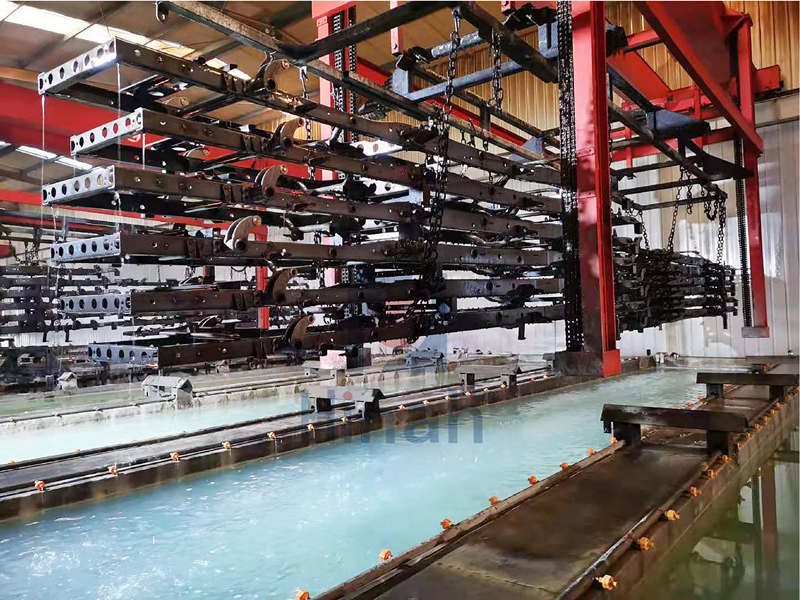
An ultrafiltration (UF) system plays an important role in an e-coat line. It separates water and low-molecular-weight materials from the coating bath while retaining useful paint solids. The permeate then supports the post-rinse process and helps return recovered paint to the bath. When the UF system starts to clog, however, permeate flow drops, pressure rises, and the entire coating process can become harder to control. So, why does a UF system get clogged in an e-coat line, and what can you do about it?
What Does the UF System Do in E-Coat Line?
The UF system continuously processes a portion of the coating bath. Its membrane allows water and small dissolved materials to pass through, while larger coating components remain in the concentrate stream.
This process serves two important purposes.
First, it helps recover coating materials from the rinse stage. Second, it produces permeate that can return to the rinse system.
The U.S. Environmental Protection Agency describes a similar electrocoating process in which an ultrafilter separates coating material from water, allowing the coating material to return to the coating tank while permeate can be reused in rinse cycles.
Because of this closed-loop relationship, UF performance directly affects the stability of the coating process.
Why Does an E-Coat Line UF System Get Clogged?
The most common reason is membrane fouling.
During normal operation, coating solids gradually accumulate on the membrane surface. Some particles can also enter or block membrane pores. As this layer becomes thicker, water has more difficulty passing through the membrane.
Several factors can accelerate this process.
- Excessive Paint Solids
The UF membrane receives coating material directly from the bath. If the paint solids level becomes too high, the membrane has to handle a heavier solids load.
Poor bath control can therefore increase the fouling rate.
The coating bath itself needs stable circulation and agitation. The EPA notes that electrocoat baths use agitation to maintain a uniform concentration of coating materials.
- Contamination in the Coating Bath
Oil, grease, pretreatment residues, dust, metal particles, and other contaminants can enter the coating system.
These materials do not belong in the UF loop. However, once they enter the bath, the UF membrane may capture them.
This creates another fouling layer and can reduce membrane performance.
For this reason, good pretreatment control matters even though the problem appears at the UF system.
- Poor Rinse and Recovery Control
The UF system and rinse stages work together.
After coating, the workpiece carries a thin layer of coating material out of the tank. The rinse system removes this excess material and recovers it. If the rinse circuit does not operate correctly, more contamination can return to the process.
A well-designed e-coat line therefore needs coordinated control of the coating bath, UF unit, pumps, piping, and rinse stages.
- Inadequate Membrane Cleaning
UF membranes naturally foul over time. Cleaning becomes necessary when deposits reduce membrane performance.
If operators wait too long, the deposits can become harder to remove. A simple rinse may no longer restore the original flow rate.
Membrane fouling is a well-known issue in ultrafiltration. Research indexed by the U.S. EPA notes that contaminants can accumulate on the membrane surface and inside membrane pores, which reduces filtration performance.
What Are the Warning Signs of UF Clogging?
You do not need to wait until the UF system completely stops working.
Several early signs can indicate a developing problem:
- Permeate flow gradually decreases.
- UF pressure increases.
- Pump loading changes.
- Rinse quality becomes less stable.
- Recovery performance declines.
- Operators need to clean the membranes more frequently.
The key is to look for trends, rather than a single abnormal reading.
For example, a small flow reduction may not indicate a serious problem. A continuous decline over several production cycles deserves attention.
How Can You Prevent UF Clogging in an E-Coat Line?
Prevention starts with process control.
First, keep the coating bath within the coating supplier’s specified operating range. Monitor solids, temperature, conductivity, pH, and other relevant parameters.
Second, control contamination before it reaches the UF system. Good pretreatment and rinsing practices reduce the amount of unwanted material entering the coating bath.
Third, monitor UF pressure and permeate flow together. A rising pressure combined with falling permeate flow is a useful warning that membrane fouling may be increasing.
Finally, establish a regular cleaning procedure based on actual operating conditions. Do not rely on a fixed cleaning interval for every production line. Different coating formulations, production rates, and contamination levels can produce very different fouling behavior.
Why UF Design Matters for E-Coat Line Performance?
A UF system is more than a filtration unit. It forms part of the material balance of the entire coating process.
The system needs suitable membrane capacity, circulation, filtration conditions, piping, pumps, monitoring instruments, and cleaning access. These elements must match the coating chemistry and production requirements.
A poorly matched UF system can create repeated maintenance problems even when the coating bath itself looks normal. In contrast, a properly designed system can maintain stable permeate production and support consistent rinse performance.
This is particularly important for automated production. As throughput increases, the UF system must handle the corresponding coating and rinse load without becoming a bottleneck.
Final Thoughts
UF clogging usually has more than one cause. Excessive paint solids, bath contamination, poor process control, and insufficient membrane cleaning can all contribute to fouling. The best solution is therefore not simply to replace the membrane. Engineers should identify where the contamination comes from and then check the complete filtration and rinse circuit.
In a properly engineered e-coat line, UF performance should be considered together with bath control, pretreatment, rinsing, circulation, and recovery. When these systems work together, the UF unit can maintain stable filtration performance and help keep the coating process under control.