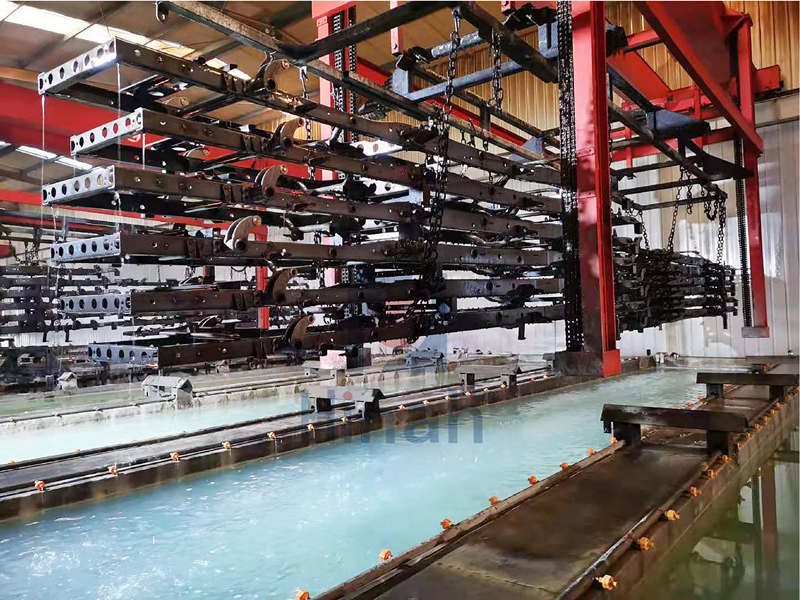
In e coating line, the coating process does not truly end when the part leaves the bath. What happens immediately afterward often determines whether the final film looks smooth and uniform—or shows defects that are difficult to correct later. Residual paint solids, permeate, and conductive substances remain on the surface after electrocoating. If these materials are not properly removed, they can lead to redissolution, secondary flow marks, and uneven appearance. This is why ultrafiltration rinsing plays a critical role in post-electrocoating cleaning.
More than a simple washing step, ultrafiltration rinsing helps stabilize the freshly deposited film, recover valuable paint, and ensure consistent quality across the entire e-coating process.
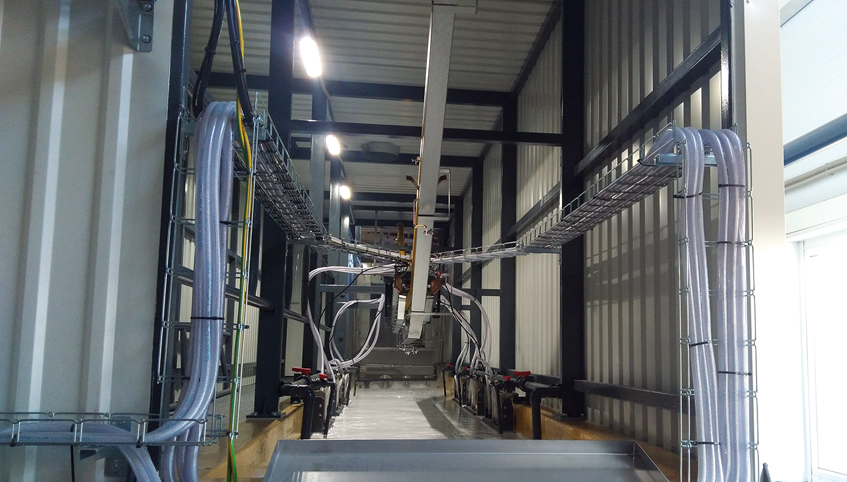
I. What Happens Immediately After Electrocoating
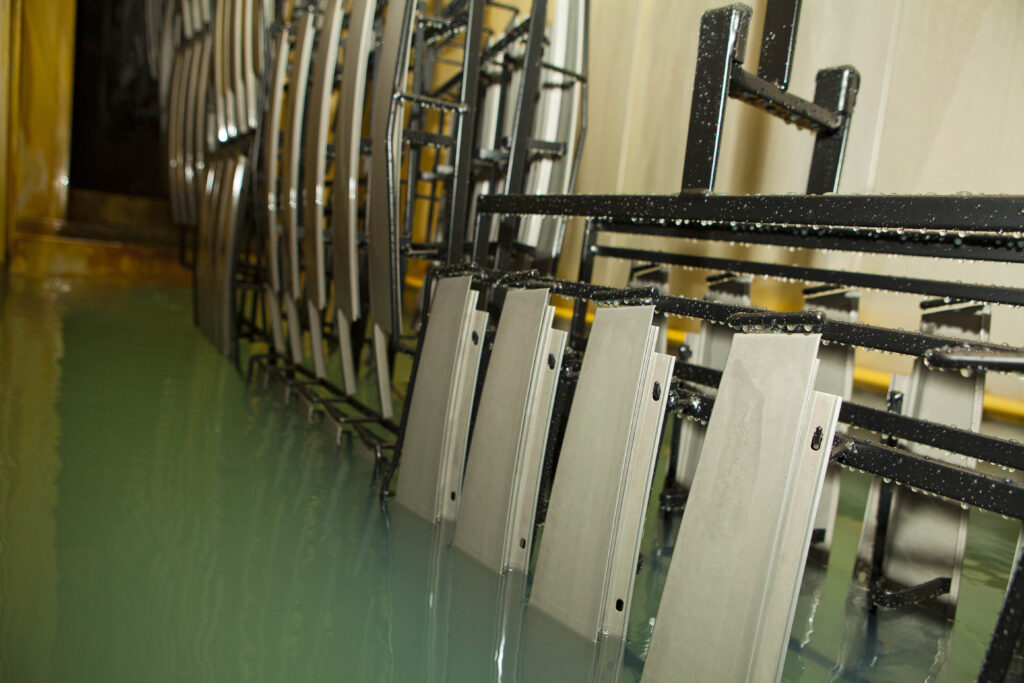
When a part exits the e-coating bath, the coating film is still in a highly sensitive state. Although the desired film thickness has already been deposited, the surface is far from clean or stable. A layer of excess paint solids, ultrafiltration permeate, and conductive residues remains attached to the electrocoated surface.
At this stage, gravity and surface tension cause the liquid film to continue flowing. If no controlled rinsing follows, this uncontrolled movement can disturb the freshly formed electrocoating layer. In some cases, the paint film may partially redissolve, while in others, uneven flow patterns appear as streaks or sag marks after curing.
Another often overlooked issue is carryover. Without proper rinsing, excess e-coat paint is dragged into downstream stages, increasing paint loss and contaminating subsequent process zones. Over time, this not only affects appearance quality but also reduces the overall stability of the electrocoating line.
This critical moment—right after electrocoating and before the film is fully stabilized—is where effective ultrafiltration rinsing becomes essential.
II. What Is Ultrafiltration Rinsing in an Electrocoating Process
To address the sensitive condition of the coating film immediately after electrocoating, a controlled and selective rinsing method is required. This is where ultrafiltration rinsing becomes essential.
In an electrocoating process, ultrafiltration rinsing uses permeate separated from the paint bath through ultrafiltration membranes. This permeate contains water and low-molecular components but is free of paint solids. As a result, it can effectively remove excess material from the surface without attacking or redissolving the freshly deposited electrocoating film.
Unlike rinsing with fresh deionized water alone, ultrafiltration rinsing maintains chemical compatibility with the e-coating bath. This compatibility allows the coating film to stabilize gradually while excess paint is recovered and returned to the system. For this reason, ultrafiltration rinsing is not simply a cleaning step, but an integral part of e-coating process control.
By combining gentle surface cleaning with paint recovery and process stability, ultrafiltration rinsing creates a controlled transition between deposition and final rinsing, helping ensure consistent quality in electrocoating production.
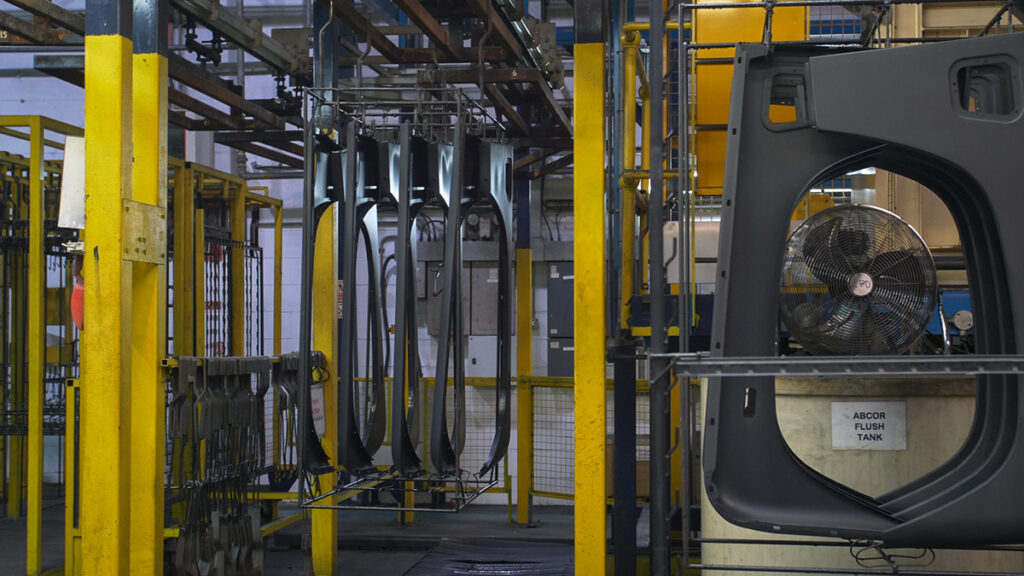
III. Typical Ultrafiltration Rinsing Process After Electrocoating
The importance of ultrafiltration rinsing after electrocoating becomes most clear when the entire rinse sequence is viewed as a coordinated process rather than isolated steps. Each stage plays a specific role in controlling film behavior, paint recovery, and final surface quality. Skipping or simplifying any stage often leads to instability later in the line.
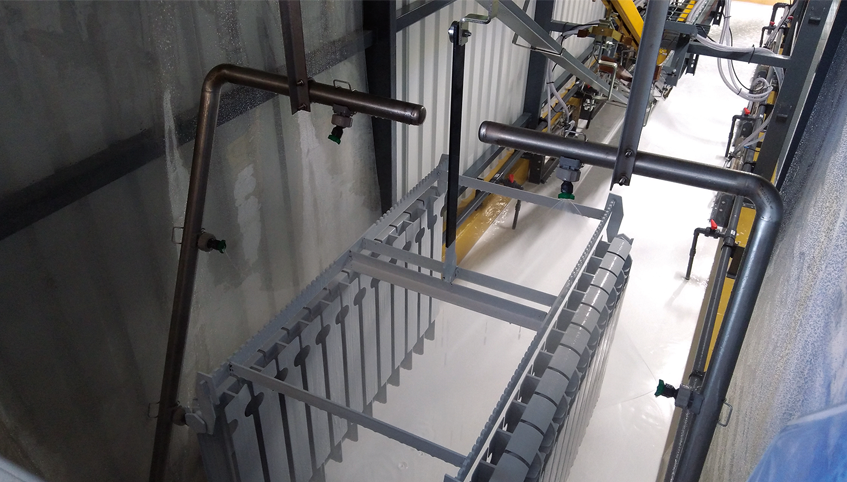
3.1 Circulating Ultrafiltration Spray Rinsing
Removing excess electrocoating paint from the workpiece surface
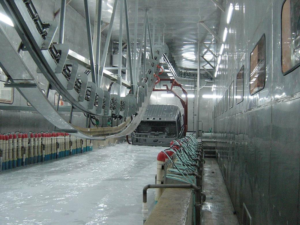
The first ultrafiltration spray rinse is designed to act quickly and gently. At this point, the e-coating film is still soft, and excess paint solids remain on the surface. Circulating ultrafiltration permeate washes away this excess material without diluting or attacking the deposited film.
Because the rinse medium is chemically compatible with the electrocoating bath, the coating remains intact while recoverable paint is returned to the system. This step not only protects film appearance but also significantly reduces paint loss. Without this controlled spray rinsing, uncontrolled runoff would continue, increasing the risk of flow defects and material waste.
3.2 Ultrafiltration Immersion Rinsing in Electrophoretic coating
Stabilizing the electrocoating film before final rinsing
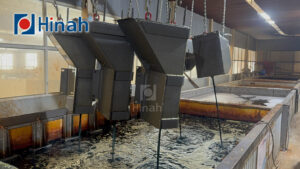
Following spray rinsing, ultrafiltration immersion provides a calm and uniform environment for the coating film to stabilize. Immersion allows residual permeate to be evenly exchanged across the entire surface, including recessed and complex geometries that spray rinsing may not fully reach.
This stage is critical because it slows down surface movement and helps the e-coating film reach a stable condition. By minimizing localized concentration differences, ultrafiltration immersion rinsing reduces the risk of redissolution and uneven film thickness, especially on edges and corners.
3.3 DI Water Spray as the Final Electrocoating Rinse
Eliminating remaining conductive residues from electrocoated parts
Once the electrocoating film has been stabilized through ultrafiltration rinsing, a final deionized water spray is applied. The purpose of this step is not paint recovery, but cleanliness. Any remaining conductive residues or low-molecular contaminants must be removed before curing.
Because the coating film is already stabilized, DI water can now be used safely without disturbing the electrocoating layer. This final rinse ensures that no residues interfere with baking, adhesion, or corrosion performance.