If you are planning a new metal finishing process, environmental performance is probably one of your main concerns. You may wonder whether an e-coat line is actually greener than traditional liquid painting. The short answer is yes in many applications, but the real difference depends on the coating formulation, pretreatment process, water management, and system design. A well-designed e-coat line can reduce VOC emissions, improve coating utilization, and limit material waste compared with conventional solvent-borne painting.
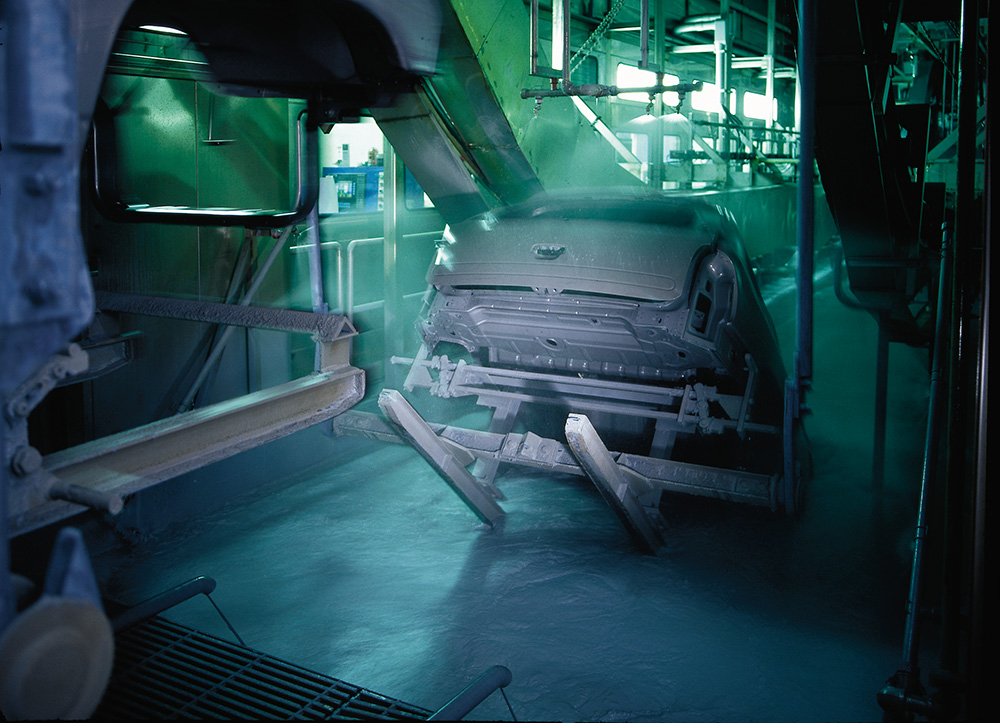
Why Does an E-Coat Line Produce Fewer VOC Emissions?
VOC emissions are one of the main environmental concerns in industrial painting. Traditional solvent-borne coatings use organic solvents to carry the coating material. These solvents can evaporate during application and curing.
E-coating takes a different approach. Most industrial e-coat primers use water as the main carrier. The coating bath contains charged resin particles, and an electric field drives these particles onto the metal surface.
The U.S. Environmental Protection Agency recognizes waterborne electrodeposition primers as a coating technology widely used in automobile and light-duty truck assembly. EPA also notes that waterborne coatings generally produce less VOC emissions than conventional solvent-borne coatings because water replaces a large portion of the organic solvent carrier.
This does not mean an e-coat line produces zero VOC. E-coat formulations can still contain organic compounds, and the actual emissions depend on the coating formulation and process conditions. EPA also warns that coating emissions depend on both the material composition and application efficiency.
So, when comparing two coating processes, you should look at the actual VOC content of the coating rather than assume that every water-based system has the same environmental performance.
Does an E-Coat Line Reduce Coating Waste?
Material utilization is another important difference.
Traditional spray painting relies on atomized paint. Some paint reaches the workpiece, while some can become overspray. This creates additional paint waste and requires an exhaust and filtration system to manage airborne particles and mist.
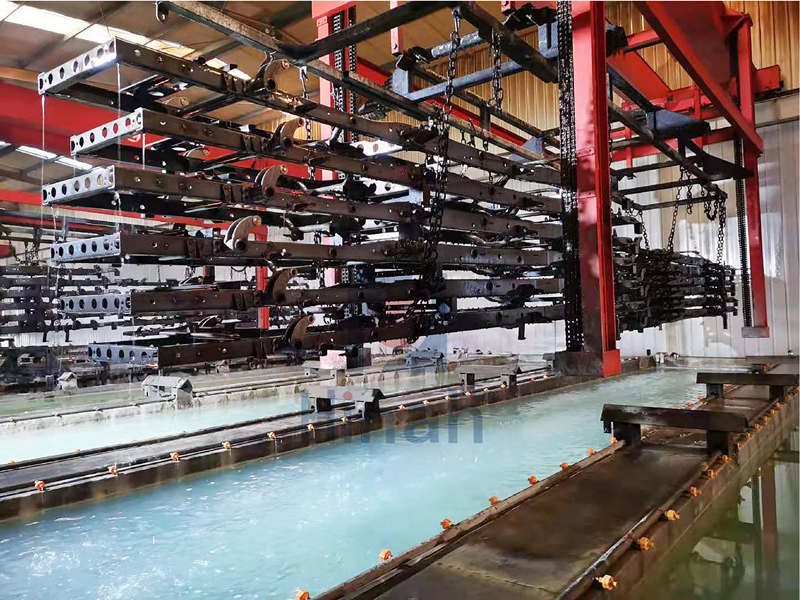
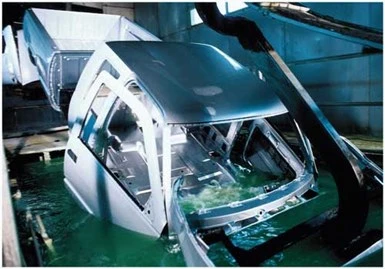
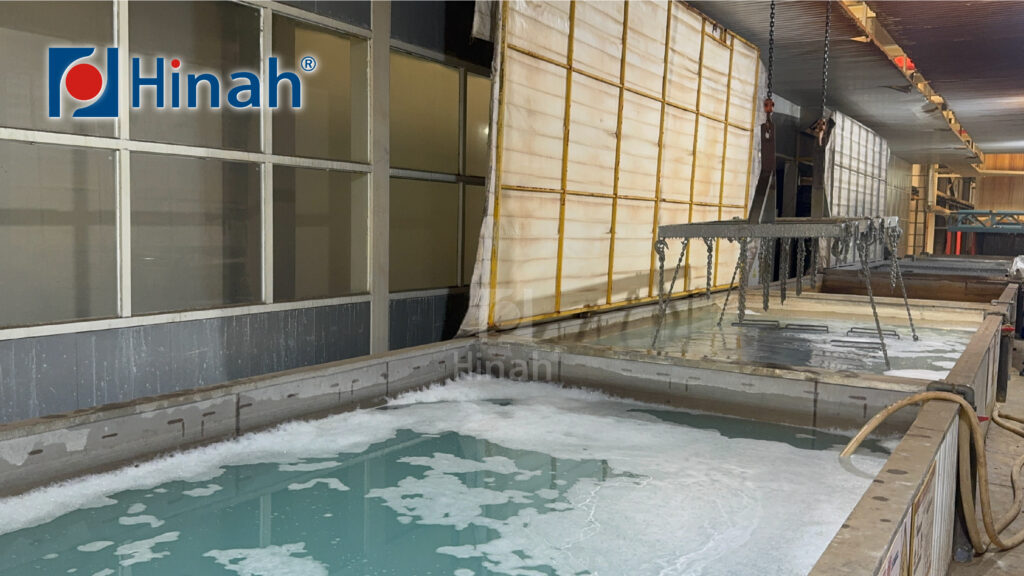
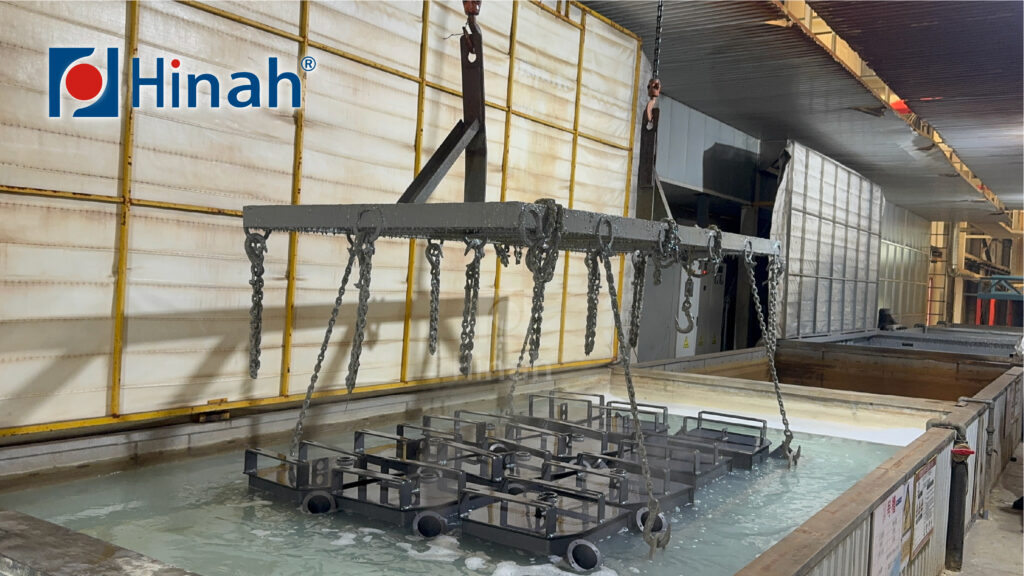
An e-coat line immerses the workpiece directly into the coating bath. The electric field attracts coating particles to the metal surface. This gives the process a very different transfer mechanism from spray painting.
The process can also recover coating material from the workpiece after deposition. Ultrafiltration systems can separate water and low-molecular-weight components from the coating bath and return useful material to the process. This helps maintain bath quality while reducing unnecessary material discharge.
The environmental benefit therefore comes from the complete process, not from the coating bath alone. Good bath control, filtration, rinsing, and recovery equipment all matter.
Can an Electrocoating Line Reduce Water Use?
This question needs a more careful answer.
An e-coat line uses several water-based stages. These may include post-rinse sections, ultrafiltration rinsing, and other water management systems. As a result, the process still requires significant water management.
However, the design of the rinse system can make a major difference. UF permeate can serve as rinse water after the coating stage. A well-designed system can also reuse water between suitable process stages instead of sending every rinse stream directly to wastewater treatment.
That means you should not judge environmental performance simply by asking how much water the process uses. Look at the entire water circuit, including rinse stages, UF recovery, filtration, conductivity control, and wastewater treatment.
Is E-Coating Line Better for Environmental Compliance?
Environmental regulations continue to control emissions from industrial surface coating operations. In the United States, EPA maintains specific rules and guidelines covering VOC and hazardous air pollutant emissions from several surface coating industries.
This makes coating selection an important part of environmental planning.
An e-coat line can help reduce the air-emission burden when the selected coating has a suitable low-VOC formulation. It can also improve material utilization and provide better control over the coating process.
However, an e-coat system does not automatically guarantee environmental compliance. Your local requirements may also cover pretreatment chemicals, wastewater discharge, sludge, oven emissions, ventilation, and chemical storage.
For this reason, environmental planning should start before equipment design. The coating chemistry and local regulations should guide the design of pretreatment, rinse, UF, wastewater, ventilation, and curing systems.
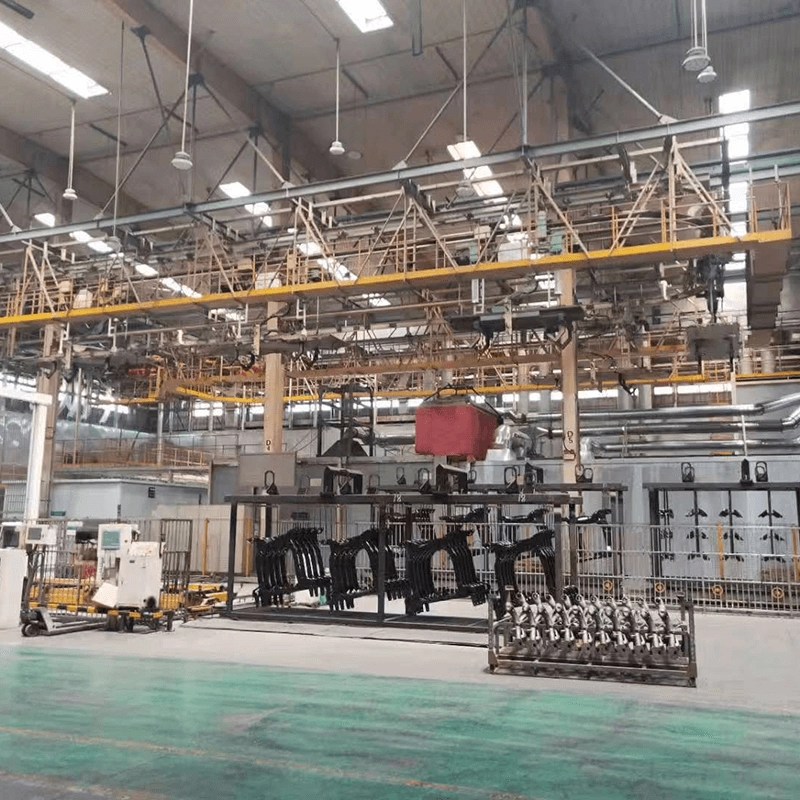
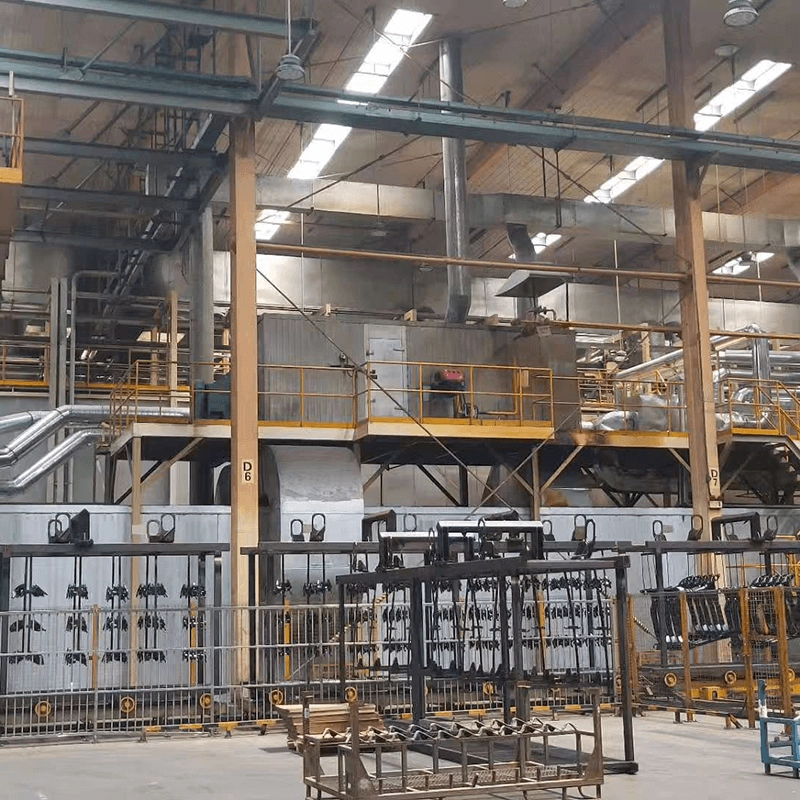
Electrocoating vs. Traditional Painting: Which Is Greener?
There is no single environmental metric that gives the complete answer.
If your main concern is VOC emissions, waterborne electrodeposition can offer a clear advantage over conventional solvent-borne painting. EPA specifically identifies waterborne coatings as one approach for reducing VOC emissions from coating operations.
If your main concern is material waste, the controlled deposition and recovery characteristics of e-coating can also be beneficial.
If water consumption is your biggest concern, however, you need to examine the complete rinse and recovery system. An e-coat process still uses water, so poor water management can reduce its environmental advantages.
Energy use also deserves attention. The curing oven, bath heating, ventilation, pumps, and pretreatment stages all contribute to the overall environmental footprint. A more sustainable design therefore requires optimization of the complete coating system rather than focusing on one piece of equipment.
What Should You Check Before Choosing E-Coat Line?
If environmental performance is a key requirement, ask your equipment supplier for specific information instead of relying on general claims.
Check the following:
- VOC content of the proposed coating
- Coating recovery and UF system design
- Rinse water circulation and reuse
- Pretreatment chemicals and wastewater characteristics
- Oven energy requirements
- Exhaust and ventilation requirements
- Sludge generation and wastewater treatment
- Expected coating utilization
- Local environmental compliance requirements
The best solution depends on your parts, production volume, coating specification, and local regulations.
Last Words
So, is an e-coat line more environmentally friendly than traditional painting? In many metal finishing applications, it can be. Its biggest advantages usually come from waterborne coating chemistry, controlled deposition, high material utilization, and opportunities for water and coating recovery.
But the equipment alone does not create a sustainable process. Coating formulation, pretreatment, rinsing, UF recovery, wastewater management, and curing all affect the final environmental performance. If you are comparing coating technologies for a new production facility, evaluate the entire process rather than looking at VOC emissions alone.