Achieving uniform thickness in industrial electrocoating demands precise control over throwpower, bath chemistry, and pretreatment quality. When coating complex metal parts, film buildup isn’t determined by voltage alone, but by how deposition time, bath temperature, and part orientation interact inside the dip tank. Even a small shift in bath equilibrium leads to uneven coatings across different surface areas. To fix this defect, we must isolate which variable disrupts the coating process.
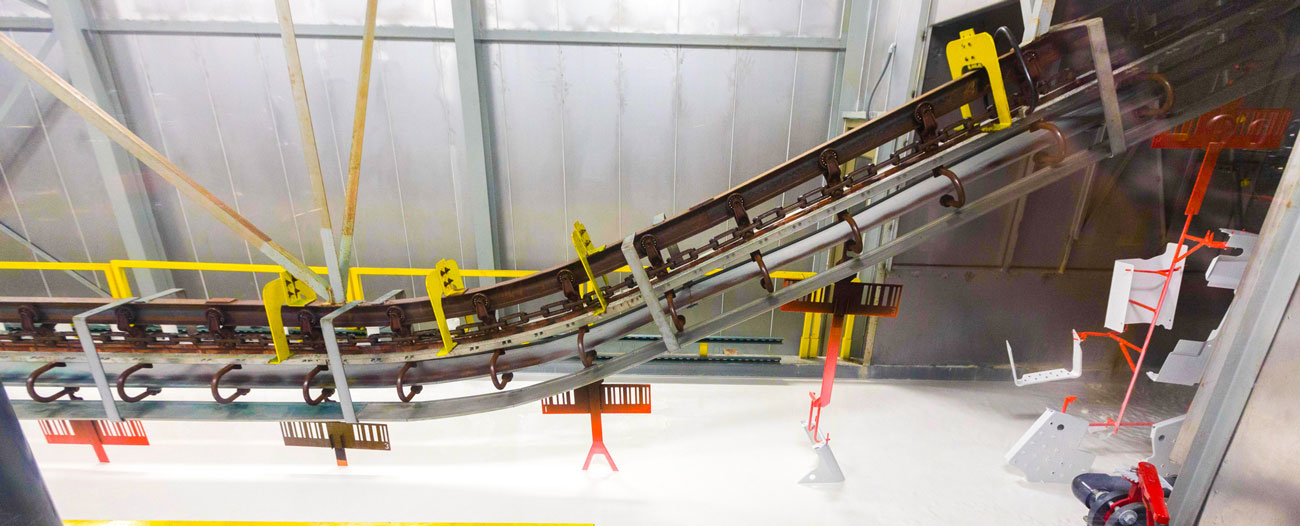
Unbalanced Rectifier Voltage and Throwpower Limits
Voltage drives paint particles onto the metal substrate. Higher voltage increases film buildup quickly. However, every chemical formula has a maximum physical limit called throwpower. Throwpower defines how deeply paint penetrates into recessed areas, internal cavities, and shielded corners.
If operators set the rectifier voltage too high, paint builds up rapidly on outer edges. This creates a defect known as heavy edge pull or framing. On the other hand, setting voltage too low leaves interior surfaces under-coated. According to technical publications from the Chemical Coaters Association International (CCAI), maintaining the specified voltage window guarantees consistent film growth across outer and inner surfaces. Therefore, operators must balance voltage settings with part orientation on the rack to maintain uniform electrical fields. This step directly affects the overall electrocoating film thickness across complex assemblies.
How Bath Chemistry Controls Electrocoating Film Thickness
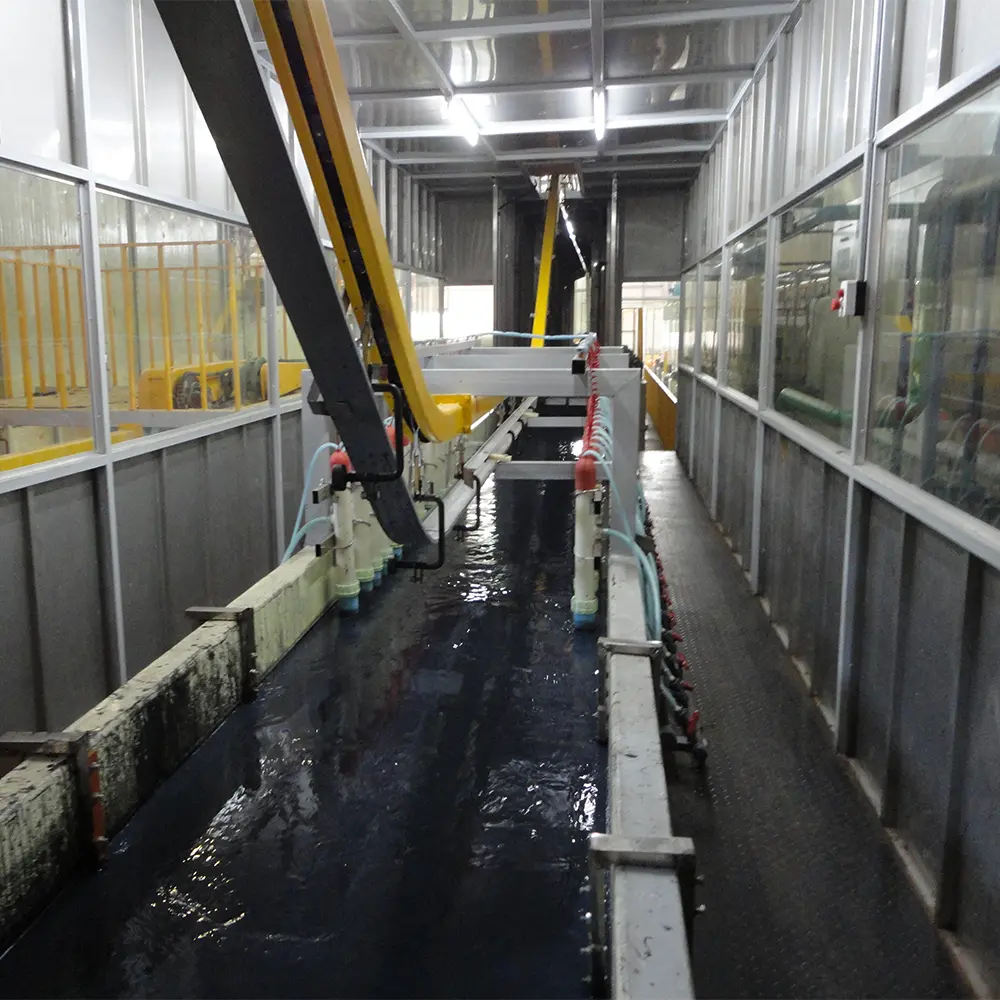
The immersion tank acts as a live chemical reactor. Temperature, solids content, and pH levels directly govern resin deposition speed during the cycle.
First, liquid temperature alters electrical resistance. Warm liquid lowers resistance across the bath. This accelerates film growth, which often creates rough or excessively thick layers. Cold liquid increases resistance, which starves the metal of paint. Standard guidelines from the Association for Materials Protection and Performance (AMPP) note that keeping bath temperature within a strict 2-degree Fahrenheit range prevents thickness fluctuations.
Second, paint solids carry the pigment and resin emulsion. If solids drop below recommended target levels, the bath loses deposition efficiency. Consequently, the finished layer stays too thin.
Finally, pH and conductivity dictate how current flows through the liquid. An unbalanced pH changes the electrical resistance of the developing paint film itself. As a result, the self-limiting insulation property breaks down, causing thickness variations across production runs. Maintaining chemical equilibrium remains essential for consistent electrocoating results.
Pretreatment Quality and Mechanical Racking Effects
Metal cleaning and conversion coatings dictate how evenly paint attaches to the substrate. Dirt, oil residues, or inconsistent phosphate layers alter electrical resistance across the metal surface.
First, spray or immersion pretreatment must produce an even crystalline phosphate layer. ASTM International emphasizes in standard test guides that irregular phosphate coatings create uneven electrical resistance across steel sheets. Areas with heavy phosphate deposits resist electric current, while bare spots attract excessive paint. This imbalance negatively impacts the final electrocoating film thickness.
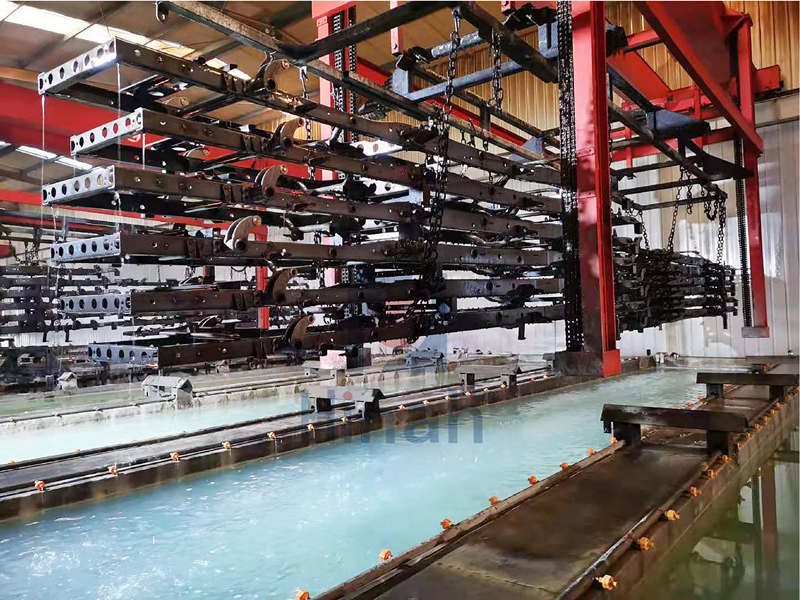
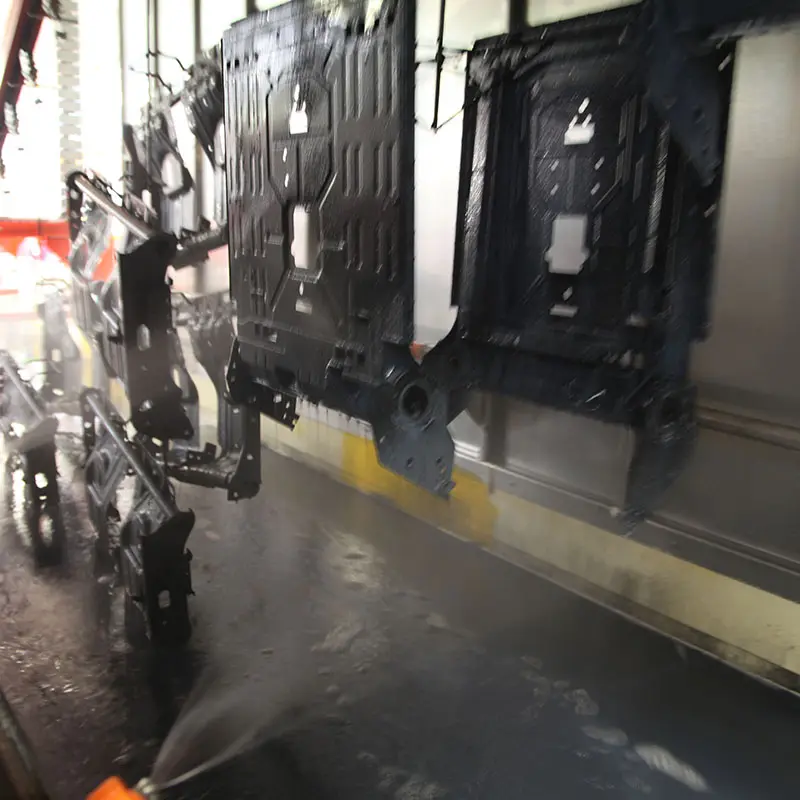
Second, part positioning on hanging racks alters current distribution. Closely packed parts shade each other from electrical field lines. In addition, trapped air pockets in hollow tubes block liquid contact completely. As a result, those unexposed sections remain uncoated or excessively thin. Operators should adjust hook spacing and part angles to let air escape and allow current to reach all surfaces evenly.
Key Steps for Electrocoating Thickness Control
Inconsistent coating results usually stem from unstable bath parameters, poor electrical distribution, or inadequate metal pretreatment. You cannot fix thickness variation by simply adjusting rectifier power. Instead, maintaining stable film layers requires a disciplined routine that monitors bath conductivity, liquid temperature, and rack arrangement together.
By following guidelines established by independent technical bodies like ASTM International and CCAI, finishing facilities can stabilize their electrocoating operations and eliminate recurring finish defects.