Why Do Pinholes Appear After Electrocoating?
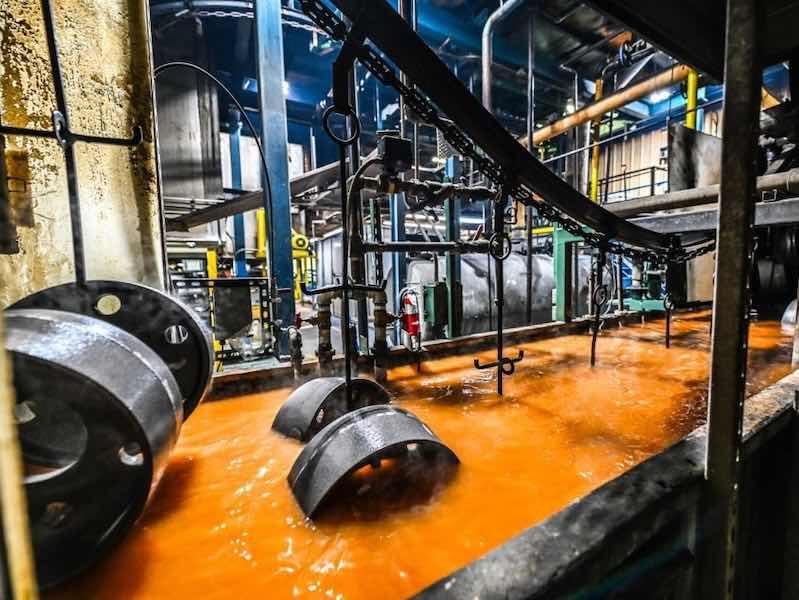
A freshly coated part can look fine when it leaves the tank, yet tiny holes may become visible after rinsing or curing. Some appear as small dark dots. Others look like tiny craters or breaks in the film. In electrocoating, these defects often point to a problem that started earlier in the process. The cause […]
Why Is Electrocoating Film Thickness Uneven?
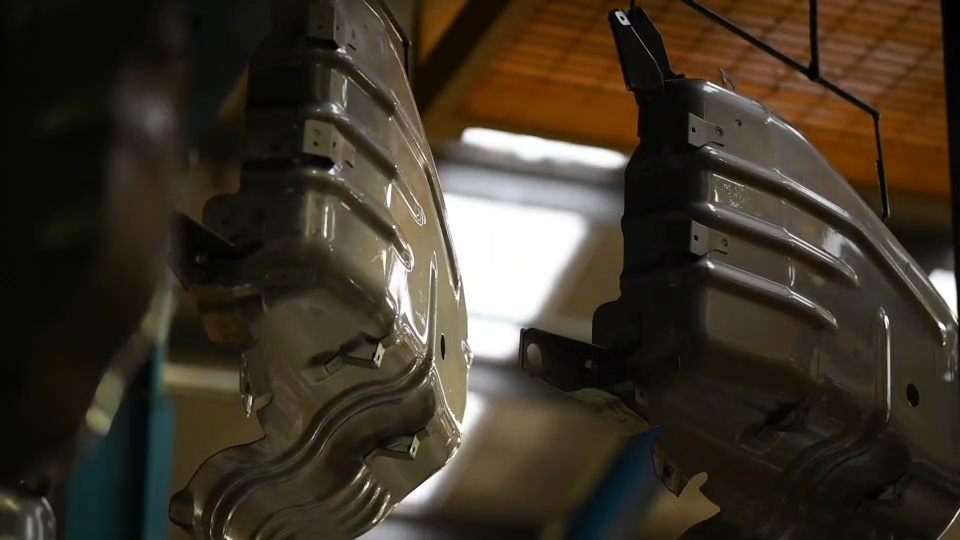
Achieving uniform thickness in industrial electrocoating demands precise control over throwpower, bath chemistry, and pretreatment quality. When coating complex metal parts, film buildup isn’t determined by voltage alone, but by how deposition time, bath temperature, and part orientation interact inside the dip tank. Even a small shift in bath equilibrium leads to uneven coatings across […]
Why Does UF System Get Clogged in E-Coat Line?
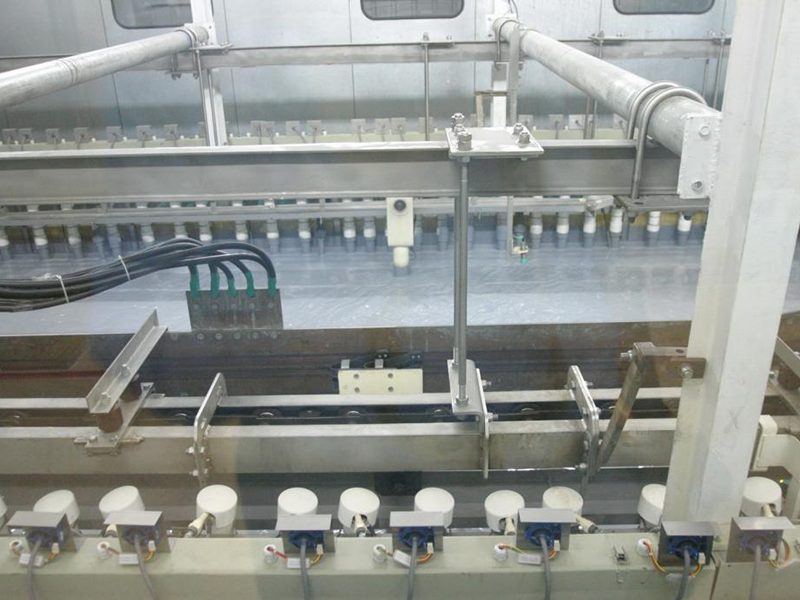
An ultrafiltration (UF) system plays an important role in an e-coat line. It separates water and low-molecular-weight materials from the coating bath while retaining useful paint solids. The permeate then supports the post-rinse process and helps return recovered paint to the bath. When the UF system starts to clog, however, permeate flow drops, pressure rises, […]
Is E-Coat Line More Environmentally Friendly Than Traditional Painting?
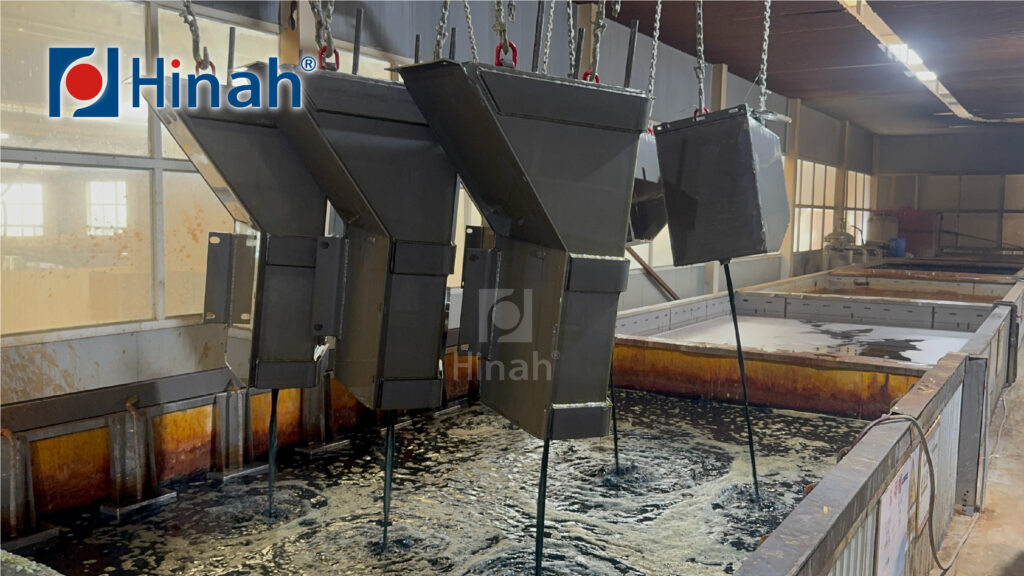
If you are planning a new metal finishing process, environmental performance is probably one of your main concerns. You may wonder whether an e-coat line is actually greener than traditional liquid painting. The short answer is yes in many applications, but the real difference depends on the coating formulation, pretreatment process, water management, and system […]
How Does Voltage Affect Film Thickness in E Coat Line?
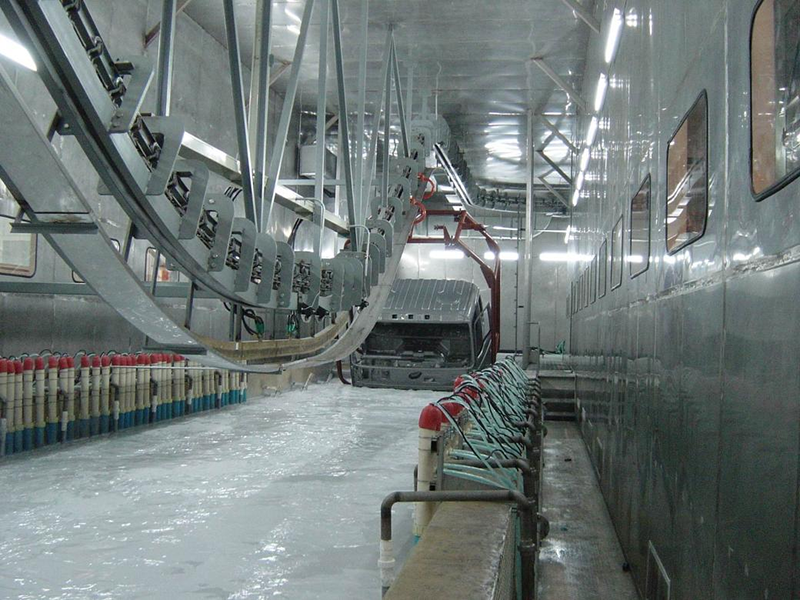
If the film thickness from an e-coating process is too thin, voltage is often one of the first parameters engineers check. But simply increasing the voltage is not always the right answer. In an e coat line, voltage affects the electrical field between the workpiece and the electrodes. This electrical field drives charged paint particles […]
7 Things You Didn’t Know About Electrophoretic Painting Plant for Aluminium
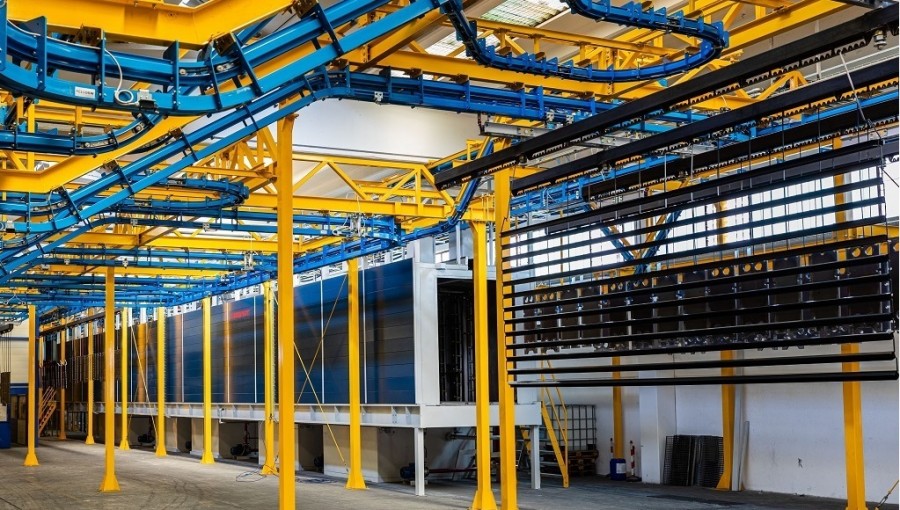
When people talk about aluminium coating, they usually focus on colour, appearance, or surface protection. However, the final coating quality depends on many hidden factors inside the production process. An electrophoretic painting plant for aluminium is more than a series of tanks and ovens. Every stage, from surface preparation to curing control, affects the performance […]
How Does Electric Hoist E-Coat Line Work for Vertical Dipping?
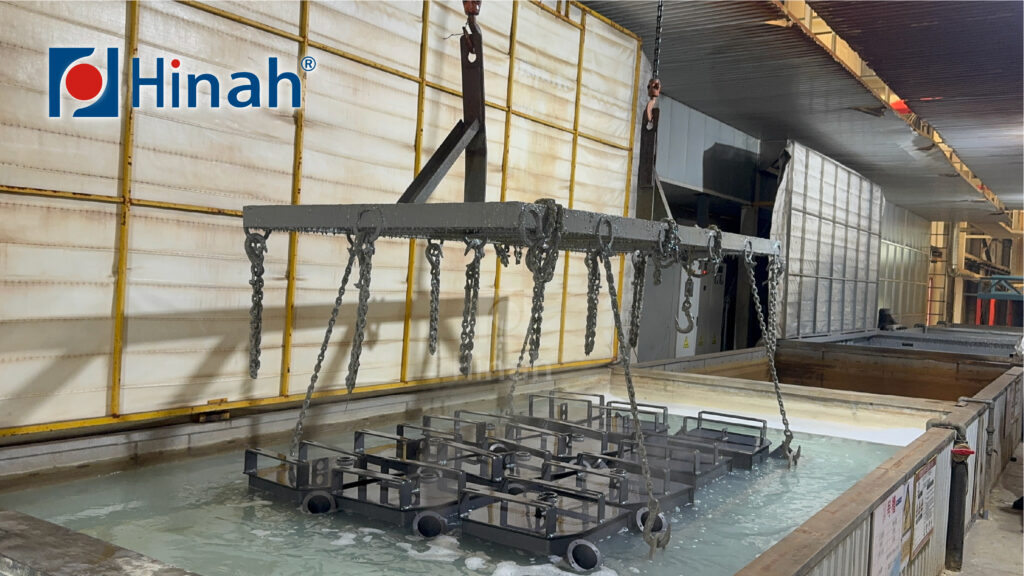
For many coating applications, the biggest challenge is not putting parts into a tank — it is controlling how each part moves inside the coating process. A large steel frame and a small metal component may need completely different dipping depths, immersion times, and handling methods. However, traditional conveyor systems usually move all parts along […]
Why Is Rust Still Occurring After Using an E-Coat Line?
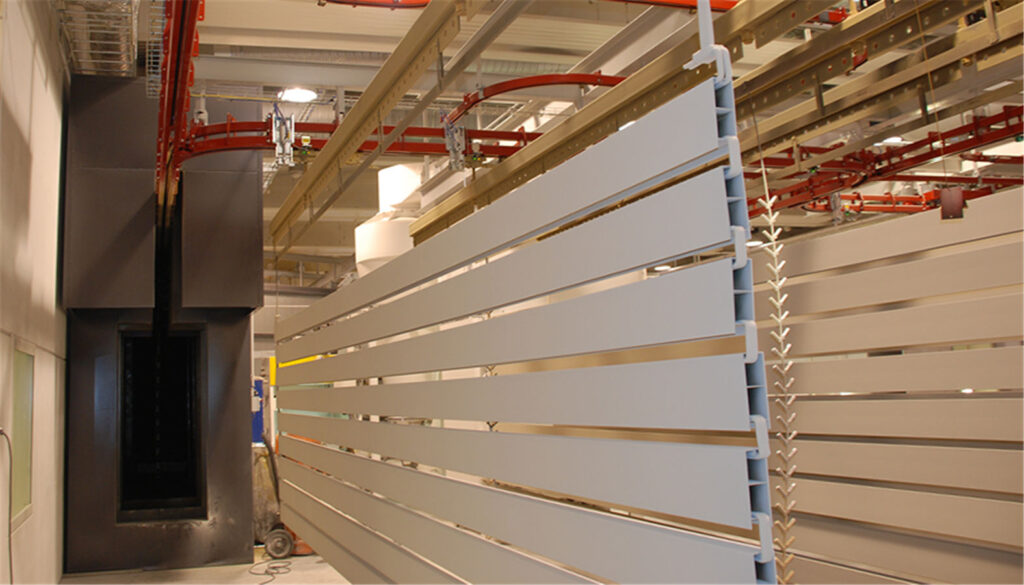
Rust problems after e-coat line can be confusing. The metal parts have already gone through cleaning, coating, and curing, but corrosion still appears during testing or after the products are used in the field. So why does this happen? In most cases, rust after e-coating does not come from the coating process alone. It is […]
Can electrophoretic coating line reduce corrosion issues in coastal areas?
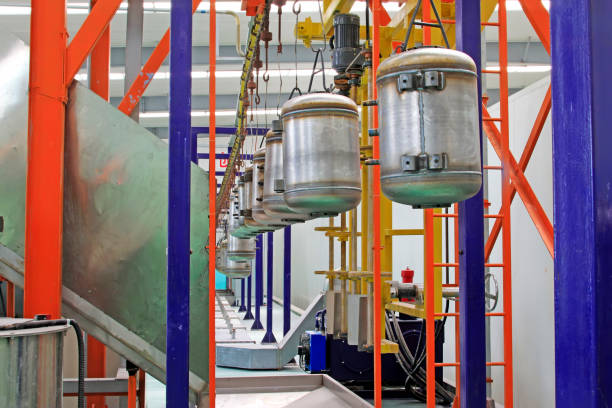
When a metal product is used near the coast, corrosion often appears much sooner than expected. A component that performs well inland may start showing signs of rust after prolonged exposure to salt-laden air and high humidity. This is why corrosion protection has become a key consideration in industries such as automotive, construction equipment, electrical […]
How Much Space and Power Does a Standard Automotive E-Coating Line Require?
Designing an automotive e-coating line is a massive undertaking. For automotive bodies and heavy-duty chassis parts, you cannot afford to guess your facility requirements. Underestimating your physical space or power capacity will halt your project, while over-engineering will drain your capital. Whether you are planning a new factory layout or upgrading an existing facility, you […]