Why Is Rust Still Occurring After Using an E-Coat Line?
Rust problems after e-coat line can be confusing. The metal parts have already gone through cleaning, coating, and curing, but corrosion still appears during testing
Can electrophoretic coating line reduce corrosion issues in coastal areas?
When a metal product is used near the coast, corrosion often appears much sooner than expected. A component that performs well inland may start showing
How Much Space and Power Does a Standard Automotive E-Coating Line Require?
Designing an automotive e-coating line is a massive undertaking. For automotive bodies and heavy-duty chassis parts, you cannot afford to guess your facility requirements. Underestimating
Is Liquid Coating Line Better Than Powder Coating for Outdoor Metal Products?
When choosing a coating solution for outdoor metal products, we often face a difficult decision: should they invest in a liquid coating line or choose
How Often Should E-Coat Tank Be Replaced?
An e-coat tank typically needs replacement every 10 to 20 years. In well-maintained production lines, it may last over 20 years. In harsh operating conditions, replacement
How Long Does an Electrophoretic Coating Process Take?
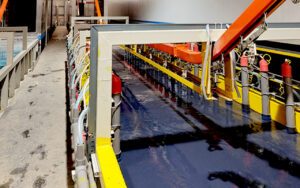
The complete electrophoretic coating process usually takes 30 to 90 minutes, depending on part size, coating requirements, pretreatment quality, and curing conditions. In most industrial
What Types of Metals are Best Suited for Cathodic Electrocoating?
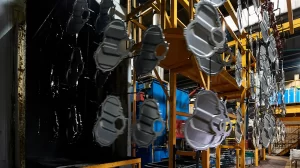
Can you use cathodic electrocoating on any metal? The short answer is yes—as long as the metal conducts electricity. When you submerge a part into
How Much Carbon Can Your Electrophoretic Coating Oven Save?
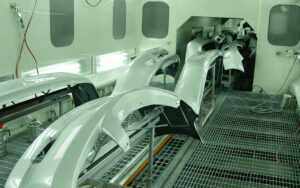
Industrial manufacturing is entering a new era. Today, a successful electrophoretic coating shop must do more than just produce durable products. It must also protect
How Much Water Does Your E-Coat Line Waste?
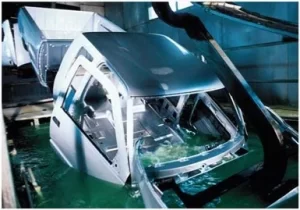
Metal finishing shops use a massive amount of water. In an e-coat line shop, the pre-treatment and electrocoating stages consume more water than any other
How an E-Coating Line Ensures Uniform Paint Coverage?
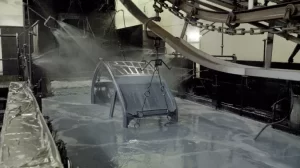
Imagine a car body fresh from the assembly line or a circuit board that will power tomorrow’s technology. Before either reaches the customer, it needs
E Coating vs Powder Coating: Key Differences Between Paints
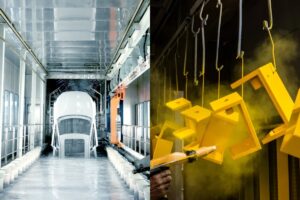
When it comes to painting metal surfaces, choosing the right coating can make all the difference. E coating vs powder coating paints may seem similar
Dealing with Electrocoating Sediment: to Restore Coating Quality
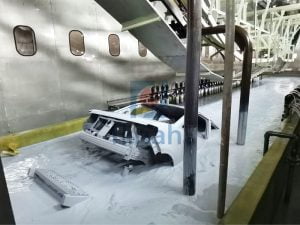
In a well-run e-coating line, consistency is everything. So when sediment appears after coating, even in small amounts, it can quickly disrupt production flow, compromise
How a Liquid Coating Line Improves Finish Quality
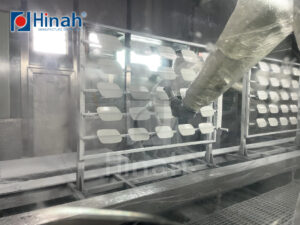
A raw metal panel enters one end of the liquid coating line—dull, uneven, and vulnerable to corrosion. Minutes later, it exits with a flawless, high-gloss
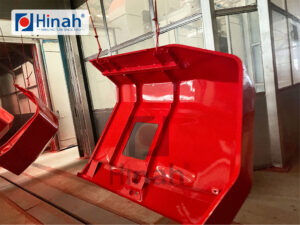
What Factors Affect Coating Uniformity in Electrophoresis Coating Line?
Coating uniformity is one of the most critical quality indicators in an electrophoresis coating line, directly impacting corrosion resistance, appearance, and overall product performance. In
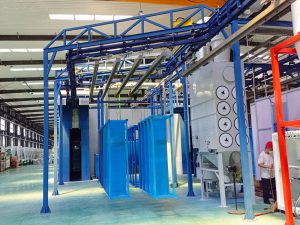
Choosing the Right Electrocoating Conveyor for Your E-Coat Line
If you’re planning or upgrading an e-coat line, there’s one part of the system you really don’t want to overlook—the electrocoating conveyor. It’s not just
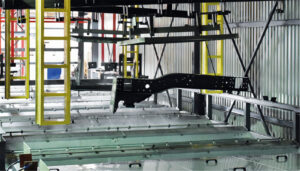
Best Practices for E-Coating Tank Care in Your E-Coating Line
The e-coating tank is the heart of your e-coating line, where the critical electrochemical deposition process occurs. Its proper design, operation, and maintenance directly determine
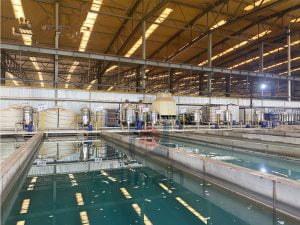
Optimizing Pretreatment Stages in E Coat Line for Adhesion
Electrocoating (e-coating) is a foundational process for achieving superior corrosion protection and uniform finish adhesion on metal substrates across automotive, appliance, and industrial applications. However,
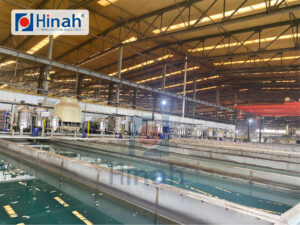
Common Bottlenecks in the E-Coating Line Workflow—And How to Solve Them
In an e-coating line, smooth workflow is essential to maintaining high-quality finishes, consistent output, and operational efficiency. However, even the most advanced systems can encounter