E-Coating Line Delivery: From PO to First Good Part
An e-coating line delivery takes roughly six to ten months from purchase order to first good part. Twelve stages run in sequence: design, fabrication, factory
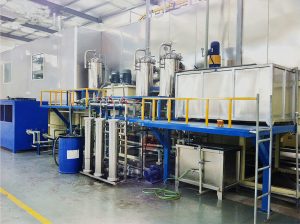
What Causes Low UF Permeate Flow in E-Coating?
A gauge reading 8% under baseline usually sends the shift straight to a cleaning cycle. The membrane is often innocent. Low UF permeate flow is
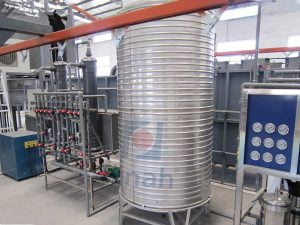
How Often Should E-Coat UF Membranes Be Cleaned?
A UF loop gives its first warning as a number nobody writes down. Permeate flow on the rinse header slips a few percent a week.
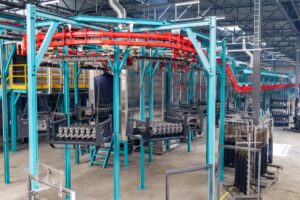
What Causes E-Coat Streaks on Metal Parts?
Sixty steel brackets leave the oven in one rack, each leg carrying the same four pale bands in the same place. The gauge reads thin
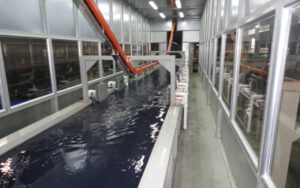
Why Does E-Coat Bath pH Keep Changing?
At 06:00 the meter reads 6.1. By the end of the second shift it reads 5.75, and nobody touched a setpoint. That swing is normal
Why Does Electrocoating Bubble During Curing?
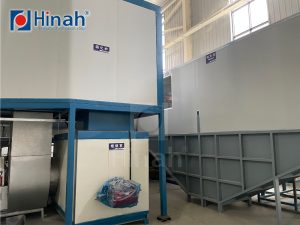
Bubbles that appear after the curing oven rarely come from bad paint. In most cases they are water that never left the film before the
Why Does Cratering Occur in an E-Coat Line?
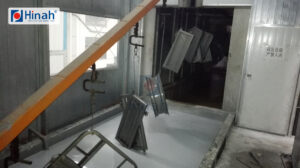
A crater looks like a shallow bowl pressed into the film. The rim sits high, the center is bare, and the paint around it is
Why Are Some Areas Bare After Electrophoretic Coating?
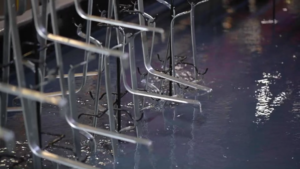
A metal part comes out of the dip tank, but one corner remains bare. Another part has a complete coating on the outside, yet the
Why Does E-Coat Line Paint Peel or Lose Adhesion?
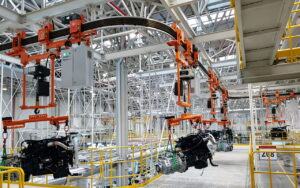
Peeling rarely starts with the peeling itself. By the time an e-coat film lifts from the metal, the original problem may have started several stages
How to Reduce Paint Waste in Electrophoretic Painting Process
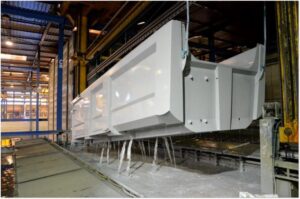
Walk into any factory running an electrophoretic painting line, and you’ll hear the steady hum of pumps, the rhythmic movement of conveyors, and the quiet
How to Prevent Contamination in Electrophoretic Coating Tank
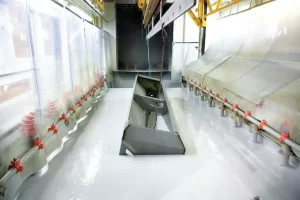
When it comes to achieving a flawless electrophoretic coating, most focus on voltage, bath chemistry, or curing temperature. But there’s another, often-overlooked factor quietly affecting
Why Electrophoresis Coating Line Redefines Protection
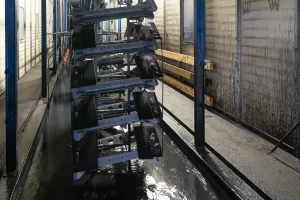
Metal is everywhere around us—shaping the cars we drive, the appliances we use every day, and the structures that hold our cities together. Yet no
Achieving Uniform Electrophoretic Coating on Intricate Components
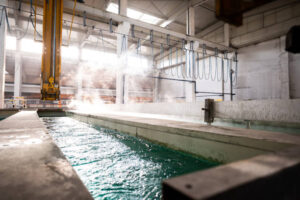
In today’s manufacturing world, products are rarely simple in shape. From automotive parts with deep recesses to electronics housings with sharp edges, components are becoming
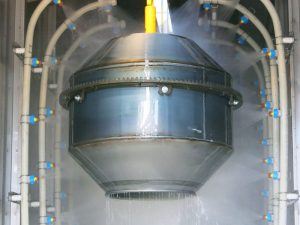
The Silent Problems Hiding in Prepreatment Coating Systems
When everything looks smooth on the surface, it’s easy to believe a prepreatment coating system is running perfectly. Parts move through the line, chemicals are
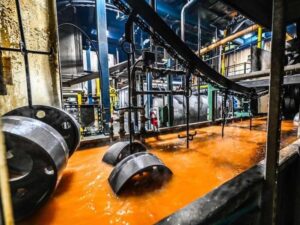
Electrocoating Conveyor: The Backbone of a Smooth E-Coating Line
In any e-coating line, smooth and uninterrupted movement of parts is essential. While the coating process itself often gets the spotlight, the real backbone of
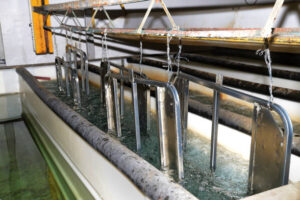
How to Control Film Thickness in an Electrophoresis Coating Line?
Imagine a perfectly coated metal surface—smooth, uniform, and built to withstand years of exposure without a trace of rust. Achieving this result doesn’t happen by
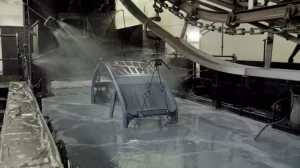
How an E-Coating Line Ensures Uniform Paint Coverage?
Imagine a car body fresh from the assembly line or a circuit board that will power tomorrow’s technology. Before either reaches the customer, it needs
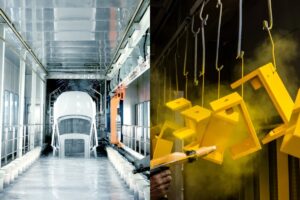
E Coating vs Powder Coating: Key Differences Between Paints
When it comes to painting metal surfaces, choosing the right coating can make all the difference. E coating vs powder coating paints may seem similar