Dealing with Electrocoating Sediment: to Restore Coating Quality
In a well-run e-coating line, consistency is everything. So when sediment appears after coating, even in small amounts, it can quickly disrupt production flow, compromise
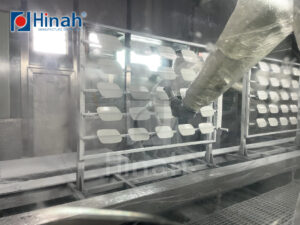
How a Liquid Coating Line Improves Finish Quality
A raw metal panel enters one end of the liquid coating line—dull, uneven, and vulnerable to corrosion. Minutes later, it exits with a flawless, high-gloss
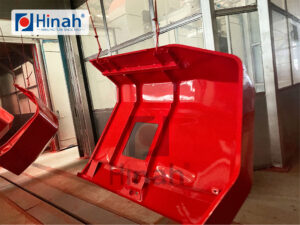
What Factors Affect Coating Uniformity in Electrophoresis Coating Line?
Coating uniformity is one of the most critical quality indicators in an electrophoresis coating line, directly impacting corrosion resistance, appearance, and overall product performance. In
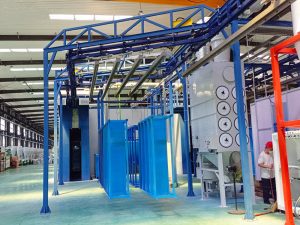
Choosing the Right Electrocoating Conveyor for Your E-Coat Line
If you’re planning or upgrading an e-coat line, there’s one part of the system you really don’t want to overlook—the electrocoating conveyor. It’s not just
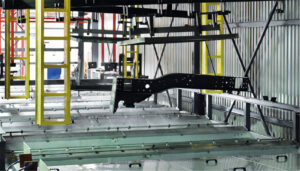
Best Practices for E-Coating Tank Care in Your E-Coating Line
The e-coating tank is the heart of your e-coating line, where the critical electrochemical deposition process occurs. Its proper design, operation, and maintenance directly determine
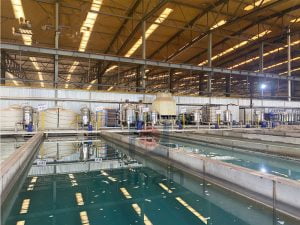
Optimizing Pretreatment Stages in E Coat Line for Adhesion
Electrocoating (e-coating) is a foundational process for achieving superior corrosion protection and uniform finish adhesion on metal substrates across automotive, appliance, and industrial applications. However,
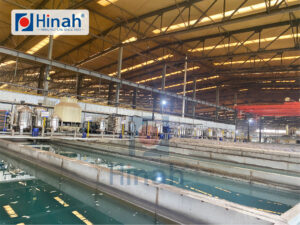
Common Bottlenecks in the E-Coating Line Workflow—And How to Solve Them
In an e-coating line, smooth workflow is essential to maintaining high-quality finishes, consistent output, and operational efficiency. However, even the most advanced systems can encounter
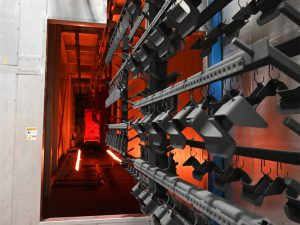
Electrocoating Curing Oven: How to Prevent Bubbles and Craters
Electrocoating delivers exceptional corrosion protection and uniform coverage on metal substrates, making it vital for demanding industrial applications. However, this performance hinges on a critical
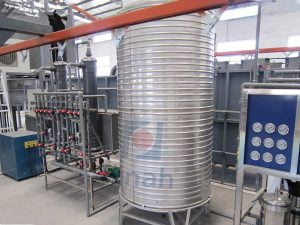
Ultrafiltration (UF) Systems in E Coat Line: Maximizing Paint Recovery & Quality
Ultrafiltration (UF) systems are the critical efficiency engine in modern e-coat lines, transforming waste into value. Without UF technology, electrocoating operations lose over 30% of
E-Coating Line Delivery: From PO to First Good Part
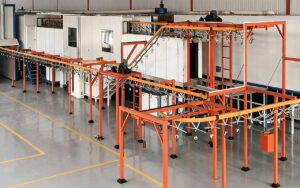
An e-coating line delivery takes roughly six to ten months from purchase order to first good part. Twelve stages run in sequence: design, fabrication, factory
What Causes Low UF Permeate Flow in E-Coating?
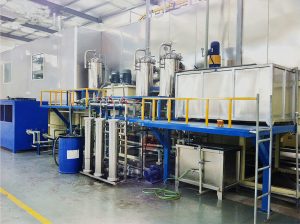
A gauge reading 8% under baseline usually sends the shift straight to a cleaning cycle. The membrane is often innocent. Low UF permeate flow is
How Often Should E-Coat UF Membranes Be Cleaned?
A UF loop gives its first warning as a number nobody writes down. Permeate flow on the rinse header slips a few percent a week.
What Causes E-Coat Streaks on Metal Parts?
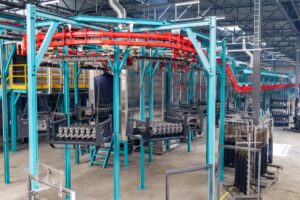
Sixty steel brackets leave the oven in one rack, each leg carrying the same four pale bands in the same place. The gauge reads thin
Why Does E-Coat Bath pH Keep Changing?
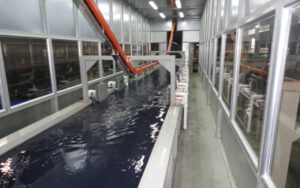
At 06:00 the meter reads 6.1. By the end of the second shift it reads 5.75, and nobody touched a setpoint. That swing is normal
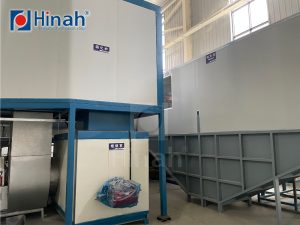
Why Does Electrocoating Bubble During Curing?
Bubbles that appear after the curing oven rarely come from bad paint. In most cases they are water that never left the film before the
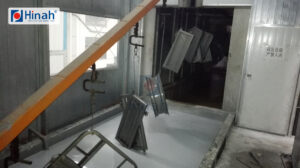
Why Does Cratering Occur in an E-Coat Line?
A crater looks like a shallow bowl pressed into the film. The rim sits high, the center is bare, and the paint around it is
Why Are Some Areas Bare After Electrophoretic Coating?
A metal part comes out of the dip tank, but one corner remains bare. Another part has a complete coating on the outside, yet the
Why Does E-Coat Line Paint Peel or Lose Adhesion?
Peeling rarely starts with the peeling itself. By the time an e-coat film lifts from the metal, the original problem may have started several stages