E-Coating Line Delivery: From PO to First Good Part
An e-coating line delivery takes roughly six to ten months from purchase order to first good part. Twelve stages run in sequence: design, fabrication, factory
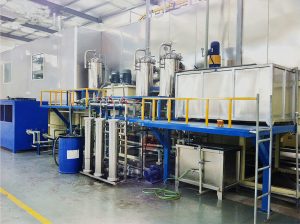
What Causes Low UF Permeate Flow in E-Coating?
A gauge reading 8% under baseline usually sends the shift straight to a cleaning cycle. The membrane is often innocent. Low UF permeate flow is
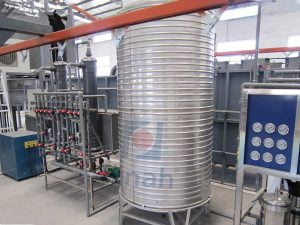
How Often Should E-Coat UF Membranes Be Cleaned?
A UF loop gives its first warning as a number nobody writes down. Permeate flow on the rinse header slips a few percent a week.
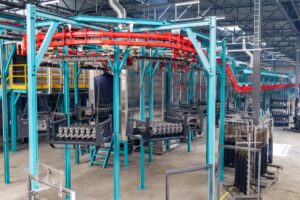
What Causes E-Coat Streaks on Metal Parts?
Sixty steel brackets leave the oven in one rack, each leg carrying the same four pale bands in the same place. The gauge reads thin
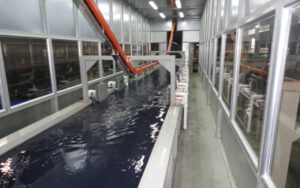
Why Does E-Coat Bath pH Keep Changing?
At 06:00 the meter reads 6.1. By the end of the second shift it reads 5.75, and nobody touched a setpoint. That swing is normal
Why Does Electrocoating Bubble During Curing?
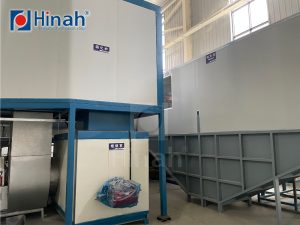
Bubbles that appear after the curing oven rarely come from bad paint. In most cases they are water that never left the film before the
Why Does Cratering Occur in an E-Coat Line?
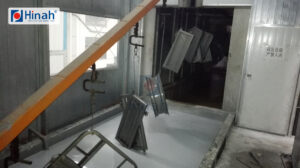
A crater looks like a shallow bowl pressed into the film. The rim sits high, the center is bare, and the paint around it is
Why Are Some Areas Bare After Electrophoretic Coating?
A metal part comes out of the dip tank, but one corner remains bare. Another part has a complete coating on the outside, yet the
Why Does E-Coat Line Paint Peel or Lose Adhesion?
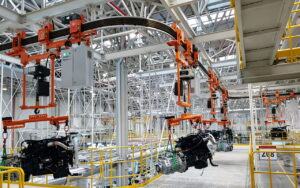
Peeling rarely starts with the peeling itself. By the time an e-coat film lifts from the metal, the original problem may have started several stages
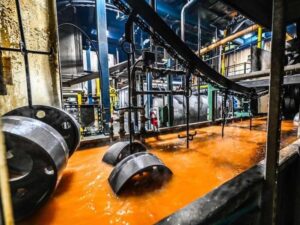
Why Do Pinholes Appear After Electrocoating?
A freshly coated part can look fine when it leaves the tank, yet tiny holes may become visible after rinsing or curing. Some appear as
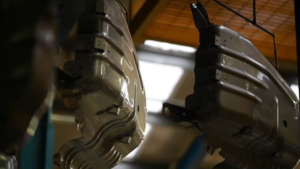
Why Is Electrocoating Film Thickness Uneven?
Achieving uniform thickness in industrial electrocoating demands precise control over throwpower, bath chemistry, and pretreatment quality. When coating complex metal parts, film buildup isn’t determined
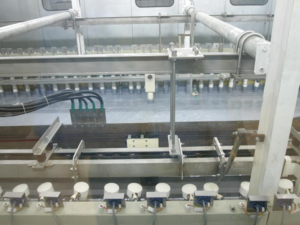
Why Does UF System Get Clogged in E-Coat Line?
An ultrafiltration (UF) system plays an important role in an e-coat line. It separates water and low-molecular-weight materials from the coating bath while retaining useful
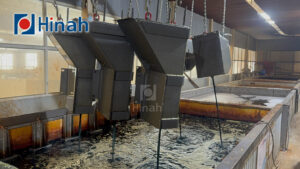
Is E-Coat Line More Environmentally Friendly Than Traditional Painting?
If you are planning a new metal finishing process, environmental performance is probably one of your main concerns. You may wonder whether an e-coat line
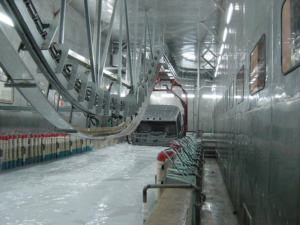
How Does Voltage Affect Film Thickness in E Coat Line?
If the film thickness from an e-coating process is too thin, voltage is often one of the first parameters engineers check. But simply increasing the
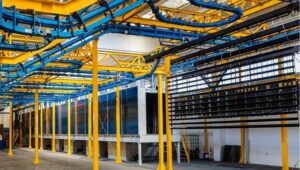
7 Things You Didn’t Know About Electrophoretic Painting Plant for Aluminium
When people talk about aluminium coating, they usually focus on colour, appearance, or surface protection. However, the final coating quality depends on many hidden factors
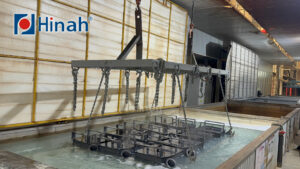
How Does Electric Hoist E-Coat Line Work for Vertical Dipping?
For many coating applications, the biggest challenge is not putting parts into a tank — it is controlling how each part moves inside the coating
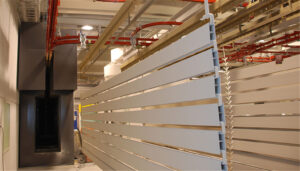
Why Is Rust Still Occurring After Using an E-Coat Line?
Rust problems after e-coat line can be confusing. The metal parts have already gone through cleaning, coating, and curing, but corrosion still appears during testing
Can electrophoretic coating line reduce corrosion issues in coastal areas?
When a metal product is used near the coast, corrosion often appears much sooner than expected. A component that performs well inland may start showing