Why Does Your E-Coat Line Have Cratering?
Cratering is one of the most frustrating defects in electrodeposition. You run your parts, and instead of a smooth, uniform finish, you get small, bowl-shaped
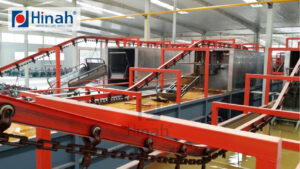
Automotive E-Coating Line: Is Your Infrastructure Ready?
Building a professional automotive e-coating line requires more than just a paint tank. It demands a robust foundation of power, water, and thermal engineering to
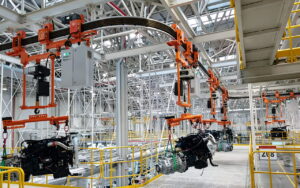
How to Eliminate the “Faraday Cage Effect” in Electrophoretic Coating?
Why do some metal parts come out of the tank looking perfect on the outside but stay completely bare in the corners? This is the
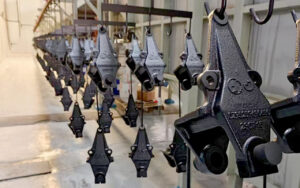
Why Is Your E-Coat Line Finish Peeling or Bubbling?
You just finished a production run, but the results are a disaster. The coating is lifting off the metal like old tape, or worse, it’s
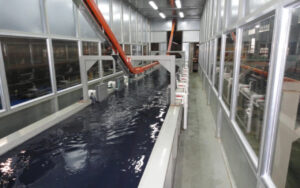
Why Is Your Conveyor Speed Out of Sync with the E-coat Tank Dwell Time?
The balance between your conveyor speed and coating chemistry is the heartbeat of a successful finishing operation. In a perfect setup, the mechanical movement of
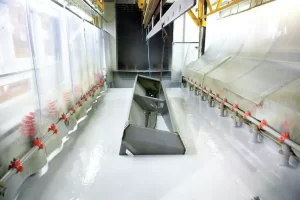
What is the Difference Between Electroplating and Electrophoretic Coating?
Choosing between electroplating and electrophoretic coating can be a tough call. Both methods use electrical currents to apply a protective layer to metal parts, but
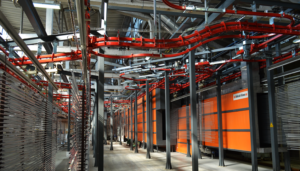
Why Cathodic Electrocoating becomes the Industry Standard?
For decades, manufacturers relied on traditional spray painting to protect metal parts. However, the industry has shifted. Most modern factories now choose electro-deposition over old

The Science Behind Coating Cracking in Electrocoating Systems
Electrocoating is the gold standard for modern industrial finishing. It provides unmatched corrosion resistance and covers every corner of a complex metal part. However, even
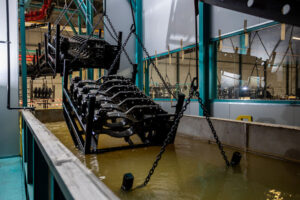
Choosing the Right Anode Cells for Your E-coat Line
Most factory managers focus on the power supply when coating quality drops. However, your anodes actually do the heavy lifting in the tank. If you
Why Are Some Areas Bare After Electrophoretic Coating?
A metal part comes out of the dip tank, but one corner remains bare. Another part has a complete coating on the outside, yet the
Why Does E-Coat Line Paint Peel or Lose Adhesion?
Peeling rarely starts with the peeling itself. By the time an e-coat film lifts from the metal, the original problem may have started several stages
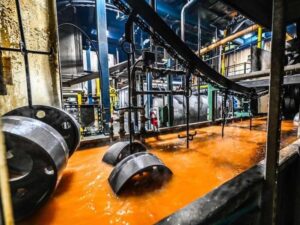
Why Do Pinholes Appear After Electrocoating?
A freshly coated part can look fine when it leaves the tank, yet tiny holes may become visible after rinsing or curing. Some appear as
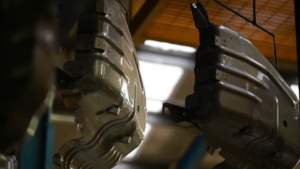
Why Is Electrocoating Film Thickness Uneven?
Achieving uniform thickness in industrial electrocoating demands precise control over throwpower, bath chemistry, and pretreatment quality. When coating complex metal parts, film buildup isn’t determined
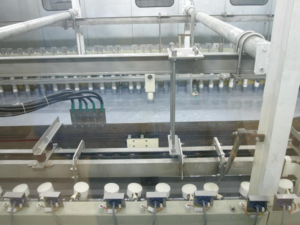
Why Does UF System Get Clogged in E-Coat Line?
An ultrafiltration (UF) system plays an important role in an e-coat line. It separates water and low-molecular-weight materials from the coating bath while retaining useful
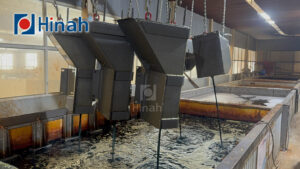
Is E-Coat Line More Environmentally Friendly Than Traditional Painting?
If you are planning a new metal finishing process, environmental performance is probably one of your main concerns. You may wonder whether an e-coat line
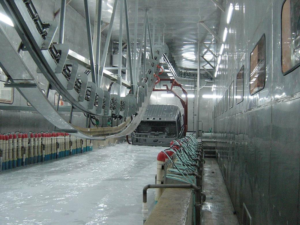
How Does Voltage Affect Film Thickness in E Coat Line?
If the film thickness from an e-coating process is too thin, voltage is often one of the first parameters engineers check. But simply increasing the
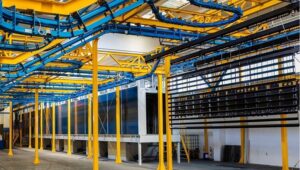
7 Things You Didn’t Know About Electrophoretic Painting Plant for Aluminium
When people talk about aluminium coating, they usually focus on colour, appearance, or surface protection. However, the final coating quality depends on many hidden factors
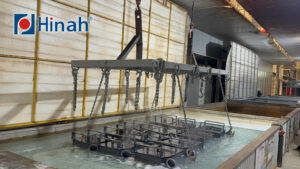
How Does Electric Hoist E-Coat Line Work for Vertical Dipping?
For many coating applications, the biggest challenge is not putting parts into a tank — it is controlling how each part moves inside the coating